‘J’ai décidé d’être heureux, parce que c’est bon pour la santé’ (Voltaire)
For most of eight years, 1999-2007, I had a small mezzanine apartment in Paris at 24 Rue de Lille, one short block removed from the left bank, opposite the Louvre. It was a perfect location for me; a short walk to the metro at Rue du Bac and two minutes from the river, in the historic heart of the city. Over the years, I read many historical novels set in the area, and often I would walk the streets of the old city in the late evening, trying to envisage what it must have been like in past centuries.
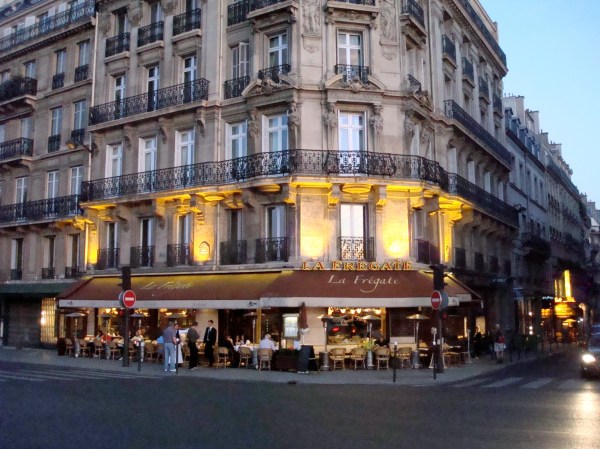
I have never aspired to cook, other than to boil an egg, make a coffee, open a beer or a bottle of wine. When it comes to preparing a meal, I defer to those who are more expert than I. Over time, I ate at most of the restaurants and bistros within a ten-minute walk from my apartment, but the one that I most frequented was La Frégate, on the corner of Rue du Bac and Quai Voltaire, at the Pont Royal. There were very few weeks when I did not eat there at least once, and I soon became recognized as a local client, as distinct from one of the many tourists. But despite the earnest efforts of the maitre d’, Patrick, to introduce me to more exotic French cooking, it was rare that I deviated from my omelette au fromage or salade mixte. But Patrick and I had one passion in common – rugby, and we had many animated conversations about the prospects of the French and Irish teams, especially during the annual 6-nations competition.
La Frégate (photo from internet)
To walk from my apartment to La Frégate, indeed to get to the river, I almost always walked down the last block of the Rue de Beaune. And there on the corner was the house in which Voltaire died, in 1778, as recorded on a plaque on the wall.
Where Voltaire died (photo from internet)
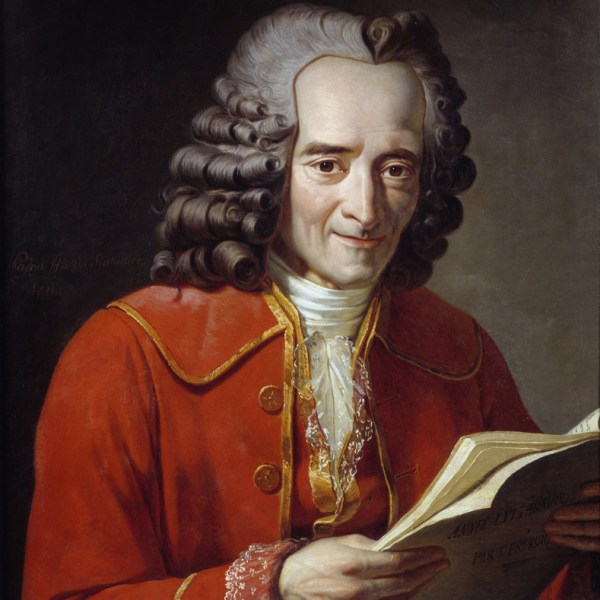
Voltaire was his pen-name. In real life he was François-Marie Arouet, born in 1694. He was a profligate writer of plays, books, essays, letters; the criticism of organised religions was a frequent theme in his writing. He wrote more than 50 plays, dozens of essays on science, politics and philosophy, several books on history and more than twenty thousand letters to friends and contemporaries. And yet, he is seldom read today.
When he was younger, he became wealthy, by exploiting a flaw in the French lottery, together with a syndicate of gamblers. His resulting wealth allowed him to be independent and able to pursue his academic interests.
Voltaire was reputed to work up to eighteen hours day and often fueled his energies with more that forty cups of coffee a day. He spent part of his life in prison, at one time in the Bastille, or in exile, and lived for most of his later life in Geneva. He was also an entrepreneur, setting up a successful watch business in Switzerland.
He never married nor had children, despite many relationships. On his death bed, he is reputed to have told the priests – ‘Let me die in peace’.
Portrait de Voltaire (Francois Marie Arouet dit, 1694-1778) tenant l’annee litteraire. Peinture de Jacques-Augustin-Catherine Pajou (1766-1828), 18eme siecle. Paris, Comedie Francaise
There are many buildings in central Paris with plaques recording their previous inhabitants. Like that of Voltaire, there are so many fascinating histories to be discovered. At one time, I aspired to document many of the plaques and to write a short historical summary of the lives of each subject.
For three years, 2013-16, we escaped the cold, dark, barren northern winters and flew south, like migrating birds, to the welcoming warmth of the Southern American summers. Each year we rented the same apartment in Pocitos, a beach suburb of Montevideo. Our serviced eleventh floor apartment was just above the top of the trees that completely shaded the street below. It was a perfect location for us, just two short blocks and three minutes from the river.
From Montevideo, the Río de la Plata does not look like a freshwater river, for it is so wide that one cannot see Argentina, about 100 kilometers away at the closest point. Massive container ships, tankers and cruise ships, on their way upriver to Buenos Aires and beyond, look like tiny toy boats on the distant horizon. When one of the regular earth-shaking tropical storms hits the upper reaches of the river, for days the water is brown with sediment.
Along the river runs La Rambla, a wide promenade, that stretches along the coast for more than 30 km, and is reputedly the world’s longest uninterrupted sidewalk. Every day, almost without exception, we walked on La Rambla, first in one direction, then in the other. After a short time, we started to recognize the locals, and before long we were greeting each other like neighbours. Some times we would count how many people we had spoken to in the course of a walk, and the number would usually end up in double figures. We felt very much as part of the community, for Pocitos had the feel of a village.
La Rambla at Pocitos
On La Rambla we also got to recognize the local birds, not just the species, but in some cases the individuals. There were numerous birds along the river, some quite exotic. There are reputedly more than 450 different bird species to be found in the relatively small country of Uruguay; the internet site, Avibase, lists 479. Not only is Uruguay on the major migration path for many birds, but the country has plentiful water and a climate without extremes. It was not long before I bought a book on Uruguayan birds and in the second year Lotta turned up with a new camera to photograph them.
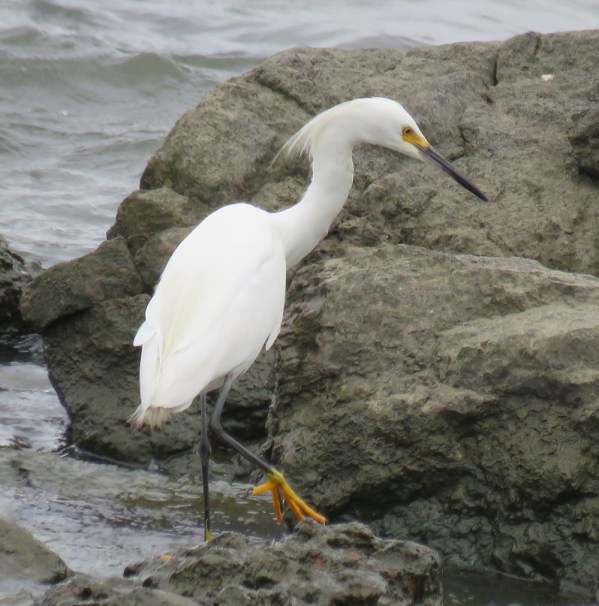
Most days when we passed the end of the beach at Pocitos, there were several small snowy egrets with yellow feet, fishing at the edge of the water. Often there was also a much larger great egret.
A snowy egret
We once spotted a great egret sitting on top of a tree, near the small harbour at Punta Carretas. When we went around and through the trees to get closer, we saw a black-crowned night heron. It was a young one and it flapped away before Lotta could get a second shot. Although we went back on other days, we never saw it again.
Great EgretBlack-crowned night heron
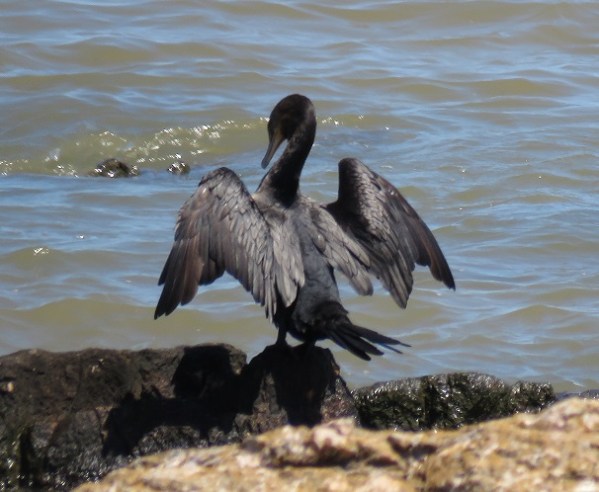
Where there were rocks by the river, inevitably there were cormorants with wings outstretched, drying their feathers. Once we were very fortunate to witness a large flock of cormorants in a long semi-circle, hunting together, driving a shoal towards the shore. We could see the fish splashing in the water, trying to escape their predators.
Neotropic cormorant
Everywhere where there were mature palm trees, there seemed to be colonies of monk parakeets. When they are feeding on the grass, they are well disguised, but when they are flying or gathered on a palm tree, they make their presence well known, for they make quite a racket.
Monk parakeet
Humming birds are tiny; they hover and then move so quickly that one has to be lucky to see one, and even more fortunate to take a photograph of it. One day we hit the jackpot, just up the hill from Playa Ramírez; a tree in full flower with many humming birds feeding on the nectar. And for several days they had a banquet on that tree.
A humming bird
Above the hill behind Playa Buceo, we often saw this little hawk, resting on a light pole. If not an american kestrel, it was similar. Even in the strongest wind it was able to hover motionless for several minutes, sometimes not far from us, then it would suddenly drop, grab its prey and fly off to nearby trees.
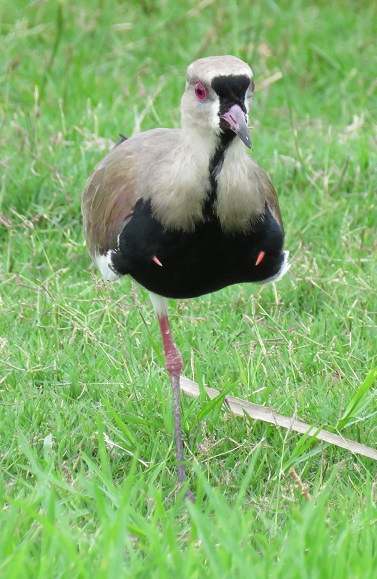
The southern lapwing is Uruguay’s national bird and in the summer they are plentiful, especially on the parkland between the golf course and the river, after heavy rain. The lapwings have a strange hesitant walk, that always reminds me of John Cleese in Monty Python’s Ministry of Silly Walks.
During our first year in Pocitos, we used to see one lapwing that was always on its own. At first we thought that it was always standing on one leg, but when it started to hop, it was obvious that it had only one leg. It appeared to be quite healthy, but perhaps the rest of the flock rejected it for not being quite normal. I guess that handicapped people in our society can suffer the same rejection.
The Southern Lapwing with only one leg
The last year that I arrived back in Pocitos, I settled my few possessions in the apartment and then went out for a short walk along La Rambla. At the end of the beach, there is a small park and there on the edge of the park, waiting for me, was the southern lapwing with only one leg.
If I were to list my four or five favourite destinations, then I would include Martigny in the Swiss canton of Valais. I have spent a few days there every year since 2010 and each year when leaving, I promise myself to return one more time.
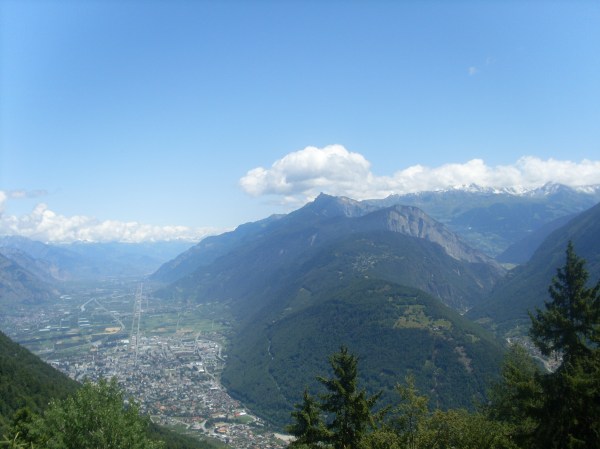
Martigny is a relatively small town with a population of about 15,000, strategically placed at the junction of the routes from Italy, via the Grand-Saint-Bernhard pass, that from France, via the Route de la Forclaz and the Rhône valley, where the river turns ninety degrees northward, to eventually empty into Lac Léman.
During 1996-1998, I was employed as MD of a Swiss computer services company, with head office in Neuchâtel, and satellite offices in Zürich, Amsterdam, Paris and London. When I had the opportunity, I spent time in the mountains, hiking, scrambling and climbing: in the Jura in the early springtime, in the pre-Alp in summer and in the Alps in late summer, before the snow-line started to descend.
With no Swiss-German linguistic ability, but confidence in French, I tended to the cantons of Jura, Vaud, Geneva, Lausanne and Sion. And on my way to the Alps, I often passed Martigny: on the way up the Rhöne valley to Zinal or Zermat, up to the Col de Forclaz and on to Chamonix, or through Martigny to Verbier or the Val de Bagnes.
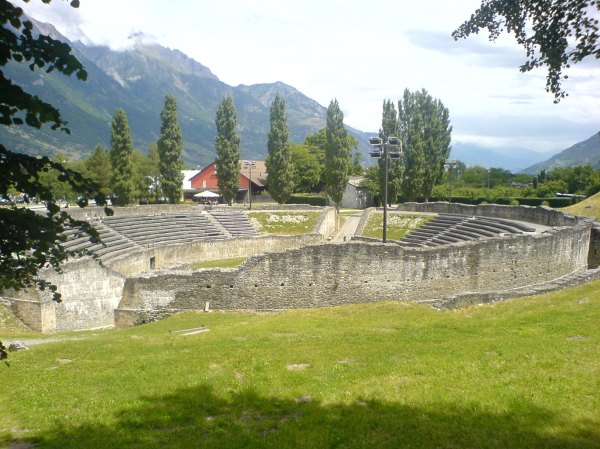
Only once did I stop on my way through Martigny and then but for a short time. I had seen a sign for a Roman amphitheatre. I was not disappointed. The site was well-preserved with a plethora of exhibits, photographs and documentation. My appetite for Martigny was whetted.
But it was not until 2010 that I returned to the area. I wanted to attempt the pilgrimage route from France to Santiago de Compostela in the autumn, but I was not confident that my lame leg could handle 20-30 km per day, so I decided to test myself, by walking from Geneva to Martigny, via the southern side of Lac Léman. The test was successful in that I managed the distance each day with no problem, despite the early July heat wave. As I had two days free before meeting Lotta and my sons in Chamonix, I decided to stay in Martigny and explore the town and surrounding area.
I returned to the amphitheatre and beside it there was now a new building housing the Musée et Chiens du Saint-Bernard. It had been opened in 2006 and in addition to many kennels of Saint Bernard dogs, there was an excellent exhibition dedicated to the history of the Saint Bernard pass, with a theatre showing vintage films. I spent most of an afternoon there.
Lotta on a later visit to the Chiens du Saint-Bernard in 2013
Close by the amphitheatre and the Musée et Chiens du Saint-Bernard is the Fondation Pierre Gianadda. It is undoubtedly the most important cultural attraction in Martigny and was founded by Léonard Gianadda in 1978. He was a successful local engineer and when his workers started excavation for a new building on the outskirts of Martigny, they uncovered the remains of a Roman temple dedicated to Mercury. Gianadda abandoned his original plan and instead built a museum to encompass the ruins and dedicated it in the name of his younger brother, who was killed in a plane crash two years earlier. Today the museum has an exhibition of locally discovered Gallo-Roman artifacts, a large vintage car museum, a sculpture park, classical concerts and three times each year, an exhibition of paintings of a well-known master.
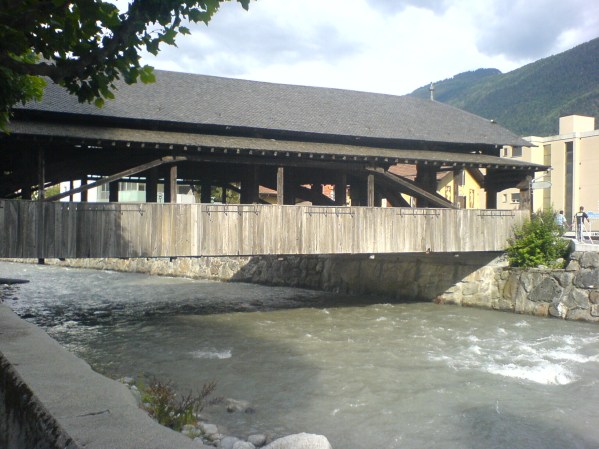
Down the other side of the narrow valley flows the river La Dranse, across which is the covered bridge, the Pont de la Bâtiaz, leading to a group of old houses huddled under the steep cliffs above. A steep path eventually leads one to Le Chateau de la Bâtiaz, towering over Martigny.
It was originally built in 1260 on the ruins of a Roman fort of the first century. In the constant conflict between the Dukes of Savoy and Sion, it changed hands many times until it was finally destroyed in 1518. It was restored in the 20th century.
When in Martigny, one of my favourite walks is to ascend to the Chateau de la Bâtiaz and continue up the steep mountainside to the upper vineyards. From there the path gently descends to the upper valley at Martigny-Bourg. For much of the descent, it is as if one is in a helicopter, such is the view of the town below.
On other days, I head up the Rhône valley through the orchards and vineyards to Charrat, across the valley to Fully and then back along the vineyards on the other side, until crossing the river back to Martigny. And of course, it goes without saying that I have my customary stop for a cold beer en route.
The village of Fully can be seen at the foot of the mountain, on the far side of the valley
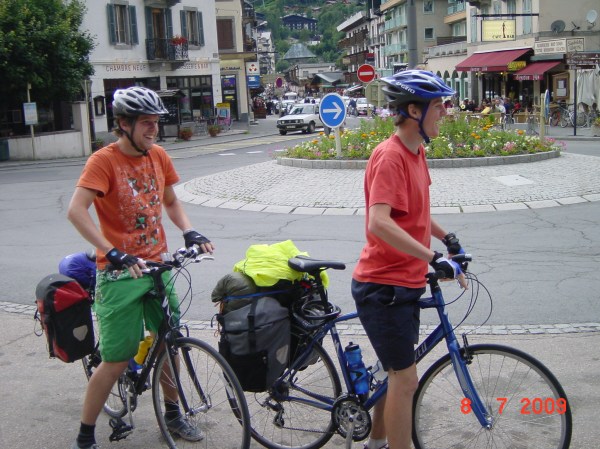
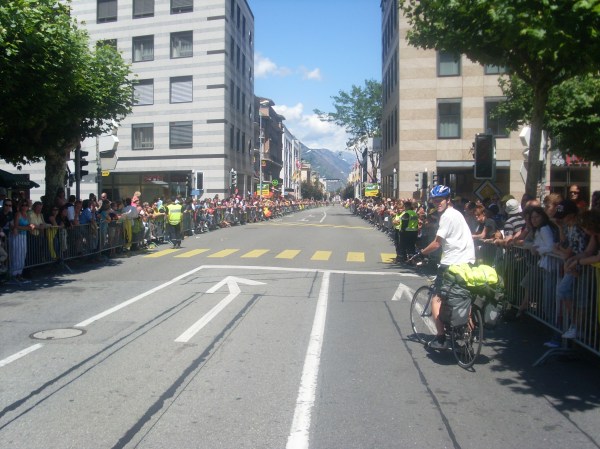
In 2009 the Tour de France passed through Martigny. That was the year my two elder sons cycled from Camberley in the UK to Chamonix, to meet us and their two younger brothers.
Meeting outside the station in Chamonix
On their return to the UK, they decided to cycle over the Col de Forclaz at 1527m and down to Martigny, in time to see the Tour de France pass, before continuing on to Geneva. The descent from the Col de Forclaz is steep and the views are breath-taking, especially on a bicycle.
Once down in Martigny, the two lads somehow managed to find themselves on the wrong side of the barriers. The crowds must have thought that they were two clowns hired to entertain them, while they waited for the main act to arrive.
Bob looking back at Andrew and wondering where to go next
Having been in South Africa for most of this year, I have not managed to spend any time in Martigny and the Alps.
I have traced my father’s ancestors back to the late 1600s and without exception, all were born in Norfolk. My father’s grandfather, William Blackwood (1847-1927), was the first Norfolk Blackwood to be able to read and write. In his youth he worked as a labourer in a mill in Hapton, but he somehow ended up owning a windmill in Harlesdon. Prior to William Blackwood, all our Norfolk ancestors were agricultural labourers, and many died in the workhouse, as paupers.
The windmill in Harlesdon
So, it never ceases to amaze me that, with that background, my grandfather, Leonard Clive Blackwood (1881-1965), was an organist at age 19, as listed in the 1901 census, and spent his life as a music teacher in Harpley. I have no idea of what or who it was that inspired him to a musical career.
His musical interests were classical, and he subsidised his teaching income by serving as organist in local churches. For some years he was the resident organist at Sandringham, the Royal residence. And his church responsibilities included training the church choirs. He ended his career in his early 80s, as organist at the church in Bushmills, near Portrush on the north coast of Ulster. But he continued to practise every morning, afternoon and evening until the night in 1965 when he permanently fell asleep.
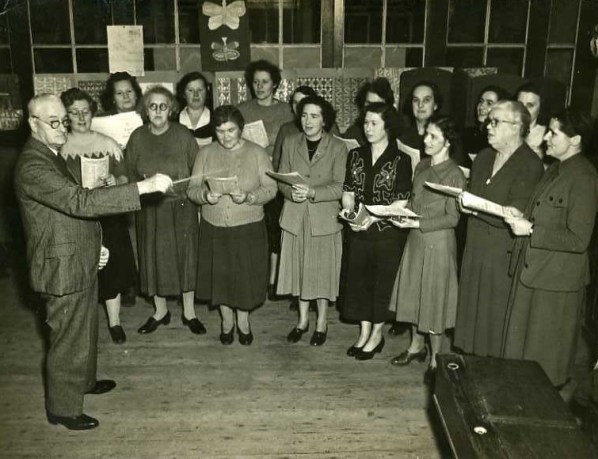
My grandfather conducting a choir c1950. My grandmother is in the front row, second from the right.
It was my grandfather who taught my father to play the piano and instilled in him the music-reading skills that stood him so well. But my father had no real interest in classical or church music and when he was 16, in 1935, he moved to London, to take up a position as a trainee-manager with Sainsbury’s, which in that era was an upper-class grocer. It was in the evenings that he found his true musical love – big bands, such as those of Count Basie, Louis Armstrong, Duke Ellington, Glen Miller, Joe Loss etc. He used to go to the ballrooms in North London, not to dance, but to listen to the bands, to observe, to study their technique.
It was during the early years of the war, when his regiment was stationed in and around Portrush, that my father established himself as a pianist, most nights playing a few numbers with the local bands. After the war ended, he returned to Portrush and joined the Ernie Mann band. But I have covered much of this history in a previous article, so I will not repeat myself.
To many, it might come as a surprise to know that for most of his professional life my father never had a piano. He bought the sheet music, turned up at a venue and played.
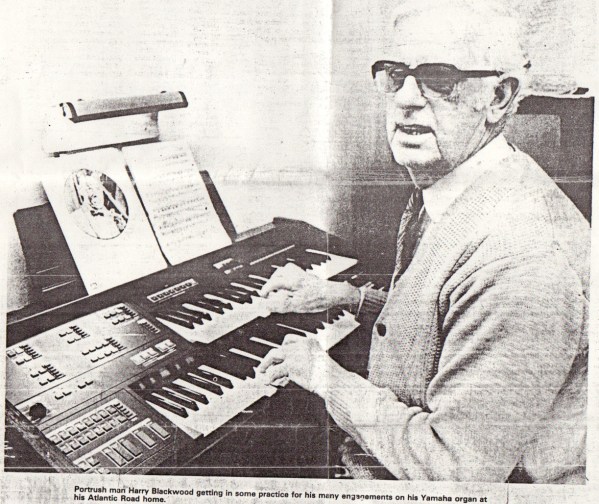
He retired from his dance band in the late 1950s to concentrate on his farming business. But music was his great love, and in the late 1960s he bought an electronic organ, an early version of modern keyboards, and soon was employed 2-3 times a week, playing in local hotels. For friends and acquaintances, he made numerous recordings on a little tape-recorder. Following is an example:
He died suddenly in late 1995; he would have been 77 the next day. We found his music case packed and prepared for a performance that night.
A clipping from a newspaper article, published not long before his death
In my turn, I had no musical training when I was young. We had no piano at home and neither the primary nor secondary schools that I attended gave any musical tuition. But I had enough rhythm to fill the role of drummer in a group with some teenage friends. We were pretty awful, but we had fun while it lasted, and when I left school in 1963, Bill McKeown invited me to join the little group that he was forming. I wrote about it in the previous article that I mentioned earlier.
One of my friends, Raymond Lyttle, who played lead guitar, had real talent, and he went on to join the Delta Showband. Sadly, he was killed in a car crash in England in 1970.
All my four sons studied the recorder at Lyndhurst Primary School, with some success. And for a time, John played the cornet and Philip played my old clarinet. It was only Andrew who continued to study music at secondary school, ending up with an ‘A’ level. For one of his exams he had to submit his own composition and thankfully I managed to make a recording of him playing it. He called it ‘Springtime’ and every time that I listen to it, I can hear his interpretation of the four seasons…
Andrew playing at a wedding in March 2013
During his school years, my youngest son, Philip, became very much involved in amateur musicals, both in school and with a local junior operatic society. For a time, he flirted with the idea of pursuing a musical career. I suspect that one day he will return to the stage, albeit in an amateur mode.
Philip in a local production of Tom Sawyer
So, from humble Norfolk roots, to date four generations of the Blackwood family have studied music, have entertained, have acted. I write these words so that future generations of my family will be aware of their historical roots, and in the hope that some of them will be inspired to carry the baton for one more lap.
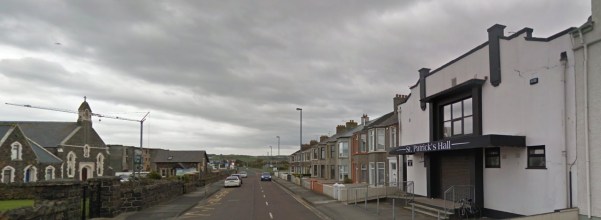
If you are ever in Portrush, on the north Irish coast, and you head down Causeway Street from the town centre, just before the Catholic church you will see St. Patrick’s Hall. Now the building was not always connected with the church. In my day, in the 1950s and 1960s, it was called The Palladium and it was a theatre, putting on variety shows during the brief holiday seasons of Easter and summer, when the resort used to be a tourist destination, before the tour companies started offering cheap holiday flights and hotels in the more reliable southern European sunshine. For most of the year The Palladium was shuttered.
Before its transformation to a variety theatre, the Palladium was a ballroom, with a resident orchestra. There was also Barry’s Ballroom. With thousands of soldiers stationed in north Ulster, training for the eventual invasion of mainland Europe, there must have been plenty of trade for the ballrooms and the local girls were very much in demand. That was how my mother met my father in 1942.
I never heard my father speaking of playing at the Palladium. He ended his military service in January of 1946 in Lübeck on the Baltic, having been involved in the fighting from the invasion of Normandy through Belgium, The Netherlands and Germany. When he returned to Portrush, he got his professional opportunity as pianist with Ernie Mann’s band, then resident in Barry’s Ballroom. When Ernie was forced to retire, due to ill- health, my father took over leadership of the band.
My father on the left, with the Ernie Mann Band in 1949And at the piano with his own band during a BBC Radio broadcast in 1951
But by the early 1950’s, musical tastes were changing, with Bill Haley and His Comets and the jive displacing the formal quickstep and waltz and orchestras. And then came Elvis Presley, Cliff Richard and the Shadows, the Beatles and the avalanche of groups with singer, lead, rhythm and bass guitars and drums. In Portrush, the Arcadia Ballroom opened in 1953 and Barry’s Ballroom closed around that time. I don’t know what happened to the Palladium Ballroom, but I suspect that it had already ceased to operate. My father moved his band to the Northern Counties hotel, and for many years they continued there. He became very well-known and many times over the years, when they have heard my name, strangers have said to me, ‘you wouldn’t be Harry Blackwood’s son, would you now?’
The Arcadia, on what looks like a bleak stormy day (photo from internet)
I only ever once went to a show at the Palladium. I think it was in the early summer of 1965, but I am not sure. Neither can I remember clearly who I went with. It may have been Trevor Gaston and Martin Williamson, but again it is all a blur. You see, we went to a performance of Edwin Heath. the well-renowned hypnotist, and I fell asleep in the first few minutes of the show, when he was introducing his act and the entrancing music was playing in the background. I was not the only one; those of us who succumbed were led up to the stage and we were the show for the next hour or so.
Edwin Heath, the hypnotist
I recall nothing. Afterwards I learned that the ‘victims’ were commanded to react to many different out-of-character situations: acting as we were different animals, believing that a glass of water tasted foul or another strongly alcoholic etc., and in my case to imitate a well-known singer, singing a hit song.
Now singing in front of an audience, hypnotised or not, for me was nothing unusual; I was the drummer in Bill McKeown’s Group, appearing at various local hotels in the area and further afield in Belfast, Red Bay and the Giant’s Causeway. We even had a six-week, Monday through Saturday, summer booking in a local hotel. In addition to a full-time day job, it was hard work, playing from 20:00 to midnight and often much later. We were ‘cheap and cheerful’ and there was little competition in those days. Bill was a talented pianist and saxophonist, his wife had a beautiful voice, his son was competent on the guitar. In addition to drumming, I sang ballads. When the client had sufficient budget, we included a bass guitar and trumpet, the latter being Tommy Tinkler, who was formerly in my father’s band and is in both photos above.
And in the Edwin Heath show, I sang the Jim Reeves hit song, ‘I love you because’, as I had many times before.
Today Portrush is but a shadow of what it was in its heyday in the 1950s and 1960s, when the holiday crowds filled the hotels and boarding houses, staying for a week or more, when the beaches were crowded in the rare good weather, the amusement arcades were full and in the evening the centre of the tiny town was one big traffic jam and the pavements crowded. These days, many of the former boarding houses have shut or have been converted into flats for the students from the nearby university. And the steam trains that used to shuttle back and forth from Belfast, have long been retired and replaced by a tiny local commuter train, carrying students to their classes at the university in Coleraine.
One of the steam trains leaving Portrush, just as I remember them (photo from internet)
And all the former ballrooms have disappeared; Barry’s Ballroom was demolished and the area converted to more amusement machines; the Northern Counties Hotel was burned down in an arson attack and eventually replaced by a Ramada Inn; the Arcadia was largely demolished and only a part of the original building remains.
The former Palladium, as it is today
Of the four, only the Palladium still functions, albeit in its new role as a church hall.
On the afternoon of this very day twelve years ago, Lotta and her aunt were about to start cooking and arranging and decorating the hospitality facility in the apartment complex where we lived. It was in preparation for her father’s 75th birthday party, to be celebrated with family and a host of his friends. As I had never before been to a birthday party and given that my cooking abilities could have been summarized on the back of a small postage stamp, I decided to disappear for a few hours in the general direction of the old city.
But the weather was awful, with strong blustery winds, a universal grey sky, intermittent icy showers and trees thrashing around, ridding themselves of dead and dying leaves. In hindsight, it was a typical uninviting Swedish late-September day. When it once more started to rain, I retreated into the relative calm of the cathedral.
But I was not the only one sheltering in the cathedral. There were several young children running up and down the aisles, screeching and clambering over the pews, as if they were in an activity playground, their parents seemingly incapable of disciplining them. A large group of Asian tourists, with enough camera power to film ‘War and Peace’, were taking their turn to be photographed in front of the altar. And a young student, with a large backpack, marched up the aisle, dragging a noisy wheeled case. He stopped for a second, then heading down the other aisle and out into the fading light; at least he could say that he had seen the cathedral!
Uppsala cathedral, as seen from the riverside
Of the current countries that comprise modern-day Europe, Sweden was quite late in becoming Christian. In 1070, Adam of Bremen described the pagan temple of Uppsala and it was not until the 12th century that Sweden was converted. In 1273, the religious seat was moved from the original pagan site at Gamla (‘Old’) Uppsala, some five kilometers to the north, to that of the current cathedral by the river .
In 1527, King Gustav Vasa proclaimed Sweden to be a Protestant nation and any catholic who refused to be converted, was subject to the death penalty. From 1686, the Church was required to maintain all official records of births, marriages and burials. In addition, all citizens were annually examined in their competence in Luther’s catechism. Not only were their movements between parishes recorded, but even within parishes. Swedes were a very controlled people.
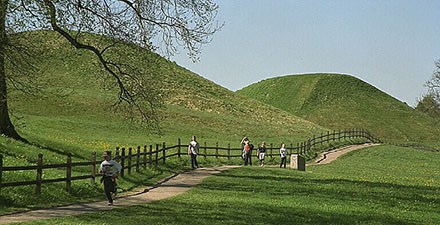
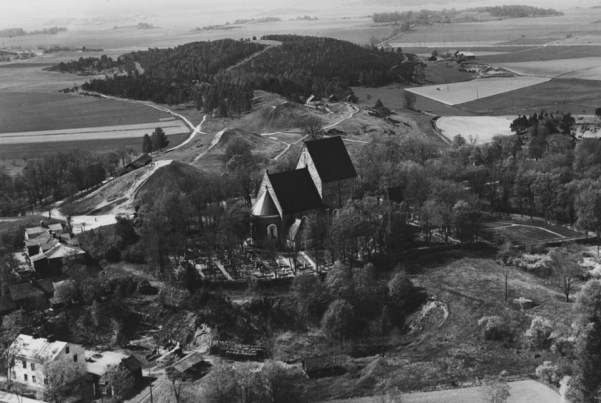
Of the original pagan city of the Vikings at Gamla Uppsala, little is left, apart from some large burial mounds. There were once many of these mounds, but most of the smaller ones gave way to the encroachment of agriculture. The Vikings used to cremate their dead and the excavation of one of the Royal Mounds in 1874 revealed little, apart from bones and some metal objects.
Some of the royal mounds
Gamla Uppsala c1934 (photo by Oscar Bladh)
Excavation of one of the royal mounds in 1874 (photo from internet)
Today there are approximately six million members of the Lutheran church out of a total Swedish population of nine million. In addition there about 0.5 million that follow Islam. Yet less than 8% of the population today ever attend any religious services. According to the Global Index of Religiosity & Atheism (2012), Sweden is one of the least religious countries in the world. Church and state have been separate since 2000.
Surprisingly, at least to me, Sweden respects several ‘religious’ public holidays – Twelfth Night, Ascension, Pentecost, All Saints and of course, Easter and Christmas. I wonder what would be the percentage of Swedes who could explain the significance of each of their religious holidays.
All members of each religion are required to contribute a percentage of their income to their church – about 1%, depending on where they live, unless they go through the procedure of removing their names from the rolls. The deduction goes through the payroll and I suspect that most Swedes view it as not worth opting out of; in a country of high taxation, an extra 1% is nothing to get excited about.
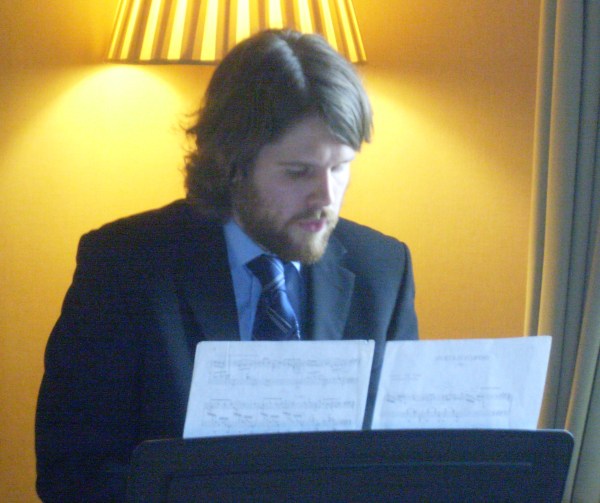
When the organ started playing, I was aroused from my train of thought, from my stroll through my limited knowledge of Swedish religious history. I had a clear view of the organist, a dusty little man, badly needing a haircut. He sped up and down the scales for several minutes and then started to play the most beautiful melody. No longer could I hear the brats in their playground and I was oblivious to the presence of tourists and their cameras. The music permeated every part of the cathedral, at times soaring, at times whispering. For some time I was entranced. My paternal grandfather was an accomplished organist. He would have been thrilled to have had the opportunity to play that organ.
It was already almost dark when I headed home, to find the the cooking completed, the tables laid and all was awaiting the arrival of the first guests.
And when I saw the hospitality room, I was reminded of that wonderful scene from the Disney cartoon, Alice in Wonderland and the Mad Hatter’s Tea Party.
I was making my way up through the wood, wary of the multitude of tree roots, not wishing to have yet another ankle sprain, when I saw the girl. She was standing on a rock overlooking the path and had a map in her hand. She was young, dressed in a skirt and sweater in autumnal colours, and with her auburn hair, she almost blended with the surroundings.
‘ Are you also looking for the Hittaut’, I asked.
‘Yes, and I can’t find it. I have been everywhere here, but with no luck. I hope that you can find it for me’.
I spent some time searching where I thought it would be, but with no success.
‘It should be in a line from these buildings’, I said, showing her my map, ‘but the problem is that from here one cannot see the buildings for the trees. If you stay here, I will go down the edge of the woods and work my way back up’.
I very much regretted not having brought my compass with me.
I set off through the undergrowth until I could have a clear view of the buildings, realigned and returned up the hill, trying to maintain a straight line, until I ended up not far from where the girl was patiently waiting. We thoroughly checked the area, but there was no sign of the marker. She decided that she had had enough and headed off to her next target. Left alone in the wood, I thought that it would be a good opportunity for a pit-stop. While standing there behind a tree, thinking great thoughts, I spotted the marker, not far from where we were looking. Twice I shouted to the girl, but she had gone too far to hear me.
Hittaut is a form of orienteering. Hittaut = hitta ut, which roughly means ‘find outdoors’ in Swedish. It involves some 130 numbered and coded stakes, spread over the circumference of Uppsala and the surrounded forests. They are colour coded – green = simple, blue = relatively simple, red = not so easy, and black = difficult. The web site is easy to use and at the end of the day, one can record the stakes that one has found. There are nearly 1900 people participating in Uppsala and there are 20 communes across Sweden involved in the activity. I have participated, to some degree, every year now since it started. It is a great way to get to know the city, particularly those parts where one would never normally go.
Most people that participate, do so on bicycles, for the distance from north to south and east to west, make walking something of a challenge. The girl that I met today, told me that she normally cycled, but preferred to do the parts in the woods and forests on foot.
I had not been long in Los Angeles, when I met Dale Williams, and through him, at a Saturday night party, Tom Anderson. Tom had an asphalting company and when he heard that I was looking for casual work, he offered me a temporary job. The schools were on summer holidays and he had just started a contract to resurface the playgrounds of eight of them in Long Beach. He needed somebody to follow behind his crew and clean up the mess they always left in their wake.
So, on the Monday morning I turned up at Tom’s yard, where he gave me the keys to a big pickup truck, tools, a large can of solvent and the address of the first school, where I was to meet the foreman, who would show me what to do. After most of an hour’s drive to Long beach and ten minutes of briefing, I was on my own.
I had to trim the edges of the asphalt and load the surplus onto the pickup truck and take it back to the yard at the end of the day. Once the truck was full, I spent the rest of the day cleaning the tar marks off the concrete edging and paths, using the solvent and a stiff brush. It was hard back-breaking work and the solvent gave off strong fumes in the hot Californian sun. Each school yard took me about two days to clean and I was happy to have three weeks of paid work ahead of me.
When I had finished, Dale offered me a similar role as an odd-job man. He was a real estate developer, with a foreman and a secretary and he built houses for eventual sale, sub-contracting all the trades. When I was there, he was building a small apartment complex in Santa Monica and a large house in Malibu. He had also recently bought a burned-out plot north of Malibu, the house having been destroyed in a bush fire; all that remained was the concrete slab.
So, for the rest of the year I went back and forward between the sites, clearing up and doing odd-jobs. At one time, I hired a pneumatic drill and towed it up to the burned-out site overlooking the ocean, and broke up parts of the slab that would not be required in the new design. I drilled holes in the concrete and inserted bolts to retain the wood frame. Not being accustomed to working with a heavy drill, I could still feel the vibrations hours later.
On another occasion at the house in Malibu, I dug an 80 m trench out to the main road, to contain the electricity cables. It was that feat that earned me the affectionate title of the ‘human back-hoe’. And one of my proudest achievements was building the road from the gate up to the front door, using perforated concrete slabs, filled with compost and sown with grass seed.
Dale had found that the fire insurance on the Malibu property would be greatly reduced, if the hillside behind the house was cleared of scrub bushes, up to a minimum distance of 50 m. That task took me a several days. There was no shelter and the temperature was around 40 C. The bushes had to be dug out and tossed down the steep hill for later disposal. At one point, I was reaching into a bush to pull it out, when I heard a loud rattling sound and spotted a huge snake poised to strike me. Without thinking, I sliced it in half with the spade which I had in my other hand. I carried both halves of the snake down to the house and the workers watched it with fascination, as both halves crawled around the yard. They told me that it was a diamondback rattler and one of the workers cut off the rattles. It had six rattles, so was at least six years old. Each year when it sheds its skin, it adds another rattle. I buried the head, as it can strike up to one hour after being severed from the body.
A rattle snake poised to strike, with the rattles raised and vibrating
Clearing the hillside created an enormous pile of brush. Dale obtained permission from the local fire authority to have a bonfire on a Saturday, providing that a water hose was laid on. So, that Saturday I spent almost an entire day feeding the fire, until all the brush was burned and all that remained was a small pile of ashes.
Those months that I spent doing labouring chores were unforgettable and the modest amount that I earned allowed me to extend my stay and experience the local way of life. I loved being in the open air, especially in the beautiful southern Californian weather. The hard work certainly toughened me up, but most nights at dinner, I could barely lift a knife and fork, my knuckles swollen and stiff from the lifting, carrying and digging, especially when I had been working with the pneumatic drill.
Yes, I have such fond memories of my stay in California and I feel forever grateful to Tom and Dale for having given me the opportunity to participate in it.
Competitive running played a dominant part in my life, from my first race in Venezuela in 1978 (see here), to my last, in 2003 in the UK. In all I ran in 350 races. I was very fortunate in being able to remain relatively injury-free during that period.
When I started competing, the Nirvana of marathon running was Boston, for which a qualifying time was required, and New York, where so many world records were made. So, with the goal of attaining a Boston qualifying time of sub-2:50, I entered in the 1980 Cleveland marathon.
But before I left for Cleveland, my friend Fidel Rotondaro and I decided to organize a group to go to the New York marathon later that year, in October (see here for the article about Fidel). We split up the responsibilities – Fidel with the transportation and me with the race entries and the accommodation.
Earlier that year, I had completed my first marathon in 3:09:45 in Miami, in what felt relatively easy, but a goal of 2:50 would be a marked increase in pace. As it turned out my pacing was almost perfect, as I finished Cleveland in 2:49:52, with eight seconds to spare. That Boston qualifying time resulted in a flattering write-up in one of the main Caracas newspapers.
On the way back to Caracas, I stopped off in New York and went to the New York Road Runners office. There I met Fred Lebow, the founder. He introduced me to his assistant, who would be my contact for any problem with runner entries. He also recommended me to an hotel, close by the race finish, where later I made a block booking of rooms.
So, in October we all set off to New York. Fidel had arranged for a bus to transport us from the airport to the hotel. I will never forget the spontaneous singing of New York, New York on the bus, as we drove into the city.
The morning of the race, it was very cold. The last buses to the start, on the other side of the Verezano Bridge, left long before the roads closed and there was a lot of hanging around, waiting for the start, with frequent visits to the toilets or the ‘longest urinal in the world’.
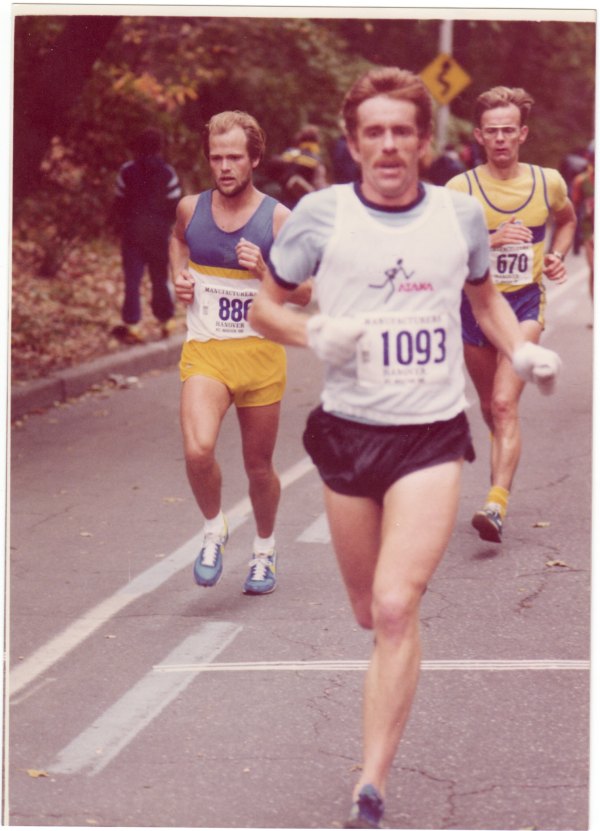
But eventually the race started and for me it flowed like a dream. I was running at a pace to beat 2:45 and it was feeling easy. When I entered Central Park with only a few kilometers to go, I turned up a gear and finished in 2:42:36.
In Central Park, with about 5 km to go and feeling the ‘power’One of our group from Venezuela featured in the next publication of Runner’s World
I only ever beat that time once, in Miami, in 2:37:27. I was quite convinced that I was eventually capable of sub-2:20, but a dusk collision with a bollard in a park and a new job that involved a lot of travel to Central and South America, placed my running ambitions on a back burner, where they have remained.
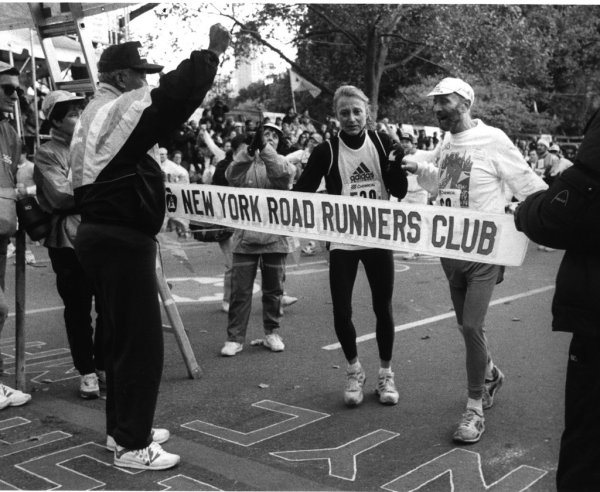
That year in New York, Alberto Salazar broke the world record and Grete Waitz, from Norway, won for the third time. She went on to win the NY marathon a total of nine times. Fred Lebow was struck down with brain cancer, but in remission, ran the 1992 marathon in 5:32, together with Greta Waitz by his side. Fred Lebow died in 1994. Later, Greta Waitz had her own losing battle with cancer and she died in 2011.
Fred Lebow and Greta Waitz reaching the finish line in 1992
These days, I don’t often hear that melody – New York, New York, but when I do, it is always the memories of that era that come flooding into my head.
Until the early 1900s, when tourism became an increasing source of income, Mundaka lived off fishing, maritime trade and some subsistence farming. Vasco was the language and still is, although most locals are now bilingual in Castellano. The street signs and menus in restaurants are in Vasco, also a section in the local newspaper.
Even today the town is small, but the original part is obvious with its network of narrow streets and alleyways. Beside the harbour is a large building with striking wooden beams and columns, bound with steel bands. Today the ground floor is a bar and restaurant and the owner told me the building was about 220 years old. He said that in Mundaka there were not many (if any) older buildings still intact, apart from the church.
Mundaka, north-west of Bilbao, on the river inlet
I had gone to Mundaka to see if I could find any trace of the Lázaga family, ancestors of my sons’ maternal grandmother, Norma Lázaga Navarro (1930-2017). She once told me that her grandfather, José Ignacio Lázaga, was born in 1865 on a ship in the harbour of San José, Puerto Rico, the family eventually settling in Habana, Cuba. Her grandfather was captured during Cuba’s war of independence from Spain and was held prisoner in Ceuta. He was sentenced to death, but was reprieved at the last minute. He rose through the ranks of Cuba’s navy and when he died in 1941, he was given a full military funeral.
I don’t know when José Ignacio’s father, José Ramón Lázaga, returned to Mundaka, but he died there in 1890. It was the grave of José Ramón that I was hoping to find, and perhaps those of other family members.
The receptionist at the hotel was curious as to what had brought a Spanish-speaking Irishman to Mundaka. I explained that I was looking for any evidence of the Lázaga family, of which at least one branch had moved to Cuba in the 1860s. I was particularly interested in anyone of the Lázaga name still resident in Mundaka. The girl immediately called one of her friends in the Ayuntamiento (Town Hall) to find out what she could. She was told that there were no residents of that name still living in the commune. Of course, there could be married female descendants of the Lázaga family living there, but due to the data protection laws, she was not empowered to reveal that information. But she was able to give the name of the last Lázaga buried in the town cemetery, a Mercedes Lázaga Goyenechea, who died in 2002, aged 75.
I headed out of the town to find the graveyard, which was on top of a hill about twenty minutes along the coast. It was a beautiful walk with glorious views of the river estuary and over the town.
The view from the steep road to the graveyard
The cemetery was isolated and very peaceful. There was not a soul around. The receptionist in the hotel had drawn a sketch of the approximate location of the grave of Mercedes Lázaga and I had no problem in finding it.
The plaque was pinned to an older grave, the stone of which was so weather-worn that it was impossible to make out other than a few isolated words. I took pictures from several angles and later on my pc I tried to decipher the words, but to no avail.
I spent some time searching the graveyard for any evidence of the Lázaga name, but without success. It seemed as if Mercedes Lázaga was the only Lázaga buried there. But the graveyard did not seem to be very old and apart from the worn stone on the grave of Mercedes, the stones were relatively new and easily legible, with the oldest being from the early 1900s.
So where were the older graves? Was there another graveyard somewhere that could have contained gravestones of the Lázagas? When I got back to the hotel, the owner explained that there had been a graveyard beside the church, but it had been removed when the new graveyard was created, and the area was now private residential property. I suspect that the eroded stone on the Mercedes Lázaga grave was from the church graveyard.
The next day I woke to a clear blue sky, warm sun and no wind. I had an excellent breakfast in the almost deserted dining room – there were only two others staying in the hotel. After breakfast, I decided to head out of the town for a long walk along the coast and perhaps up the hill into the countryside. Just outside the town I passed a pristine and secluded beach, completely deserted. It was perhaps too early for sunbathers.
From the top of the first hill I had an excellent view of the church, prominent on the headland. There was already a church on the site in the 11th century, as a document from 1071 noted its existence and recorded a donation that it made. The original church was destroyed during factional wars, being rebuilt and enlarged in the XVI century.
St. Mary’s church
I eventually came across an unpaved road off the coastal road and decided to follow it to see where it led. For perhaps thirty minutes the road steadily climbed up a narrow valley until it finally stopped at a dilapidated farmhouse. A dog started barking when it spotted me and an old man came to the door. He was exceedingly wizened and frail. I spoke to him but he did not seem to understand me. He replied in Vasco. But sign language can be universal and I indicated that I wanted to walk further and was it possible. He indicated that the farm was the end of the road, so I reluctantly returned back the way I had come. It was a pity that I could not have asked him if he could remember of any Lázagas.
Once back to the coast road, I stopped in a bar and had a beer, a light lunch and read the newspapers, before returning to explore Mundaka.
The Hermitage of St. Catherine sits on a peninsula and is isolated from the rest of the town. It was built in the 19th century on the ancient remains of a fortress. It was often used as a meeting place and as a place for quarantining victims of epidemic.
The hermitage of St. Catherine
The view across that bay to the next headland was spectacular. The day was peaceful and the water calm, but on the exposed headland one could imagine that the winds from the Bay of Biscay could be quite fierce during a storm.
Today Mundaka is renowned for its surfing and even on a relatively calm sea, there were several surfers patiently waiting for a suitable wave. The waves rise in the shape of a tube and can grow to four meters high and extend for 400 meters. In the village there are constant reminders of surfing in posters, photographs, rental shops and groups of young people, bronzed and athletic.
Surfing picture from a local brochure
The sea was remarkably calm that day and there was no activity in the harbour to shatter the glass-like surface of the water. There were a few men fishing from the wall. There was no evidence of the fishing fleet and maritime trade that used to exist, just pleasure craft.
Looking from the harbour to the bayAnd looking back towards the town
Before I came to Mundaka, I had ambitions of accessing the church records and proving the veracity of what I had been told of the family history. But I had read several accounts of how difficult it was to get access. The records are not centralized as they are in many countries and one is quite dependent on the willingness to help of the parish priest. When I saw the locked gate and the iron bars around the church, my thought was that the priest has bigger and more pressing problems that helping amateur genealogists. Perhaps one day in the not too distant future the Spanish church records will be centralized and available on the internet, as they are in many other countries.
The locked and barred church
When I returned home, I documented what I had found in Mundaka and sent the photographs and a local tourist brochure to Miami, to my sons’ grandmother. I am glad that I made the effort to go to Mundaka when I did, for she sadly died suddenly, earlier this year.