First Taste of Freedom

I never much enjoyed my grammar school days, and when the opportunity came to escape the drudgery, I grabbed it with both hands; I was like a thirsty man being offered a cold pint of Guinness on a hot summer day. My new-found freedom was delicious.

Before long, I started to study towards an initial Quantity Surveyor qualification, via a correspondence course with the Royal Institute of Chartered Surveyors (RICS). I was enthusiastic about the subjects and I was free to proceed at my own pace. If I was not ready to take the exam the next year, then the year after or whenever. And in the meantime, I was supporting myself and contributing something to my parent’s household. I was quite content.

And my evenings and weekends were filled with sports, music and girls.

At work, my colleagues rented the gymnasium at the Intermediate School in Coleraine for one night a week, to play indoor football. And in the summer months, we participated in a team in the local works league. Through the winter months, I played rugby with the Coleraine II team, and in my last summer, with the Coleraine Cricket Club.

Soon after finishing school, I joined Bill McKeown’s group, playing drums. We were five – piano, saxophone, guitar, drums and singer. We played at hotels around the north Antrim coast and even had a six week summer season at the Lismara hotel in Portrush, playing six nights a week. I earned much more drumming than at Quantity Surveying, but unless one has real talent, music was not steady work.

When I could, I used to go to one of the local dance halls on a Saturday night: to the Arcadia in Portrush, the Strand in Portstewart, the Boat House in Coleraine and sometimes further afield. If a girl let me walk her back to her house, I almost always managed to miss the last bus, and had a long walk home, often in diabolic weather. It once happened to me in Ballymena, some thirty miles away. I walked several miles before I managed to thumb a lift home.

The last time I saw my mother, not long before she died, she told me that she had never fallen asleep until she knew that I was safely home. I was never aware of my having caused her sleepless nights.

It was Raymond de Zeeuw who had given me the idea of a career in Quantity Surveying. Knowing that he was the leader of the Ballywillan Lifeboys, I offered to help him in any way that I could. They met every Saturday morning. The Lifeboys were the junior branch of the Boy’s Brigade, as the Cub Scouts were the junior branch of the Boy Scouts.

So I taught the boys much of the military discipline that I had learned at Army Cadets. And at the end of the year, they demonstrated their coordinated marching capability in front of their parents and friends at the annual ‘demonstration’. They were brilliant.

I organized football games outside the Church Hall, before and after the formal Lifeboy agenda. We even had a ‘match’ with Portrush Primary School. We lost, but it was great fun.

Raymond once organized an early-summer cruise on Lough Neagh and many of the boys came along.
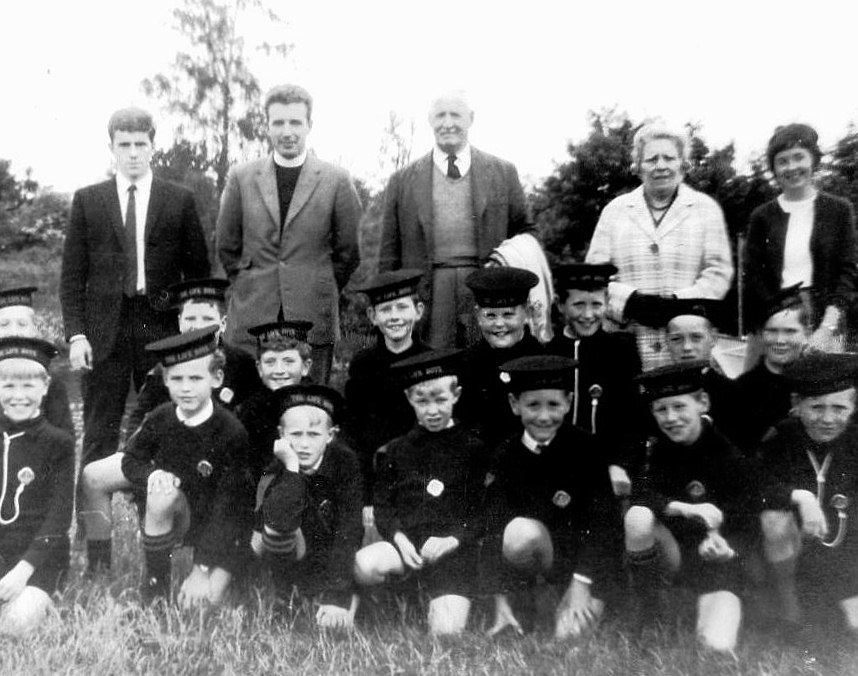
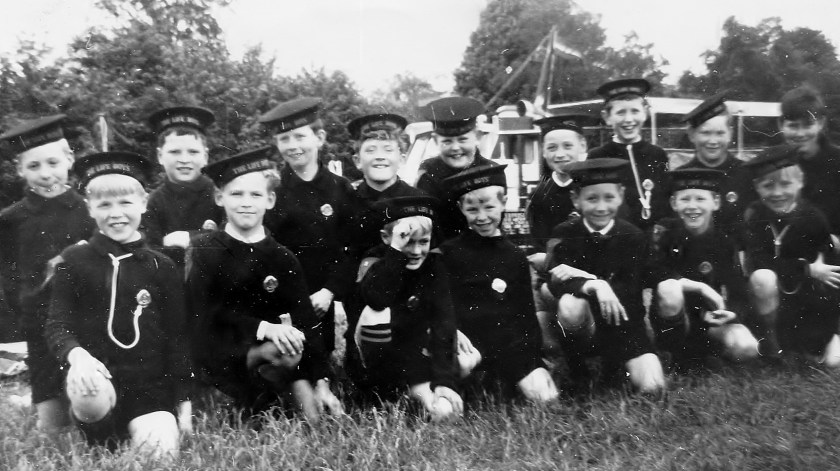
The Lifeboys, later to be known as the Junior Boys Brigade, on the outing to Lough Neagh in the summer of 1963. In the back row – Yours truly, Rev. Jim Frazer, Brigadier W. W. Boggs, Mrs. T. Stewart (pianist) and Josephine Dallas
And the boys. In the back row – Ian King, Stephen Wilson, Colin Stewart, Nigel Stewart, Victor Sinclair, Alan Cunningham, Ivan Adams. Trevor Martin, Milton Stewart. And in the front row- Archie McNeill, Raymond McNeill, Brian Caldwell, John McNeill, Norman Adams, Peter Stewart and Norman Brewster

The photographs were taken by Raymond de Zeeuw, the leader, and it was Josephine Dallas who recently sent them to me, along with the names of the boys.

By now, most, if not all of the boys will be collecting their pensions, some with families and some perhaps with grandchildren. Sadly, two of them have passed on: Alan Cunningham some years ago, and Archie McNeill, within the past two weeks. They have passed much too soon.

In a field beside Ballywillan Church, one beautiful mid-summer evening, I organized an extra-curricular football game. As usual, Raymond led one side and I led the other. Somehow, I managed to slice my knee open on a sharp stone or a piece of glass and ended up needing several stitches. I still have the scar.

That proved to be my last involvement with the Lifeboys, for soon after, I left for Canada on what has turned out to be the first stage of a journey without end.

I have never lost my taste of freedom.

Dalzell & Campbell

In my fifth year of grammar school, 1962-3, I felt quite lost. Having abandoned my ambition of a military career, I had no plan ‘B’. The school assumed that I would go on to a university, but I knew that there was no way my father could have contributed to my support, even if I were to obtain some form of scholarship.

In that era, there was no career advice available at my grammar school. Perhaps some of the teachers took their successful pupils under their wing and coached them. More likely, the parents were the guides. In my ‘A’ class, most, if not all, of the parents fitted into three categories – professional, businessmen or farmers. My parents were not able to advise me and I had no uncles or aunts to lean on.

After the ‘O’ level exams in June 1963, a good friend, Raymond de Zeeuw, suggested that I might want to consider his career of Quantity Surveying, for which GCE ‘O’ levels would suffice. It was a form of professional apprenticeship, with part-time study and culminating in a qualification – R.I.C.S. (Royal Institute of Chartered Surveyors). As he always seemed enthusiastic about his work, I decided to get an interview with Crofton Dalzell, the principal of Dalzell & Campbell, Raymond’s employer.

I confess to having been taken aback with Crofton’s first question – ‘What religion are you?’. Perhaps it was just a standard statistic required for governmental reporting, but I suspect that if my answer had been ‘Catholic’, the interview would have been soon terminated. Is the situation different today? I would like to hope so.

In any case, I appeared to have impressed him sufficiently, and soon after, I received a job offer of £8 per month, subject to my passing the GCE exams. I started work the following Monday. And my mother informed me that I would have to contribute £2 a month for my board!

Dalzell & Campbell was a partnership between Crofton Dalzell and his son-in-law, the architect, Noel Campbell. Crofton was a dapper little man, he looked very fit, and reputedly walked along the beach from Portrush to the White Rocks, some four miles in total, every morning before work. I know little about Noel Campbell, except that he drove a Jaguar, at one time was a drummer, was married to Crofton’s daughter, and designed my parent’s house at Carnalridge.

If you know little about a Quantity Surveyor’s work, I will attempt to give you a very brief description.

A Quantity Surveyor stands between an architect and the client. The Quantity Surveyor’s ‘bible’ is the Bill of Quantities (BOQ), which contains the specification, the quantity and the unit cost of all the items involved in the contract. It is the basis for any variations or dispute regarding the original contract.

My first year as a Junior Quantity Surveyor was spent extending and summing the measurements of other more senior staff and producing physical Bills of Quantities (BOQ). We had no calculators in that era, so all calculations had to be made by hand. And don’t forget that it was before monetary decimalization and metric measurement. Try calculating by hand an area of 9 feet 7 inches by 21 feet 4 inches or 1279 cubic yards at £2-17-11 per yard!

For Bills of Quantities, we had no copy machines or printers as we know them today; they were not yet available. We had stencils that were thin sheets of paper, coated with wax. The Bills of Quantities were typed on the stencils. I wrapped the stencil around a Gestetner roller and produced as many copies as were required. I then had to collate the pages, drill holes and bind the final product with ribbons.

It was not so long before I progressed to measuring earthworks, landscaping, asphalt, kerbs etc. And most weeks, there were visits to sites to measure actual versus the BOQ, and calculating progress payments. I was quite happy in my work.

And there was a great camaraderie in the office. In particular I remember John Dalzell, George Darragh, Stuart Barnes, Jim Morrison, Tom Clarke, Raymond De Zeeuw and our Chief Quantity Surveyor- Brian Watson, a little Scot. I wish that I could recall all the other names.

Sooner, rather than later, I moved on, in my case to Canada. But I learned an important lesson at Dalzell & Campbell, that I have never forgotten, and that is, no matter how lowly the job, do it well.

As in this recording of Charley Pride…

I wanted to be a soldier

It was September 1961 when I returned for my fourth year at C. A. I. I had already decided that I aspired to an army career, as an officer graduate from Sandhurst, in Surrey. The physical outdoor life, the sports, and the opportunities to travel very much appealed to me. I had already received a package of information from the recruitment office and in it was suggested that I join the local Army Cadet Force. One Friday evening in early September, I set off for the Territorial Army Barracks in Coleraine.

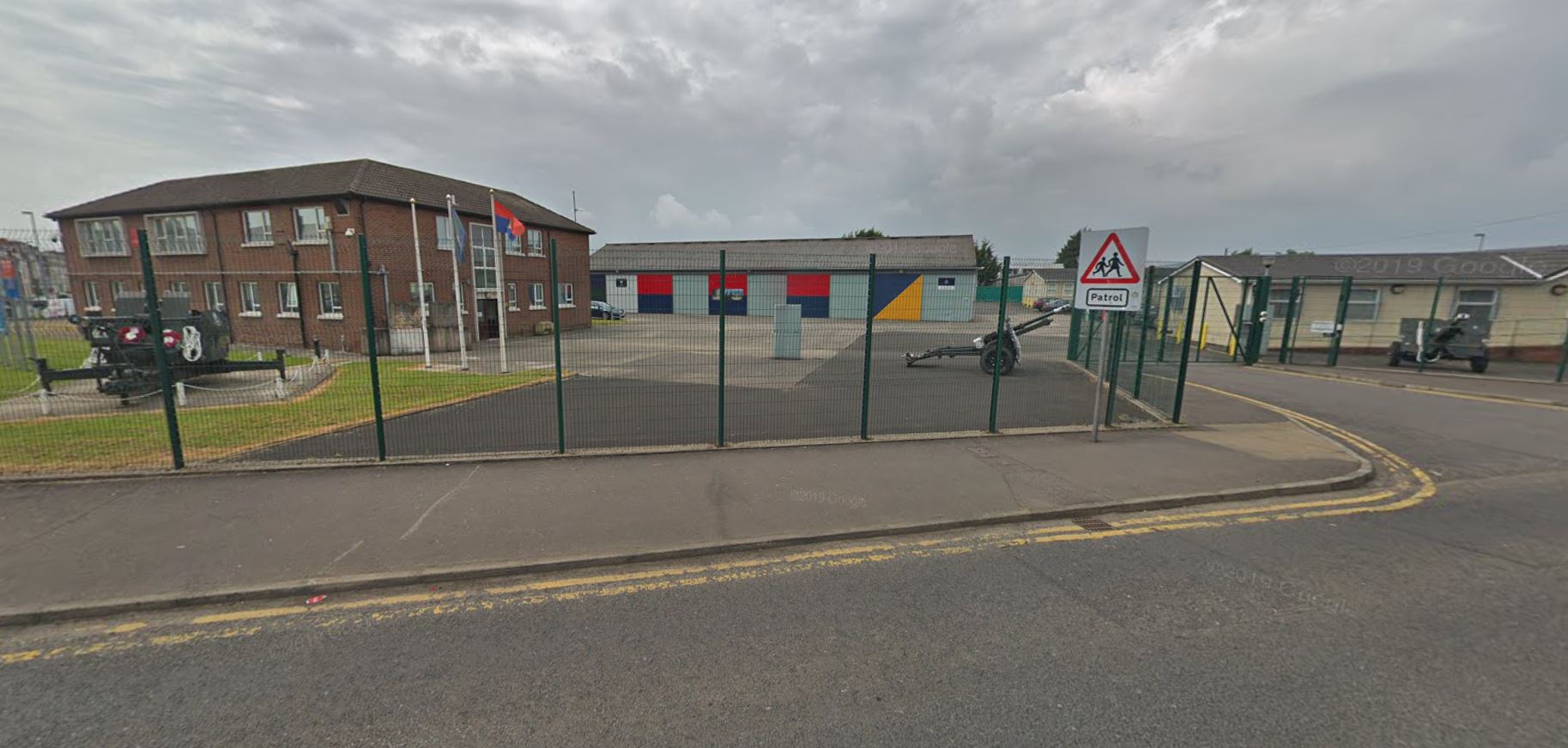
The Army Reserve Centre in Coleraine, formally known as the Territorial Army

It was there that I met Captain Kitson, who was responsible for the local Army Cadet Force. I remember him as a slim and very well spoken man and I was immediately quite inspired by him. He noted all the necessary particulars and we agreed that I would return same time the following week to collect my uniform and join the Force.

My father was not greatly enthused by my career aspirations. He had survived seven years of war, had seen many of his friends die, and did not wish that life on his eldest son. He would have very much preferred my going to agricultural college and then joining him in his farming business. But as much as I loved the soil, the lure of travel and seeing the world prevailed. Dad reluctantly kept his peace.

The uniform consisted of everything except underwear, plus a beret, boots and a heavy greatcoat. that reached almost to my ankles. In cold wintry nights, the greatcoat was most appreciated. The shirt and trousers were made from a heavy khaki material that initially I found most itchy, but in time I became almost accustomed to it.


On my first full night at the barracks, we were lectured at length on the uniform, how to dress, what never to do, how to polish our boots and clean our brasses. we were warned that first thing, every night, we would be inspected and reprimanded if fault was found. Our Sergeant Major was a tough little Irishman, a long-serving soldier whom I shall call Jerry, for I cannot recall his full name. When not on duty, he was a chain-smoker and always stank of nicotine. He has an extremely loud and raucous voice and when he called ‘Atten shun’, windows in nearby houses rattled.

After inspection, we spent a lot of time on drill, eventually including a rifle. If you have ever observed a squad of soldiers on parade, performing complex manouvers, you perhaps can understand how much practice is required to train a group of individuals to act as one. And most evenings we moved to the rifle range to practice our shooting skills, using .22 rifles.

In the summer of 1962, we went to the Ballykinler Army Barracks, in County Down, about 12 kilometers SW of Downpatrick. We were met at the station in Belfast and taken in Army lorries to the camp. For a week we were treated as any other soldier, with all the disciplines and obligations. It was the first time that I had been away from home. I recall two memorable days.

Ballykinler Army Barracks, as it is today

The first was when we were taken in a truck and dropped off in the countryside, with maps, bivouacs, and enough food and water for a day. Our objective was to decide where we were and in 24 hours to find our way to a second pick-up point quite far away, on the other side of a lake. To complicate the mission, we were to leave no trace of our passing. Our officer, Captain Kitson accompanied us, but he made zero effort to influence our decision making. It was a character enhancing experience and we all learned a lot from having to disguise our overnight camp.

The second memorable day was when we were split into two platoons, one to defend a hill and the other to attack it. I was with the latter. We were armed with .22 rifles and a few blanks. We decided to have a frontal attack, with two of us, another guy and myself, crawling a long way through scrub to attack from the rear. Unfortunately, the defending force spotted the frontal attackers, some blanks were shot and the ‘attack’ was foiled.

On our last night at the camp, we went to Newcastle, the nearby beach resort. We had a few hours to ourselves. Most of us went up the mountain – Slieve Donnard; a few joined me in unsuccessfully looking for girls.

During the long summer break, something changed in me. I spent much of the holidays working on the farm, feeding and watering the livestock, clearing, cleaning, painting: I was already quite strong and could do most of a man’s work. In return, my father gave me gave me generous pocket money. Most evenings I went down to Portrush to meet and mingle with friends. The summer season was in full swing and there were lots of girls on holiday also wandering around. I relished my new-found freedom, to come and go as I pleased.

Eventually that summer I realized that I would have very little freedom to come and go if I were to join the army. Whether one agrees or not, orders have to be obeyed, without question. That would not be a problem if I agreed with the direction. But what if I didn’t? And I was reminded of the quote – ‘Lions led by donkeys’.

When September came around, I returned the uniform and resigned from the Army Cadets.

In 1985, some 23 years later, for one year I found myself living at Harvard Road in Sandhurst, and passing the military college every day.

What goes around, sometimes comes around…

Definitely not three of my best years…

Most of us have come across them, often rather uninspiring people who confess as to how much they loved their secondary school years – their supportive teachers, the absorbing subjects, their wonderful friends etc. ad nauseam. Of course they probably never failed to present their completed homework, they were always in time for class, they never had to be reprimanded, they were perfect students. I suspect that their parents had a great part in supervising and aiding them in their homework. In my secondary school years, I was very far from being an exemplary student.

I had been quite happy and successful during my primary school days at Carnalridge. I had a caring and inspirational headmaster and teacher – James Bankhead. In those days – 1952-58, Carnalridge was a small country primary school, less that 100 m from my from door.

In my last year there, there were only four of us attempting the 11-plus exams – David Hunter, Michael Moore, Joan Gurney and me. The 11-plus examinations were a test of mathematics, English and IQ and they were held in Coleraine. Depending on the results, one went to a grammar, a technical or a secondary school. For most of us, the 11-plus result dictated our future careers.

Known locally as C.A.I. or The Inst, Coleraine Academical Institution was founded in 1860 and had a large boarding facility until 1999, with extensive playing fields. In 1958, it was to this institution, as a day pupil, that I was sentenced. As a result of my having attained a decent mark in the 11-plus examinations. I was allocated to the ‘A’ class. There were four classes – ‘A’ through ‘D’, each with 30 pupils.

But the move to C.A.I was rather a shock to my system. Firstly, there was my having to catch a bus to Coleraine – to miss it was to be late and subject to punishment. I was never late. Then there was what felt like a long walk in all weathers, from The Diamond in Coleraine, up the Castlerock Road to the school. In my first two years I attended the Model School, across the Castlerock Road from the main C.A.I. buildings. The Model School had been recently taken over by C.A.I. To me, the Model School seemed like an reluctant survivor from the very early days of Charles Dickens. It no longer exists, having been demolished and replaced by yet another housing estate.

Early days at CAI

I was in no way prepared for the curriculum. My poor parents had only very basic education to age 15 and subjects like Latin, French, Physics, Chemistry, Biology, Mathematics etc. were foreign to them. I had no educated uncles or aunts to lean on and frankly, I struggled. Much of the subject matter made absolutely no sense to me.

And I did not respond well to the discipline that they tried to instill in us. Nothing will ever convince me that, having been detained after school for a minor misdemeanor and having to write 500 times, ‘I must not talk in class’ or ‘I must remember my school book’, has made me a better citizen. Nor has having been caned across the hand or the buttocks. There were several teachers that, were they to be alive today, I would happily punch. In those days, corporal punishment ruled.

As a day pupil, I was free to go home at the end of the day. It was not so for the young boarding school pupils. I never envied their lives, separated from their families for months on end. I feel certain that there was an element of bullying of the younger students by older pupils and prefects. If the various churches have had to face up to a multitude of scandals, I suspect that CAI has had some of its own ‘skeletons in the cupboard’.

But there was one really positive side to my secondary schooling – the sports; C.A.I. was a leading rugby school. I had never before seen rugby – we had no television in those days, but once I was involved, rugby very much appealed to me. Sports at C.A.I. were compulsory and only excused if subject to a doctor’s note. And in the summer months, there was cricket; in the morning break, lunch and after school, I could usually be found bowling in the cricket nets.

C. A. I. with its extensive playing fields

I will never forget my first exposure to rugby. It was in my first days at my new school and there was a schools cup match. We were excused classes to support our senior team and it was then that I first heard the school’s war cry:

HEE-YAH, HEE-YAH, HEE BILLYWANGA, HEE-YAH HEE-YAH HA

HUNKA, HUNKA, HUNK BILLYWANGA, KRA KRU KRA

RICK, RICK, RICKETY RICK

ISKY ISKY AYE

HEE BILLY WANGA, TING TONG TANGA

C.A.I.

C-O-L-E-R-A-I-N-E

The war cry was written after some CAI boys watched the All Blacks perform their famous Haka, prior to playing Ulster in the winter of 1924-25.  The CAI war cry was first heard in public on 17 March 1925, at Ravenhill, now the Kingspan Stadium, when CAI won the Schools Cup.

So, for my first three years at CAI, I struggled through the junior school, sometimes with ‘an excellent mark’ when I was interested in the subject, at other times ‘must try harder’ prevailed. At the same time, I was very much involved in the sports.

But I was definitely never an exemplary student.

An update on the Cape Town Drought

It was on May 7 last year that the combined Cape Town dams held only 20.9% of their maximum capacity. The city was restricted to a daily allowance of 55 liters per person, the supermarket shelves more often than not were devoid of drinking water, and we were only days from the mains supply being switched off and an emergency situation declared.

And emergency supplies meant 20 liters per person to be collected in your own containers from stand-pipes somewhere in the neighborhood. But nobody seemed to know where the stand-pipes would be located and how we would identify ourselves. It threatened to be chaotic. In a modern society, such as is that of much of Cape Town, can you imagine trying to cope with cooking, washing, flushing toilets etc. with so little water?

But nature relented and the rains started to fall, and month by month the dam levels rose, until they peaked on October 8, at 76.2% capacity. The immediate emergency was over, but not quite; the rainfall was most welcome, but it was still below average. Personal consumption was increased to 105 liters per person.

In our apartment building, we have recently had installed individual water meters. Once a week, first thing Saturday morning, I note our consumption, and it is constantly 110-130 liters per day, well within the guidelines. Since the emergency, we have been very conscious of not using more water than is absolutely necessary. I suspect that we will now always treat access to potable water as a valuable privilege, wherever we are.

Cape Town is very much a tourist destination and it was very much hurt by the negative international publicity regarding the drought. I find it encouraging to know that one of the local hotels, Radisson Water Front, has eliminated its dependency on local water supply, and has constructed a desalination plant to supply its own needs. Perhaps others will follow their example.

As part of the water augmentation plans, the Western Cape government has commissioned three desalination plants along the coast, but with little success. They take water directly from the ocean, but have been hit by the natural occurrence of algal bloom in False Bay and recent contractual disputes. It seems that we will continue to depend on natural rainfall.

Today is May 18 and the dam water levels stand at 45.6% of capacity. And light showers are forecast for tomorrow.

As an Irishman, I never thought that I would ever say ‘May it rain… ‘.

What’s in a name?

My parents named me Leonard Douglas – Leonard after my paternal grandfather, and Douglas, my mother’s maiden name.

The Douglas are an ancient Scottish clan and in the late 1600s, one of the Douglas soldiers settled in Glenmanus, a tiny rural village just south of the North Antrim port of Portrush. The descendants of the original Douglas remained in the village and farmed the land until recent times. Two of my cousins still live in the village, but most of the land has long been sold and has disappeared under a modern housing estate.

Until I migrated to Canada in 1965, I was only known as Leonard, although at grammar school, I had the nickname of ‘Blackie’. Indeed one of my good friends from my schooldays, Hugh Brewster, still refers to me as ‘Blackie’.

immigration card

Soon after I arrived in Toronto, I found myself being called Len, and that name has stuck ever since. I don’t recall how my name got changed, but I suspect it was something to do with my rugby mates. In any case I prefer to be called Len; Leonard now seems rather formal to me.

One night in 1974, I went to my favourite jazz club in Sydney, The Basement. I was quietly sitting in the shadows at my usual table, sucking on a bottle of red wine and listening to the music, when I was invited to join an attractive girl and two guys at a nearby table. I felt that it would have been rather rude of me to refuse the invitation, so I moved to their table. They thought that I looked very sad and needed cheering up, when I was actually quite relaxed and content, lost in my thoughts.

The introductions were made and everyone seemed to be in good humour.

‘I confess that I have never liked the name Len’ said the girl. ‘Don’t you have another name?’.

‘My second name is Douglas, but nobody would know me as that’.

‘But that is so much better. I love that name. I am going to call you Douglas’.

I never thought that we would meet again, but we eventually did, and for our next few years we were a couple; in Australia, across the Pacific, through Central America, in California and across the U.S and Canada, and finally in England, where we eventually parted. At times, I felt as if I was leading a double life; to my own friends and in my work, I was Len, and in her social life, I was Douglas. Of course my parents and siblings still referred to me as Leonard.

I don’t remember when the airlines first started to insist that a reservation had to be in our passport name. Certainly after the New York 9/11 attack in 2001, it was mandatory, in my case the name had to be Leonard Douglas Blackwood. A booking in any other than that exact name could result in boarding being refused. With the expansion of internet booking and with travelers keying their own data, inevitably mistakes occur. And most, if not all airlines, charge for name corrections.

Capture

Apart from air travel, until recent times I remained as ‘Len Blackwood’, until my UK bank suddenly demanded that I prove my identity with a notarized copy of my passport, and proof of address. The fact that I had held accounts with the bank for more than 30 years was irrelevant: I was a money laundering suspect until I proved myself innocent. As I was not in the UK at the time, it was an inconvenience, but eventually all was resolved. At least I hope it is. The banking bureaucratic wheels can turn ever so slowly.

And it is not just in banking that passport names can be required. In recent years I had keys of a French rental property sent to an address in Sweden. Unfortunately they were addressed to Len Blackwood and my ID was in my Leonard name. Everything else matched, but it took a long telephone discussion to a head office responsible to have the package reluctantly released.

I suspect that all the checks by governments and business serve only to keep honest people honest.  I can’t believe that they are much of a deterrent to a criminal requiring a false passport or a proof of address.  Today, fingerprint and iris recognition are proven technologies, identifying us as unique individuals.  It is hopefully only a matter of time until the new technology is adopted by governments and financial institutions and passports and bits of paper are ancient history.

I look forward to that day.

The Elliotts of Glenmanus

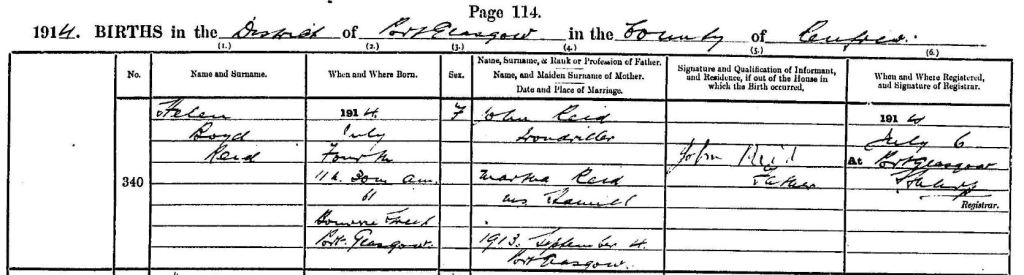
Helen Boyd Reid was born in Glasgow in 1914, of parents John Reid and Martha Hamill.

Helen never knew her father. On 31 July 1918, he was wounded in action, with a gun shot to his right thigh, in the last months of WWI. He was evacuated on the HMAT Warilda, when it was torpedoed by the German submarine, UC-49, between Le Havre and Southampton. The ship sank with 123 of 801 lives lost. John Reid was missing, assumed drowned. I won’t attempt to recount the tragic sinking- you can read about it by clicking on https://www.awm.gov.au/articles/blog/ss-warilda-troopship-hospital-ship-ambulance-transport-wreck

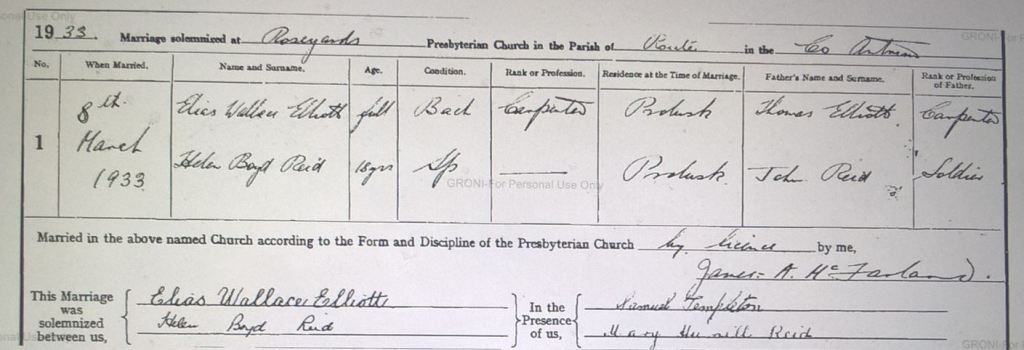
With her father dead, Helen’s mother could not afford to live in Scotland and they moved back to Ireland and lived in a farmhouse between Bushmills and Ballycastle, near her family. In 1933 Helen married Elias Wallace Elliott of nearby Bushmills.

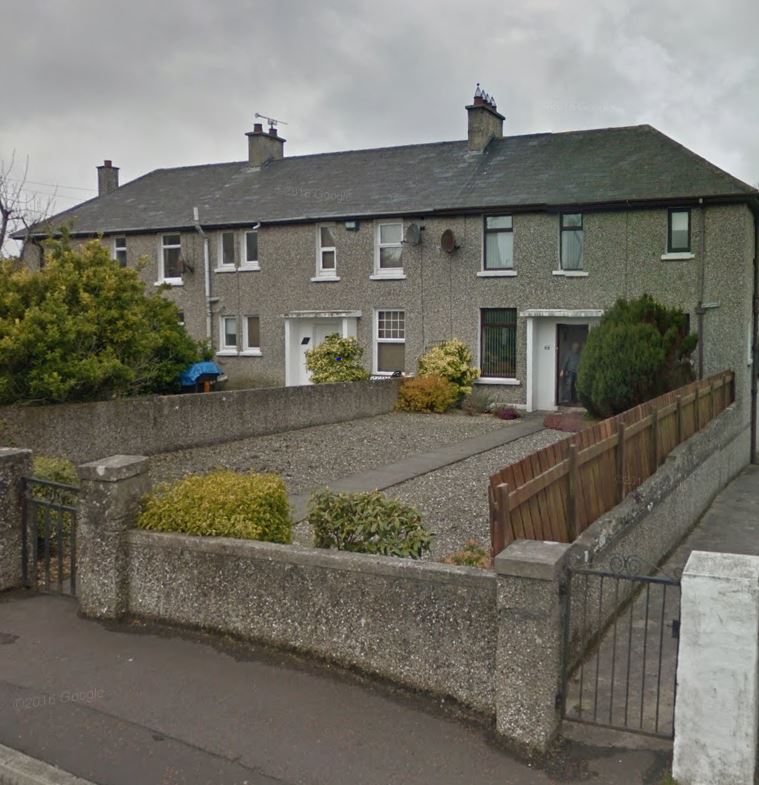
The Elliott family lived in the middle of the three row houses in the following photo. To the left were the Stuart family and to the right was that of Dan Taggart.

To the left of the houses and across the lane into Glenmanus village, were the old Irish cottage and farm buildings of my great-uncle Bill Douglas and his sister, Letitia.  To the right was the saw mill of John Rainey and Dhu Varren dairy.  Opposite was John Rainey’s construction yard.

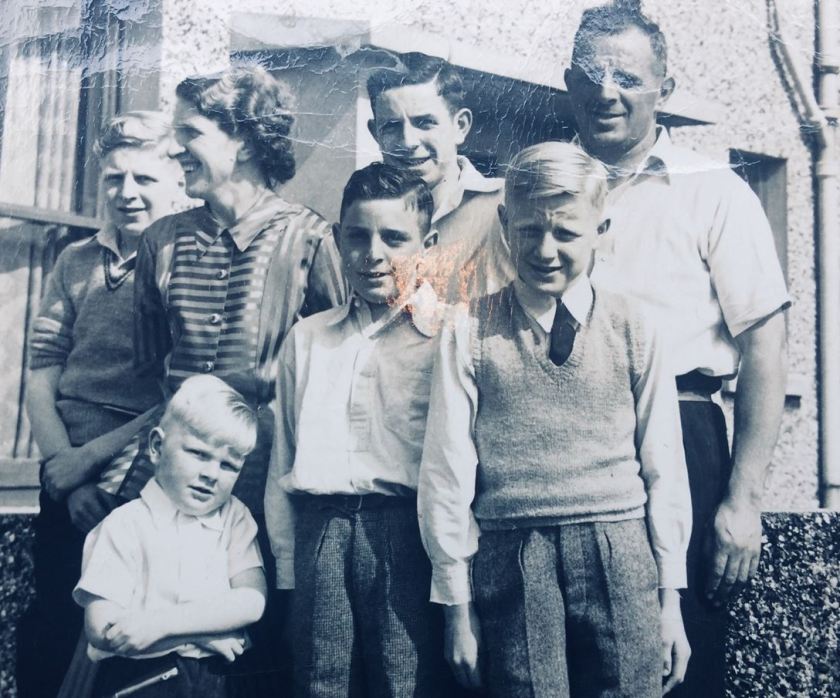
The Elliotts in 1952 – back row – Tom, mother, John and father – front row . Malcolm, Maurice and Pat

Mrs Elliott’s youngest son was Malcolm, born soon after I arrived on the scene.

For my first five years, my parents lived in a little wooden hut, less than 1oo m up the road from the Elliotts.  When I was very young, about three, my mother spent six months in a sanitarium in Derry, struck down with tuberculous.  Our neighbour, Mrs Wilson, looked after me, for in those days, my father worked all day on his fledging farm, and every night played with his dance band in Portrush.

I suspect that Mrs Elliott helped out in looking after me, for I can clearly remember being in her house and clambering up the stairs to the landing and being picked up and carried back down.

After my parents build a house and moved his poultry farm to Islandflackey, my contact with Malcolm was limited to the primary school at Carnalridge and youth events at the nearby Ballywillan Church.  I had no relationship with Malcolm’s brothers, for they were much older than we were, but every Sunday morning the whole family used to troop into the church, to their pew in the corner of the western transept.  I always sat with Trevor Gaston and David Adams at the back of the nave.

During our last summer, before moving on to secondary schools, I arranged a blind date for Malcolm, so that I could be with my first love.  We were eleven years old at the time.  We met outside John Rainey’s house, across from the road that leads into Glenmanus village, and we walked up the long lane that led past Caldwell’s farm, holding the girl’s hands.  Unfortunately one of Malcolm’s brothers spotted us, and that was the end of our romantic excursions, albeit not for long.  We were soon back in action.

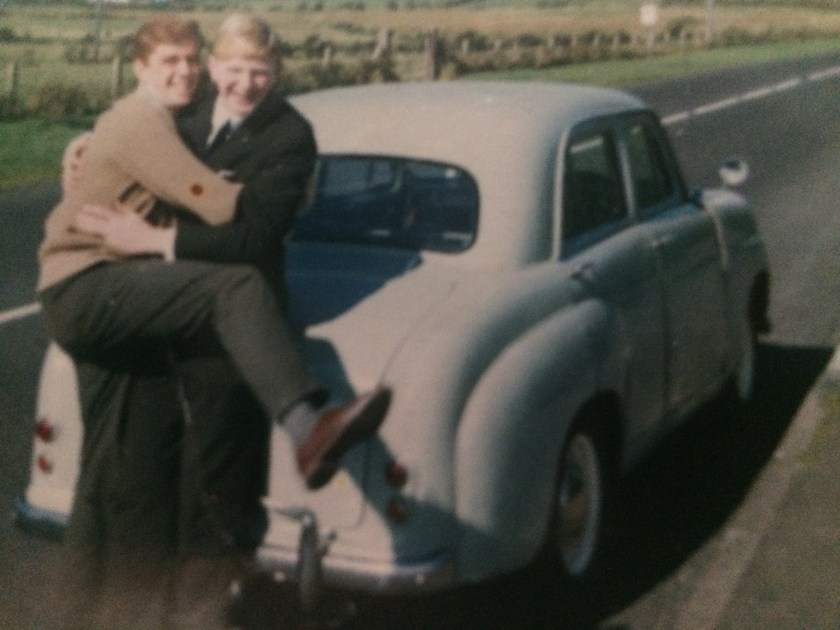
Two young lads outside my parents’ house, but I have no recall of the occasion

When I was eighteen, I left for Canada, and apart from seeing Malcolm during one visit to my parents, I lost contact with the Elliott family, although my father used to keep me well informed.  I believe that Tom was an accountant; John was a joiner; Maurice was a mechanic, later to be a blacksmith; Pat was also a mechanic – I bumped into him one evening that I took my father out to dinner; and Malcolm was a painter.  When he was an apprentice, Malcolm painted the sign for my father’s ‘Greenacres Poultry Farm’.

The only other contact I had with Malcolm was at at a reunion of the Ballywillan Boys Brigade; I think it was the 50th reunion, in November 2004. And I heard no more from him until 19 December 2017, when  I was in a bar in Alicante and he sent me an email.  He had come across my blog and we have been in contact ever since.  Sadly his father died in 1982 and his brother, Tom, died in recent years.

Macolm recently sent me the following photographs of his mother, his brothers and his own family. They are photos to be treasured.

Mrs Elliott birthday
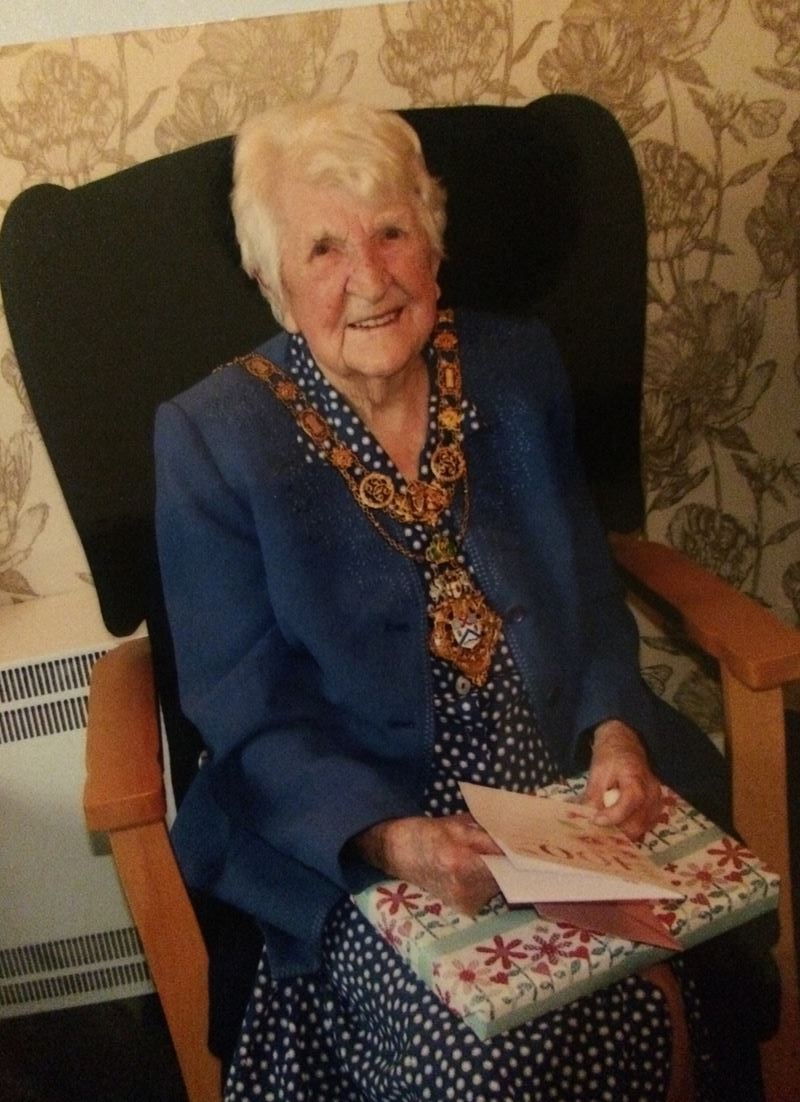
Mrs Elliott on her 100th birthday, not long before she passed on
Birthday family
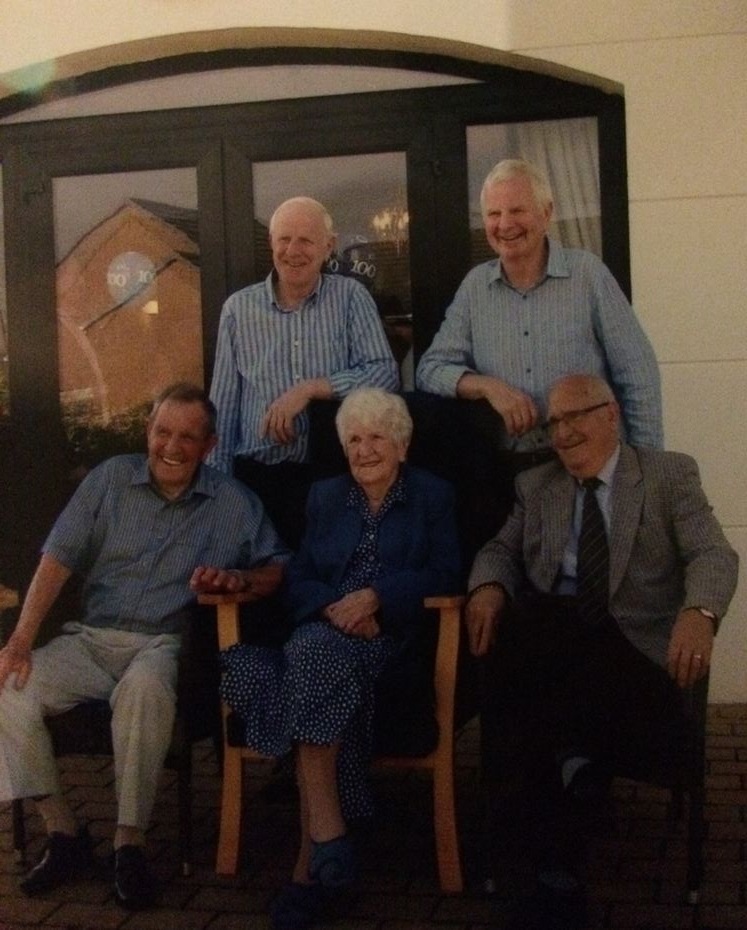
And with her four surviving sons – John, Pat, Malcolm and Maurice
Maurice Elliott
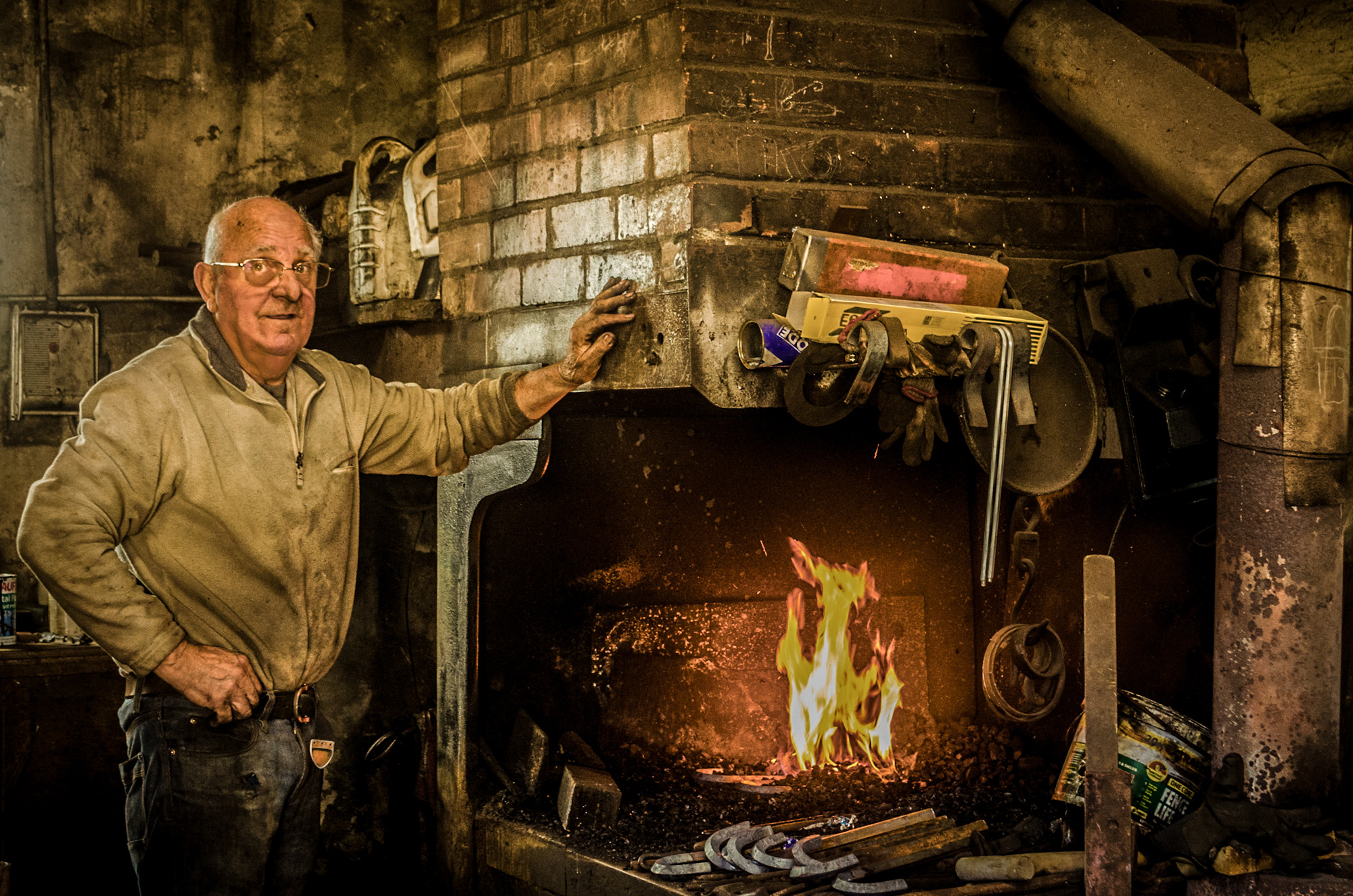
Maurice the ‘Smithy’
Malcolm dancing
Malcom and Jean jiving at the Portrush Golf Club
Malcolm's family
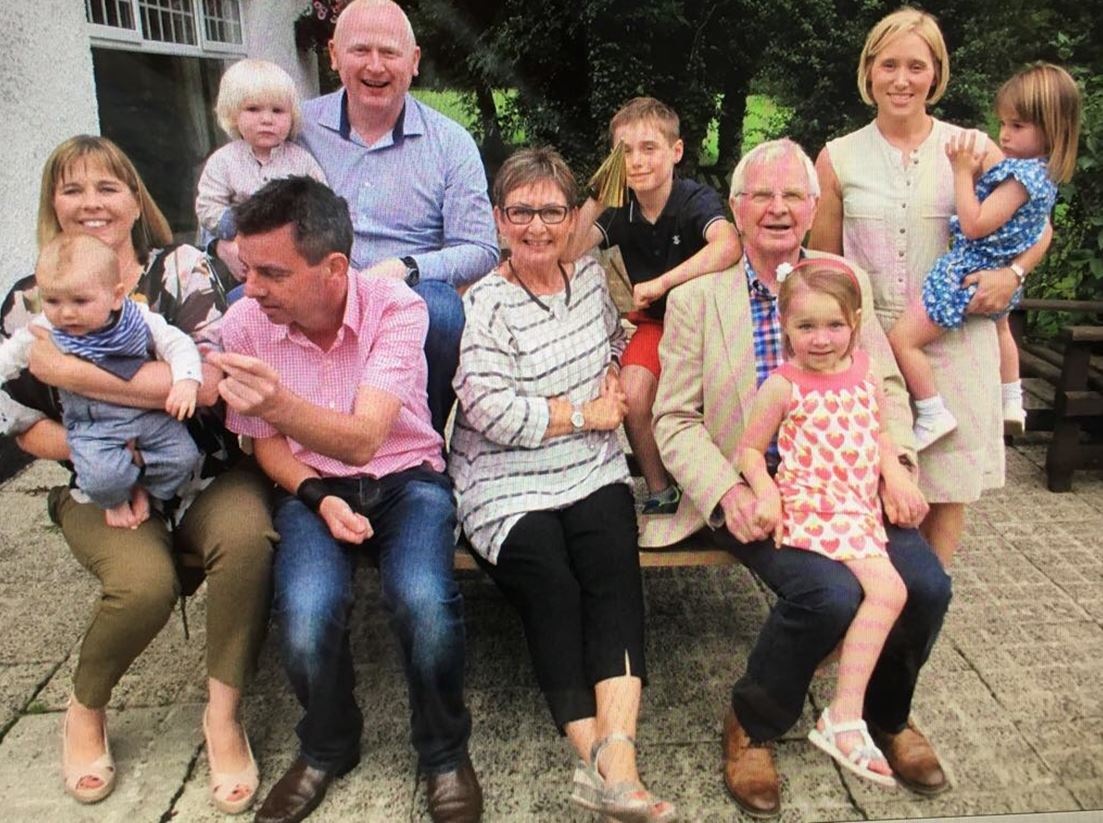
Malcolm and Jean with their family

When we were teenagers, we used to think that Malcolm looked a bit like Adam Faith. I could not resist including an Adam Faith recording to remind me of those crazy days.

48358019_2005808402787705_5916000790891200512_n
Cheers Malcolm

The Deepsea Stavanger

Our balcony in Cape Town faces due west, and in the summer months, from early to late afternoon, it is just too hot and much too bright to sit out there.  But once the sun nears setting, it is almost idyllic to sit and watch the buildings, the trees and Signal Hill slowly transform from detail to silhouette.  And then, one by one, the stars appear.

But last night was different.  Suddenly, in late afternoon, a huge deep sea drilling rig appeared just off-shore.  It was the Deepsea Stavanger, a Norwegian rig.

The Deepsea Stavanger was built in 2010.  It has a tonnage of 43,708, with an area of 119 m by 97 m, and a draught of 17 m.  Recently it has been drilling at a depth of more than 1400 m off Mossel Bay, about halfway between Cape Town and Port Elizabeth.

In 2014 a similar drilling attempt had to be abandoned; the rig that had been contracted was not capable of withstanding the severe storms and strong currents, conditions in which the Deepsea Stravanger is built to excel.

IMG_3749

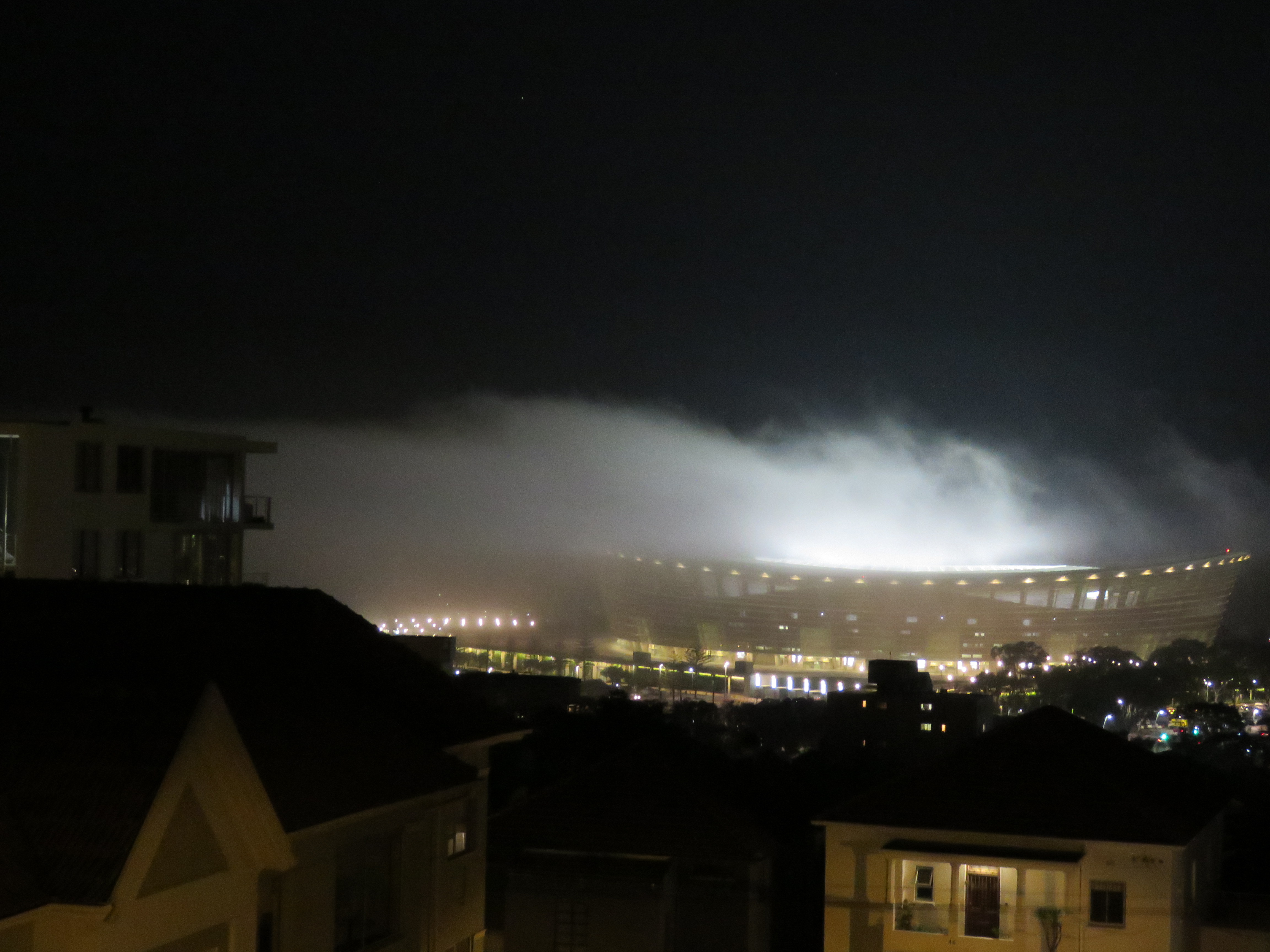
When we looked later in the evening, a fog was rolling in and the rig was hidden from view.  The fog made Capetown Stadium look as if it was on fire.

IMG_3753

Today we walked along the seafront and the Deepsea Stavanger looked really enormous.

IMG_3763

Then in late afternoon, the lights on the rig were switched on, and it started to slowly move westwards.  And from my desk, some hours later, it is a small receding light on the north-western horizon.

IMG_3765

Oil experts are confident that South Africa will soon be able to announce the discovery of a major new energy field.

Let’s hope that they are right…


Just one of those days

22 January 2019

Last year, the news that Cape Town was on the verge of running out of water was global.  The tourism and the farming sectors were badly impacted.  When the winter rains eventually arrived on May 5, the reservoirs were down to 20.9% of their capacity, anything under 10% being largely inaccessible.  Fortunately, the winter rains were generous, particularly in the early months, and the reservoirs peaked at 76.2% of their capacity on October 8.  For this year the threat of drought has receded.

But for how long has the problem gone away?  Cape Town is using about 0.2% of its reservoir capacity every day or 6% every month.  The reservoirs are currently at 61.7% of capacity, so without fresh rain, there is a little over eight months of available water.  If there is not normal rainfall this winter, the emergency could be back on next year

From reports I have seen, the average American uses more than 300 liters of water per day.  During the peak Cape Town drought last summer, we had to limit ourselves to 50 liters per day, increased to 70 liters when the winter rains arrived, and recently increased again to 105 liters.

Our small building in Cape Town has only six apartments; two on each of three floors, with a secure parking garage in the basement.  Our apartment is on the top floor.

Now we know how much water we were consuming as a building, but we had no idea if our individual apartment conservation efforts were adequate.  So the building committee decided to install individual water meters in each apartment, and a plumbing company was contracted to carry out the work.

And on a beautiful Cape Town morning on 15 January at 09:00, a plumber and his mate started work.  Shortly after, they found that they did not have the right meters, and off they went to plumbing suppliers to source the correct ones.

When they returned, they started work on the first apartment, only to find that the pipe inserts that they had were not the right size.  So back to the suppliers they went once more, but this time with no luck.  They could not find the required size.

So rather than abandon the task for the day, they decided to at least install the meters, and come back another day, when they had located the correct inserts.  At 13:00, they arrived in our apartment, the second of the six apartments to be converted.

By 13:40, the initial work was completed, and I offered to knock on our neighbour’s door, the next on the plumber’s list.  When she opened her door, there was a tremendous whoosh of air and a resounding bang, as our door slammed shut behind us, trapping in a horizontal position, an apron, that had been hanging on the wall beside the door.

And nothing we did would open the door.  Nothing would move it, not even Tony’s shoulder charge.  As unlikely as it appeared, it looked as if the force of the slamming had caused the door to lock, and my keys were inside the apartment.

So, for a while we considered climbing up from the apartment below, but we did not have a suitable ladder.  In the end, our neighbour contacted Lotta at her office in the city, and drove off to get her keys.

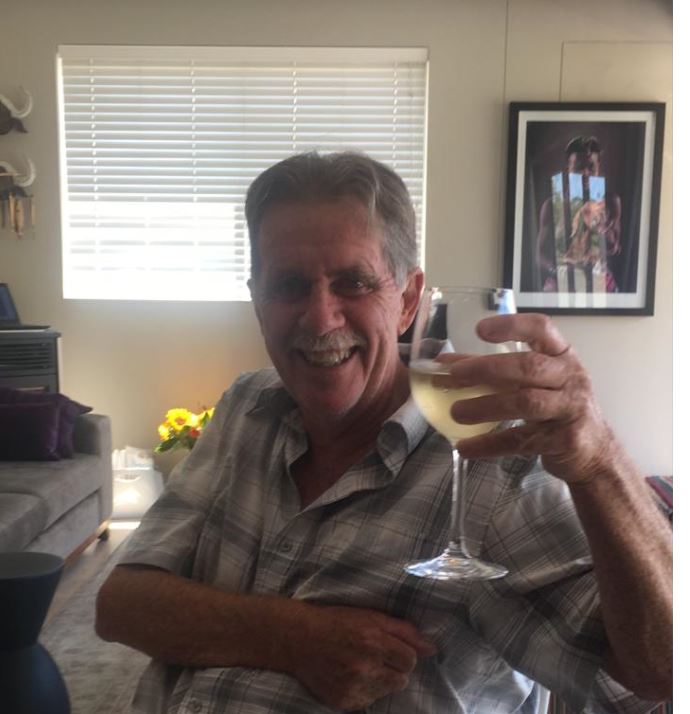
In the meantime, Tony offered me a glass of delicious white wine in his apartment,  while we waited.

capture
Locked out and looking quite concerned…

But when the keys arrived, it was soon obvious that the door was not locked, just jammed, due to the apron.  So everyone had a go at pulling it out, and after several attempts, the plumber succeeded in wrenching it free.

And the door sweetly opened, with no effort.

Finding myself being locked out of our apartment in Cape Town, reminded me of an incident that occurred to me, many years ago in the early 1990s, when I used to spend a lot of time in Brussels on business.  I had a contract at attractive rates with the Hotel Euroflat on Boulevard Charlemagne, and on the very rare occasion when they were fully booked, they used to find me a room at an up-market hotel across the street.  It was on such an occasion that I am recalling.

I had just got back to my room from training in the Parc du Cinquantaire – I was still a keen runner in those days, and I was rather late for a dinner appointment.  I stripped off my running gear and went straight to the bathroom to shower.  I threw open what I thought was the bathroom door, only to find myself  standing naked in the hotel corridor.  Now hotel entrance doors tend to have a strong spring to avoid them being left open, and it was something of a miracle that I managed to realize my predicament, and grab the door behind me, before it slammed shut.  I was microseconds from having to descend in the elevator, stride naked across to reception and request another room key.

But how could I have made such a mistake?

For this particular room, the layout was different to a standard hotel room.  If one stands with back to the window, normally the bathroom is next to the bed and at the end of a short corridor there is the entrance door.  But in this case, the entrance door was next to the bed and the bathroom was at the end of the corridor, where the entrance door would normally be.  An easy mistake to make; a possibly embarrassing outcome.

I wonder how many others have got caught like me?

But the curtain had not yet come down on the ‘water meter’ drama.  Late afternoon yesterday, there was a message on our Whatsapp group to say that the recently installed piping in the apartment next door had come loose, and the geyser had ejected 400 liters of water.  It was all hands to the pump.

Luckily there were several of us in the building at the time and we collectively sourced buckets, towels, mops, sponges etc. and within the hour, all was almost spick-and-span once more.

And while we waited for the plumber and his mate to return to re-do his handiwork, Tony produced two more cold bottles of the same delicious white wine, that had so successfully consoled me a few days previously.

img-20190121-wa0001

As Shakespeare said, ‘All’s well that ends well‘.


Groot Constancia

20 November 2018

I would never consider myself as an expert on wine, despite my life-long exposure to grape juice.  I have never quite felt comfortable when I have been requested to approve a wine by a usually supercilious waiter, and I will never forget the day when I tasted and ‘approved’ a wine at a lunch in Paris, only to have my colleagues spit it out, declaring it to be ‘corked’.  It had tasted fine to me.  I hope that Liliana Frigerio cannot recall that occasion!

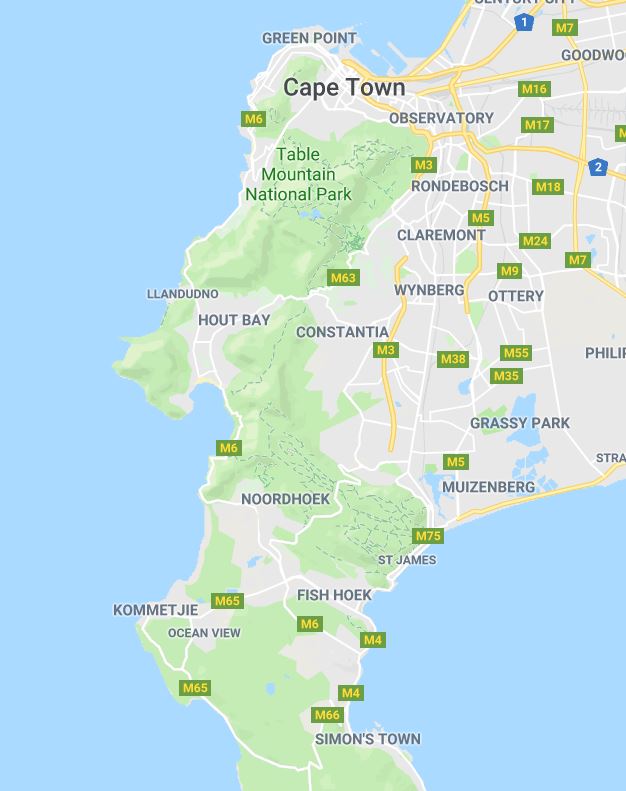
When my sons arrived here in Cape Town last November, one of our suggestions of ‘Things to do in Cape Town‘ was a visit to the oldest wine farm in South Africa, followed by lunch.  So one day we set off in two ‘Ubers‘ for the 30-minute drive to Groot Constancia.

Now why they are called ‘wine farms‘ and not ‘vineyards‘ I am yet to understand.  I assume that something got lost in the translation to English from Afrikaans or Xhosa.

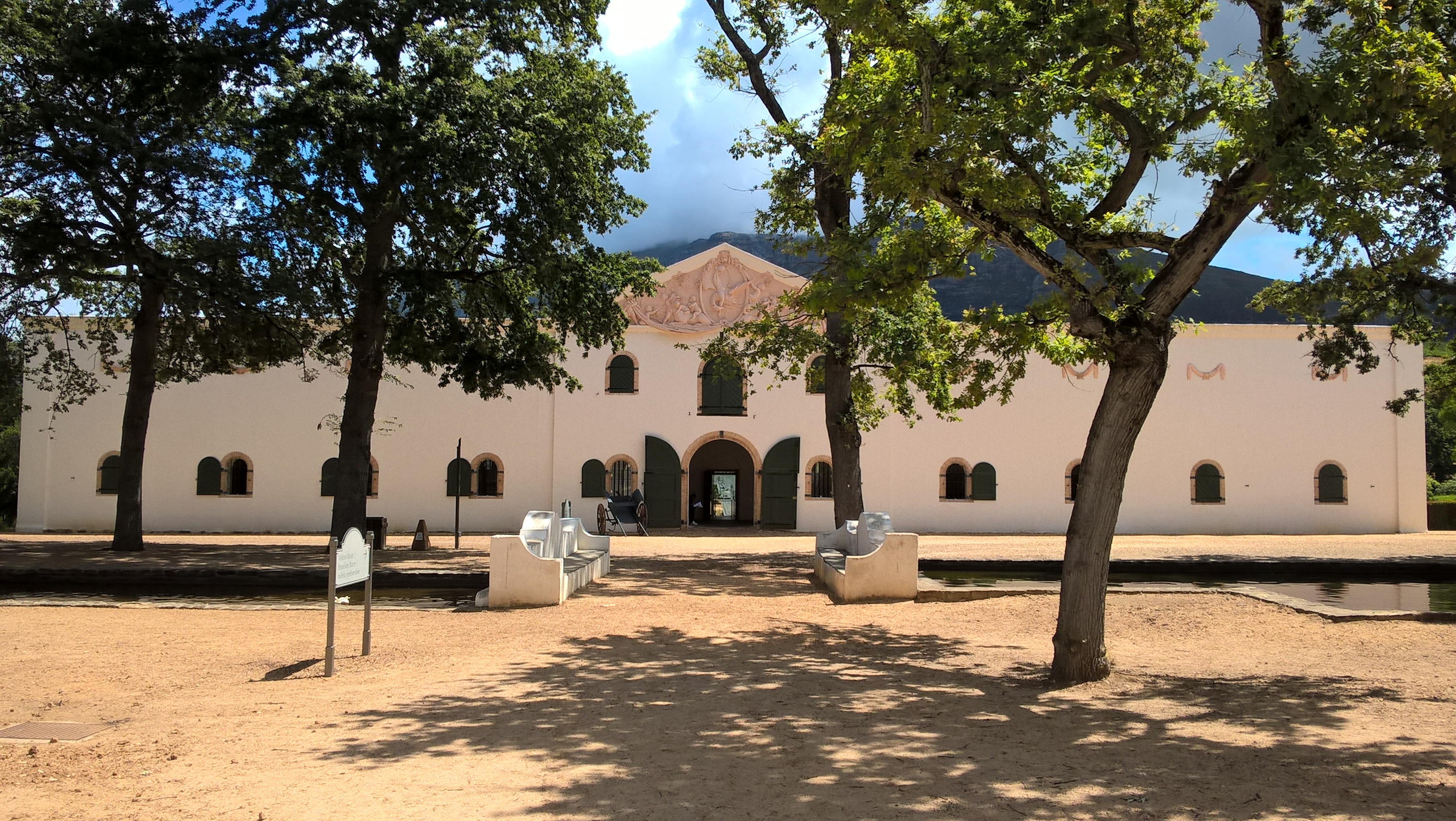
It was Simon van der Stel, then Governor of the Cape, that established Constancia in 1685, believing it to be best suitable for vineyards.  And it was Hendrick Cloete who bought land in Constancia in 1778 and planted thousands of vines.  In time, according to the local marketing material, the resulting wine of Groot Constancia became a favourite drink of many European kings and emperors, including Frederick the Great of Prussia, King Louis Philippe of France and Napoleon Bonaparte.

And how did it come about that Napoleon was able to drink wine made at Groot Constancia, while exiled on the island of Saint Helena in the Southern Atlantic, from 1815 to his death in 1821?

It so happens that the English East India Company, based in Cape Town at the time, was commissioned by the British authorities to provision the garrison and the regiments stationed on the island, as well as the ships of the Royal Navy patrolling the waters around Saint Helena.

constancia

While the rest of our party went on a tour of the facility and a presentation on the wine-making process, I wandered around the well-preserved buildings and the vineyards.  It was so tranquil and I found it difficult to believe that I was in Africa.  It felt more like Spain.

wp_20181120_14_19_46_pro
One of the original building on the estate

When we convened, after a delicious lunch in the restaurant, we had the opportunity to sample some of the local wines.  They proved to be delicious, and I couldn’t resist buying a  case of their white.

wine tasting
My four sons synchronizing their tasting of a red

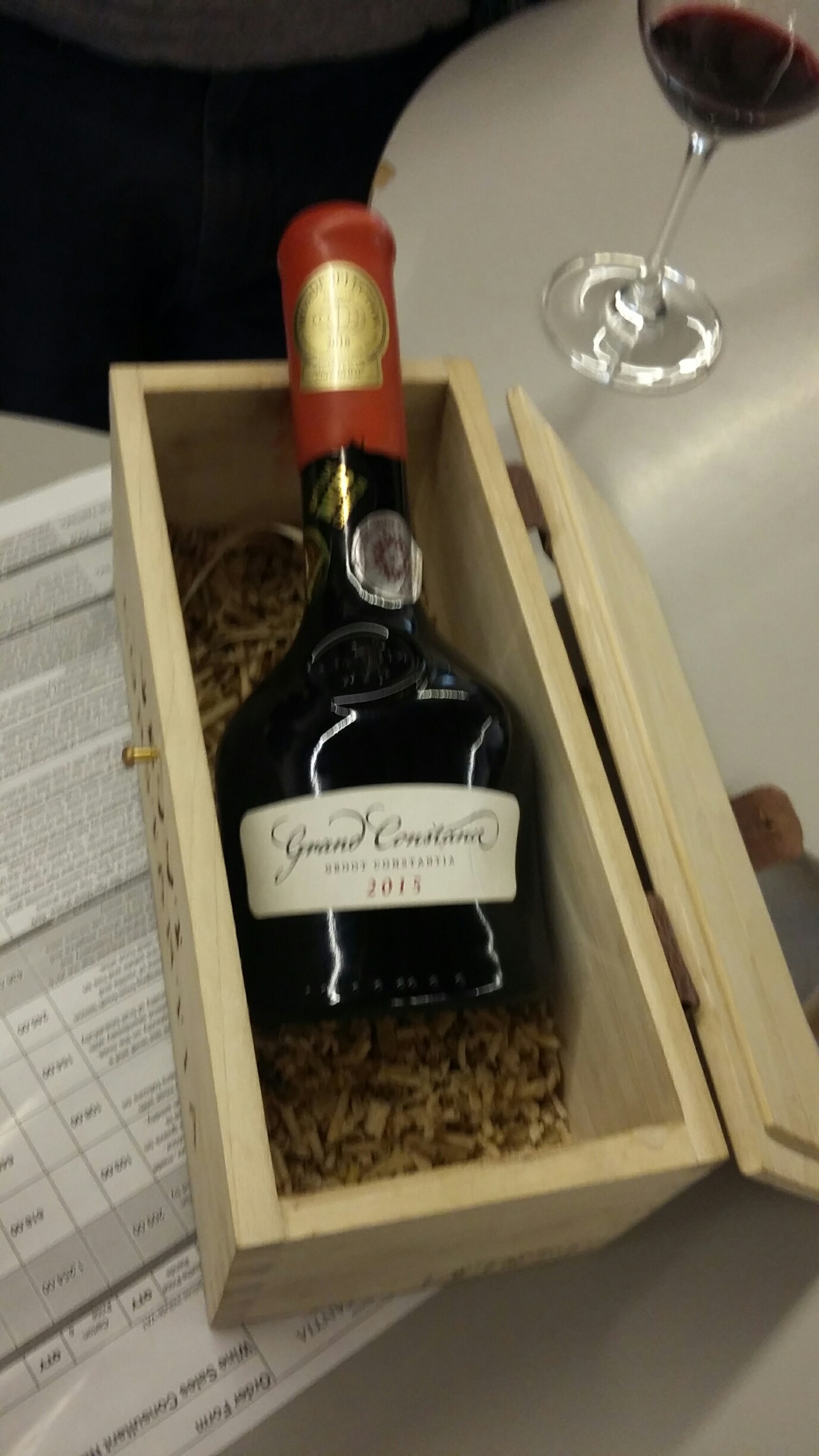
And two other examples of the local wine that we purchased…

img-2f2cb77e0e015b77bb680daf2da32ca9-v_resized_1

img-9467b89edae964b2c88e868572ce7fdf-v_resized (002)

For more information on the interesting history of Groot Constancia, click here