Mérida to Cáceres

We decided to continue as far as Cáceres, some 74 km to the north of Mérida, spending the nights in Aljucén, Alcuésar and Aldea de Cano.

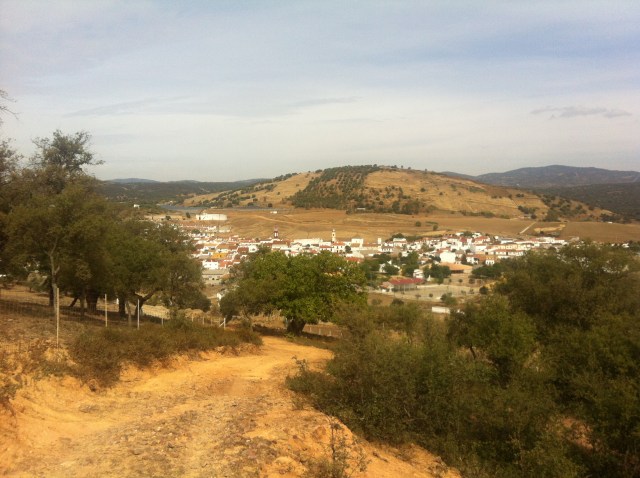
About 5 km north of Merida, we passed around the Proserpina dam – El Embalse de Proserpina.  It was built in the early days of Mérida, to supply water to the city across aqueducts.  The aqueducts have long been in ruins, but the reservoir, with its 12m retaining wall, still exists.

img_2871
El Embalse de Proserpina

At one point on the route, we saw in the distance the couple with the cart.  She was strapped in and hauling, while he was ahead, walking with a perceptible limp.  A little later we passed them: they were sitting some distance from the path.

Aljucén is a very small village with one bar and a rather strange Casa Rural – Termas Aqua Libera, at which we turned out to be the only guests.  From the street, there was nothing unusual about the place, but once across the threshold, one was transported to Roman times.  It seemed to be quite an authentic copy of a Roman villa, and we were shown where we could select from a choice of Roman togas to wear, if we were interested in dressing the part.  We respectfully declined the opportunity.

When we went out some time later, there seemed to be a party going on, with several couples dressed in Roman gear, with lots of flashing legs and thighs.  But when we returned a couple of hours later, all was quiet, much to Lotta’s relief and my disappointment; I had never before been to a Roman orgy and I still haven’t.  One can but live in hope… 🙂

The highlight of the next day was our encounter with the pigs, black pigs, hundreds of them, in a huge open range paddock: the black pigs that produce the famous pata negra ham.  The black Iberian pig, or cerdo negro, are apparently the only pigs that naturally seek out and eat mainly acorns.

img_2877

But like most pigs, they are very curious, and want to smell you and perhaps taste the salt on your legs.  Now I was brought up with pigs, so nothing new there, but I suspect that Lotta would have preferred to have seen them from the other side of a fence.  She was quite happy to eventually cross a cattle grid and leave that massive paddock.

The place where we stayed in Alcuésar was also quite strange.  I had only vague instructions that led us nowhere, so we stopped in a bar to ask directions.  After another caña, the very helpful barman drew us a simple map on a serviette: it turned out that we had been quite close, but not close enough.

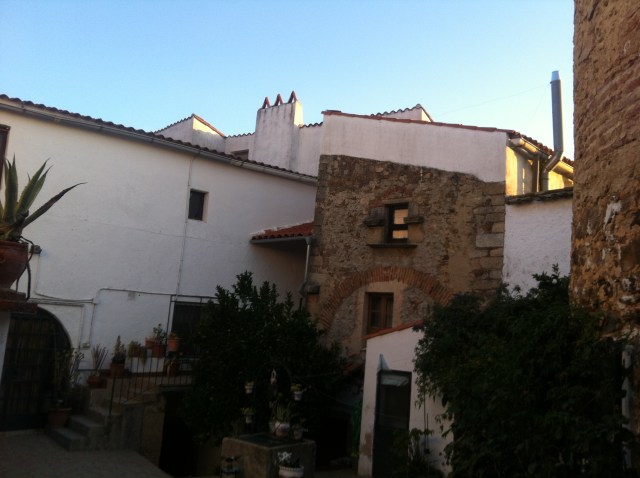
But when we found the street and the right block, we could not see a door.  I asked an old toothless man if he knew where the entrance was and he immediately scuttled up a side-street and rang a door bell, signalling that we had arrived.  An elderly aristocratic-looking lady answered the door, hustled us in and in a whirlwind of introductions and instructions, swept us in and out of rooms, up stairs, down steps and along corridors until we were in a small apartment that was ours for the night.  I was quite disorientated.
Thankfully our exit was close by, via a side door of the house, which it turned out occupied an entire block of the town.  It must have been a rich family that built the house and perhaps the aristocratic lady was a descendant.  We never did see her again.

We managed to navigate our way from the apartment into the town and back again, without once getting lost.  And when we returned, who did we see watching television as we passed a large room that served as a lounge?  The couple with the cart!

img_2879
Somewhere in the house was the little apartment

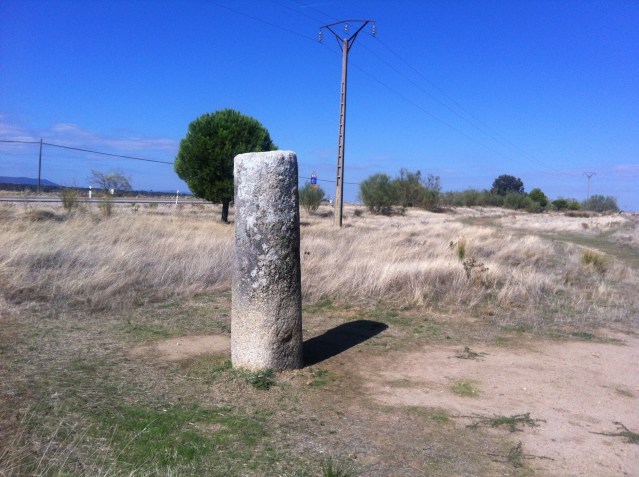
Between Alcuésar and Aldea de Cano, we came across several Roman milestones.  A Roman mile was the distance that a legion would march 1000 paces, a pace being each time the left foot struck the ground.  It was the origin of the English mile, and each Roman milestone had its distance from Rome engraved on it.

img_2881
A typical Roman miöestone

Prior to Aldea de Cano, we passed through an extensive area with bridges and stepping stones, even though the ground was bone dry.  Apparently, it was a swamp when it rained.

img-20151014-01116
Dry, but sometimes  not so…

img_2884

When we arrived in Aldea de Cano, there was a sign on the door of our Casa Rural to say that our hostess would not be there until two hours later.  So, we settled ourselves down in the sun, outside a nearby bar, and quenched our thirst and ate some tapas.  We were soon joined by an old farmer, who obviously already had had a few drinks. He was delightful company.  At one stage, he disappeared and emerged with some more beers for us, and later I reciprocated.

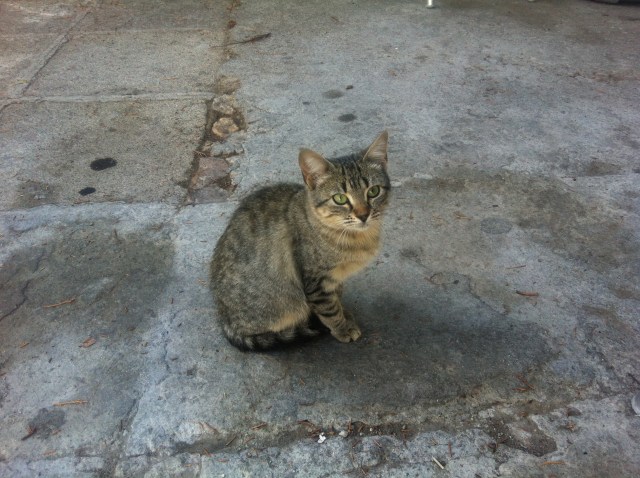
In the meantime, we had been joined by a little kitten.  It watched us, but never got close.  When I tried to stroke it, it quickly retreated.  The farmer said that it was a street cat and he wanted one for his farm, to keep the vermin under control.  He tried to tempt it to come close, but to no avail.

img_2883
The rodent hunter

That night we finally met the ‘strange couple with the cart’.  I had arranged for the owner to serve us dinner, and when we sat down, the couple emerged from a nearby room.  It turned out they were indeed German, quite shy, but passionate about hiking.  He was a web developer, quite a ‘geek’ and I don’t recall what she did.  They did not live together, but were ‘married’ in their passion for hiking.  I rather liked them.

The next morning, we left early and stopped at a bar on the edge of the village.  And who came in, just as we were about to leave?  Nope, wrong this time.  The old farmer, he of the kitten, arrived to have his early morning drinks with his mates, before setting off to his land.   I’ll never forget how his face lit up when he saw us and I am sure that mine was a mirror image.  We chatted for a few minutes before we had to set out.  The memory of the old farmer is ingrained in my memory.

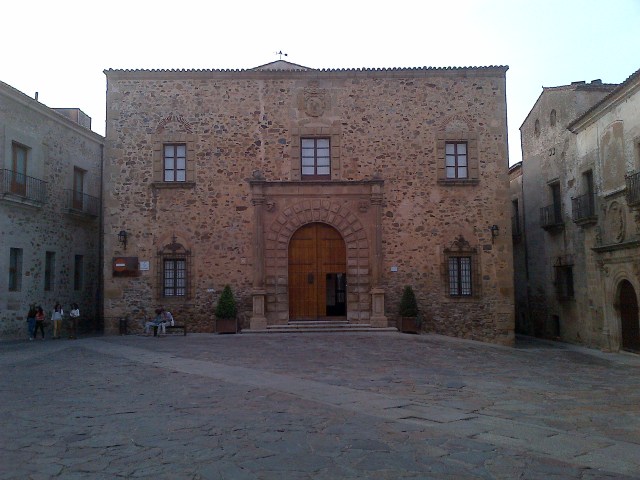
The path to Cáceres was long, but uneventful, and eventually we wended our way through the industrial suburbs and the centre of the city, and finally up the steep hill to the Plaza Mayor and the old city.  Our hotel was just off the Plaza Mayor.

img-20151016-01117
The old city from the Plaza Mayor

img-20151016-01120

img-20151016-01125

The weather was starting to get quite cold overnight and we were not equipped for late autumn in Northern Spain.  To come, there would have been the historic cities of Salamanca and Zamora, but they would have to wait for another day.  So, we headed to Madrid, and eventually back to Uruguay.

Mérida

When I first started walking to Santiago de Compostela, I was aware of the legend of Saint James, one of Jesus’s disciples; of his preaching in north-western Iberia; of his eventual return to Jerusalem, his arrest and beheading; of his two faithful followers taking his body to Galicia, and his interment there.  But to me, it was just a legend, an interesting tale, but bearing little relevance to any historic events.  To me, Galicia seemed a long way from Jerusalem.

But until I went there, I had not realized how developed and sophisticated was that part of Europe in that era, with its nearly 1000 km of straight paved road, running from south to north, allowing the rapid movement of armies and the transportation of gold, silver, other minerals and crops to the waiting ships in the south, and on to Rome.  I had seen Roman ruins in Astorga in the north and Sevilla in the south, but walking on the former Roman road for day after day, and seeing the remains of the Roman city of Mérida, caused me to change my view: perhaps there was some credence in the legend of Saint James.

We walked across the Puente Romano on a beautiful early autumn afternoon, past the Muslim fort, and up the hill to the old town.  I had reserved the same hotel, where two years previously I had become stuck in the elevator, and was eventually hauled up and out by the owner.  It was no surprise that he had no hesitation in remembering me, when we checked in.  And he assured me that he had had no further problems with the elevator since my incident, but just in case, he gave us a room on the ground floor.

The modern city of Mérida has been built on top of the walled Roman city of Augusta Emerita, originally founded in 25 BC, in the reign of Augustus.  Hence the origin of the name.

img-20130925-00698
A model of Mérida, as it was in Roman times

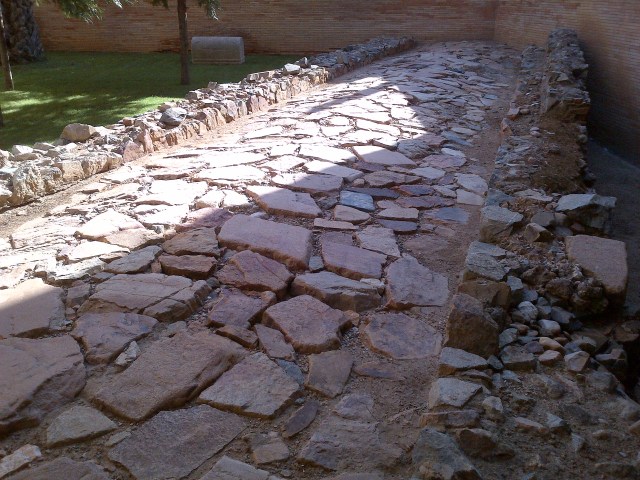
The original Roman street and block layout has been maintained, and there are several places in the city where one can see the original street surface.

img-20130925-00697
A section of an original Roman street

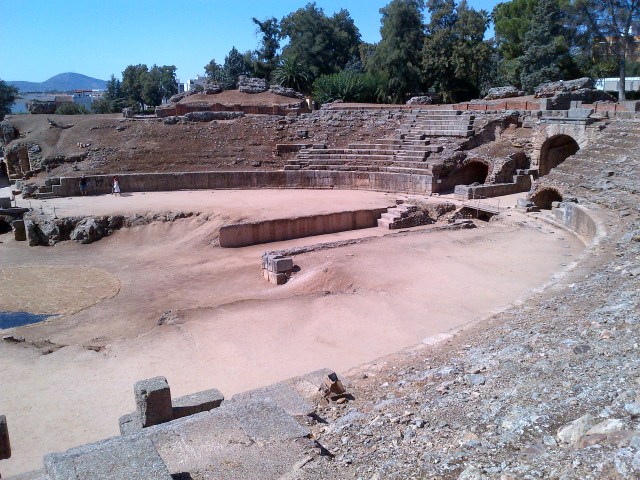
Mérida had an impressive amphitheatre and an adjoining theatre, the latter which has been partially restored and is still used for productions.

img-20130923-00660
The amphitheatre
img-20130923-00665
The stage of the theatre
img-20130923-00668
And the restored seating

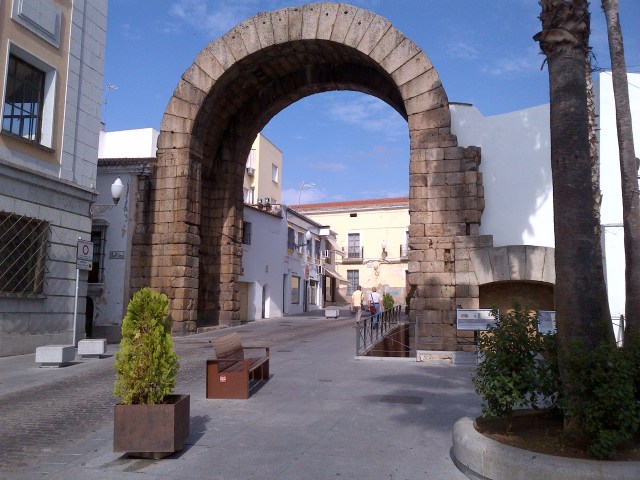
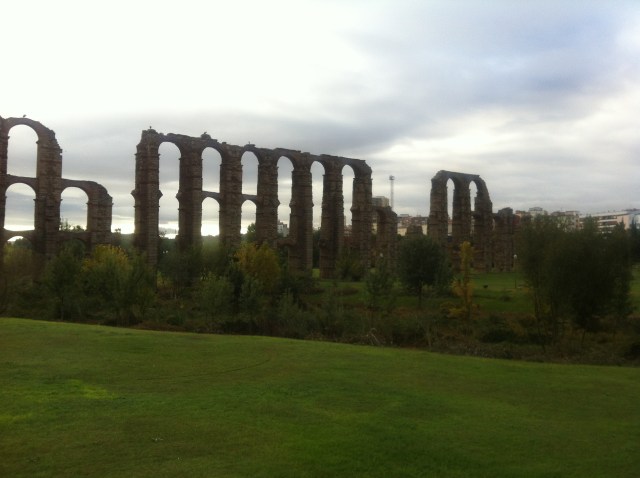
Throughout the city there are several other impressive Roman remains, including Trajan’s arch, the Temple of Diana, the aqueducts, and outside the original walls, the well-preserved circus used for chariot racing.

img-20130924-00673
Trajan’s archTrajan’s arch
img_2866
Temple of Diana
img_2870
The remains of one of the aqueducts that carried water to the city, seen just after sunrise
vr_merida_03
The Mérida circus (photo from internet)

After the fall of the Roman Empire in the 5th century, the Visigoths replaced the Romans, and they in their turn were conquered, in the 8th century,  by the Muslims from North Africa.  The Islamic control of Mérida lasted until the 13th century, when they were defeated by the Christians.  At Granada, in 1492, the last resistance of the Muslims in Spain was eliminated.

img-20130925-00694
The Alcazaba, the Muslim fort, as seen from an island in the river
img-20130924-00680
The western wall of the Alcazaba, as seen from the Puente Romano

In the legends of Saint James, there is no mention of the route he may have taken on his return to Jerusalem, but it is likely that such a traveller from North-western Iberia would have passed through Mérida on the way south, to continue by boat to the Eastern Mediterranean.

I remain to be convinced that the legends of Saint James are anything other than legends, but I need no convincing that Mérida is a most interesting city.

Zafra to Mérida

8-10 October, 2015

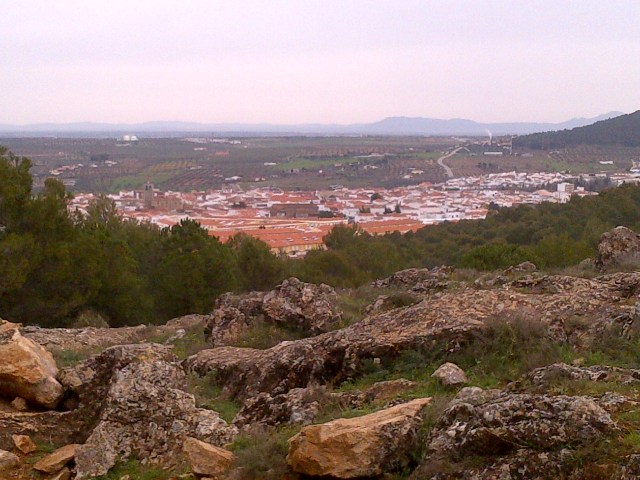
Once outside Zafra, the route climbed steadily to a ridge overlooking Los Santos de Maimona.  From the summit, one could see the plain stretching to distant mountains.  Mérida lies 65 km to the north of Zafra and takes three days of walking, spending the nights in Villafranca de Los Barros and Torremejía.  Once again, between the overnight villages, there was nothing but occasional farmland and bush.

img-20130304-00481
Looking down on Los Santos de Maimona

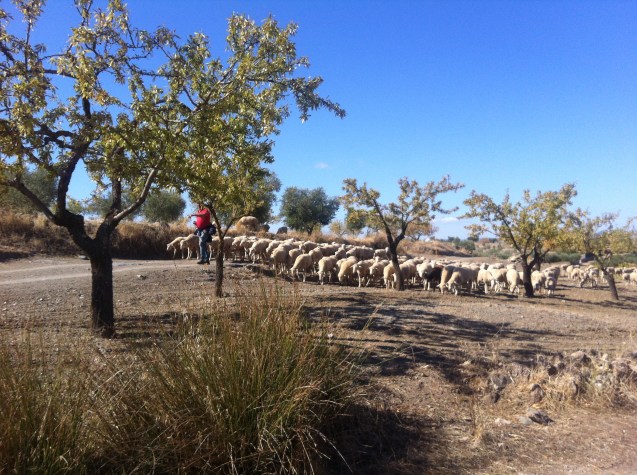
The land was parched.  It looked as if it had not seen rain for a long time.  At one time, after Santos de Maimona, we came across of a flock of sheep.  The shepherd walked ahead, seemingly oblivious of what was following him.  Four sheep dogs raced around, rounding up the stragglers and keeping the flock moving in the general direction of their master.  It was not the first time that I have witnessed the shepherd-to-dog relationship, and I have never ceased to be impressed.

img_2831
The shepherd leaving, the flocking following

From Villafranca de los Barros to Torremejía the path was straight, following the old Roman road.  There is absolutely no shade, just grape vines and occasional olive groves as far as the eye can see.  In one part, the road was being resurfaced, and for several kilometres we had to trudge through a thick layer of uncompressed dust.

img_2844
A repaired through the vines

On a long straight path, with no bordering trees or bushes, one’s progress across the landscape is barely perceptible.  The goal is there on the horizon, but on the horizon is where it seems to remain.

img-20130921-00654
In the distance Torremejía


But eventually one arrives.

img-20130921-00655
Grapes on their way to being pressed
img-20130921-00657
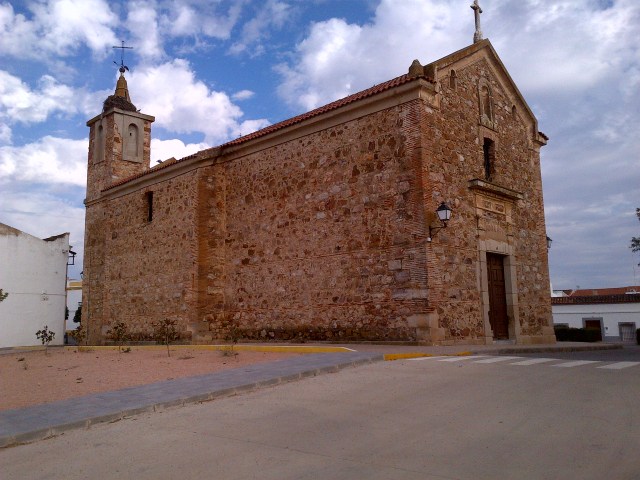
The recently renovated Iglesia Parroquial in Torremejía

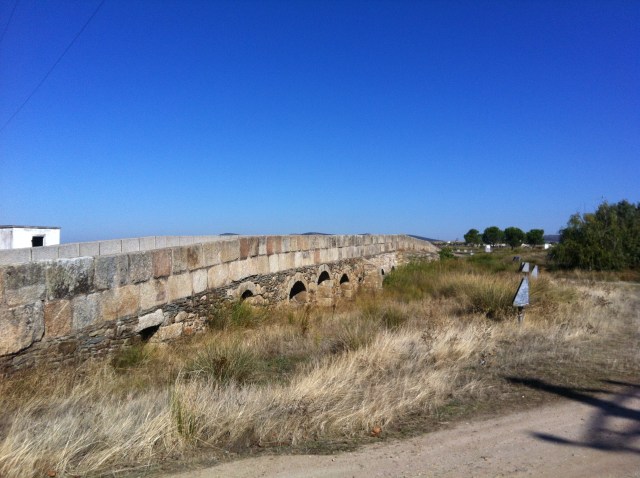
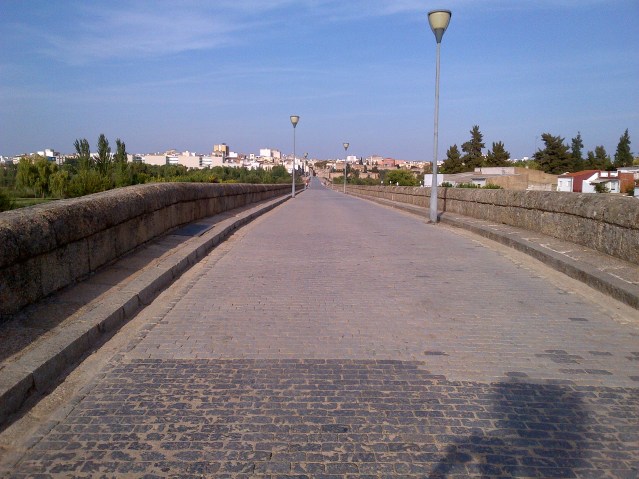
The next day was relatively easy and, in the early afternoon, we arrived at the Puente Romano, that leads across the river Guadiana to Mérida.

At 790 m, it is the longest surviving Roman bridge.

img-20130924-00682
The Puente Romano over the river Guadiana, with its 60 surviving spans


img-20130924-00683
The restored and pedestrianized Puente Romano


Next: Mérida

Guillena to Zafra

2-8 October, 2015

The path north from Guillena to Zafra covers 125 km and passes through five villages – Castilblanco, Almadén de la Plata, El Real de la Jara, Monestario and Fuente de Cantos.  The villages are between 15 km and 27km apart, a distance that a hiker, carrying a backpack, can comfortably cover in a day.  Originally it would have been the distance that a heavily armed Roman soldier would have been expected to march.  Apart from some farmland adjacent to the villages, the countryside was empty of habitation.

img-20130227-00462
A cork plantation near Castilblanco

For the first three days, the path wound through the rugged Parque Natural de la Sierra Norte to El Real de la Jara, shortly before passing from Andalusia into Extremadura.  There was a long climb to Monestario, after which the landscape transcended onto the plains that surround Mérida.

img-20130227-00468
Looking back from a ridge, before descending to Almadén de la plata


img_2742
And the path down to Almadén de la Plata

Apart from Zafra, which is a large town with a rail and bus station and several hotels, the villages that we passed through were small, each with its church and a small central plaza, an hotel or rural hostel with a few rooms, an albergue with dormitory accommodation, a bar, and little else.  And the houses and buildings were universally painted white, with red tiled roofs.

In the first three days, where the landscape was more rugged, the path led through many huge paddocks, where herds of cattle, pigs, goats, sheep and horses ranged free.

img_2758
Free-ranging goats


img_2763
Pigs looking like hippos, with their own pool
img-20130301-00473
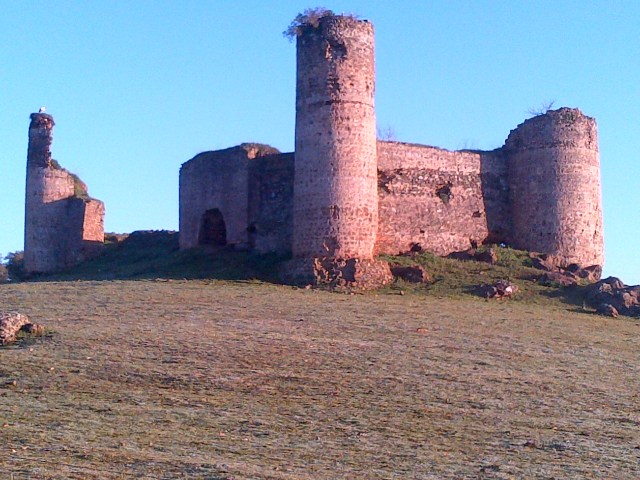
El Castillo de las Torres (XIII century) outside El Real de la Jara

After Monestario, the land flattened, and the farming changed from mainly animals to crops, with occasional olive groves and grape vines.  The path was dusty and the land parched; it seemed as if it had been since the last sustained fall of rain.

img_2819

In the seven days that we walked from Sevilla to Zafra, the only other hikers that we saw were the strange couple pulling the cart; we had seen them arriving in the bar in Guillena and pulling their cart up the stairs to their room.   We passed them a couple of times on the path, when they were sitting in the shade, resting or having something to eat and drink.  They seemed to be quite shy, or perhaps they just wanted to be alone.  I can well sympathize with the latter.

We always knew when they were ahead of us, when we spotted the tracks that the wagon tyres left in the dust.  And each night we usually saw them arrive in a village, sometime after we did.  On a couple of occasions we saw them enter the same hostel where we were staying, but they were quite reclusive and stayed in their room.  I thought that they might have been on their honeymoon.

When we were on our way out of Zafra, we stopped at the bar of a comfortable hotel to have a coffee and a croissant, and who walked out of the restaurant and up the stairs but the strange couple with the cart.

Little did we know that we were to see them every day until Cáceres.

img_2825
Leaving Zafra and passing the castle in the early morning sun


Next: The former Roman city that is now Mérida

Sevilla to Guillena

Sevilla to Guillena (23 km)

Thursday, 1 October, 2015

We set out early, before dawn, and took the metro to close by the cathedral.  From there our camino began.  We walked along the river and when we reached the Puente de Triana, the sun was rising; the buildings to the east were in silhouette and those on the west were bathed in rose light.

img_2713
Looking back across the river from the Puente de Triana
img_2714
And looking forward to the Castillo de San Jorge, with the moon clearly visible

The route took us through typical industrial suburbs and abandoned lots, rather depressing, but typical of large cities anywhere in the world.

About 10km from the centre of Sevilla, we passed through the small town of Santiponce, largely built on the former Roman city of Italica, founded in 206 BC.  One can visit the amphitheatre that once held 25,000 spectators.

italica
The amphitheatre of Italica (photo from internet)

Two of the best known of the ‘good’ Roman emperors – Trajan and Hadrian, were born in Italica.  Trajan was known for his public works and his expanding Rome to its maximum territorial extent.  Hadrian followed Trajan and is best known for the wall he had built across northern England to keep out the Scots.  Ironically these days, many Scots would like to have the wall rebuilt to keep out the English.

When we finally reached the end of the industrial zone, at a large roundabout, we were confronted by two attractive women, bent over and baring their bottoms to passing cars and trucks.  Until I greeted them with ‘Buenos días señoritas‘, they were not aware of our passing presence.  Sevilla has its unique way of welcoming visitors to its city.

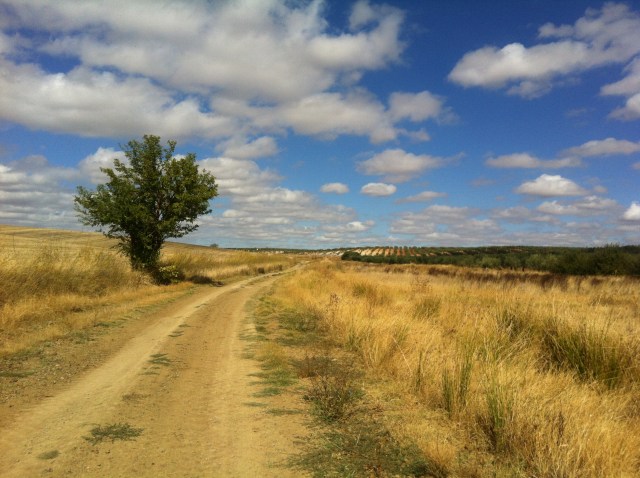
From close to that roundabout a long straight undulating dirt road led to Guillena.  From the top of each incline one could see the town in the far distance, but after each hour of walking, we scarcely seemed to be any closer.

img_2717
The long straight road to Guillena

We passed the hollow, where two years previously the road had been waist deep in flood water, and where I had slipped and got very muddy and wet.  It was bone-dry, with no hint that a stream had ever existed.

img_2718
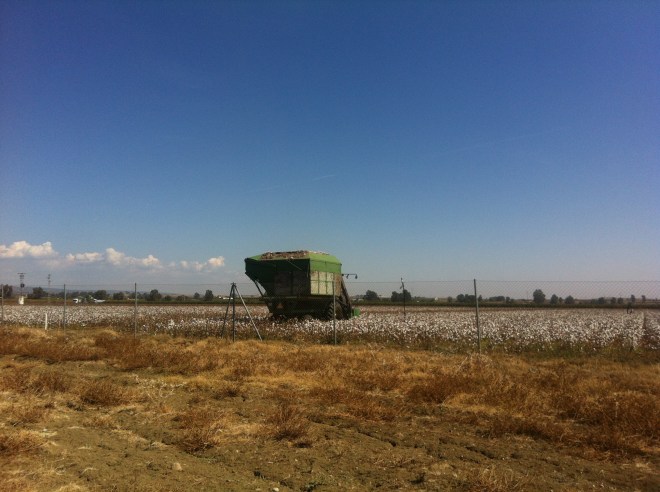
Harvesting cotton outside Guillena

Later, when we had checked into the only hostel in the village, and were having a beer in the bar downstairs, we witnessed a strange couple enter and inquire about a room.  He was tall and very thin and she was short and quite plump, and neither of them spoke Spanish.  They were both heavily dressed, considering that it was a warm day, and he was strapped around the waist to the handles of a cart, which was piled with bags and camping gear.  It was almost comical to witness the two of them hauling the cart up the stairs to their room.  I would have loved to have captured the incredulous looks on the faces of the locals in the bar.

Every day brings a new experience on the camino.

Next: Castilblanco de los Arroyos

Sevilla

Sevilla

29-30 September, 2015

We were not long back from our four months in Chamonix, when I started to plan our next long hike along one of the pilgrimage paths that eventually arrive in Santiago de Compostela.  My mind was set on walking across France, from Geneva to Saint-Jean-Pied-de-Port, via Puy-en-Velay.  I booked flights from Stockholm for 28 September and started to plan the stages of the walk.

But I had nor progressed very far in my planning, before I realised my potential mistake; we would be crossing the Massif Central, the mountainous south-central part of France, in late October, when the weather could be quite cold.  And as I don’t ‘do’ cold, I switched my attention to the Vía de la Plata, that starts from a much more temperate Sevilla.  And conveniently there was a low-cost morning flight from Geneva to Sevilla on 29 September.

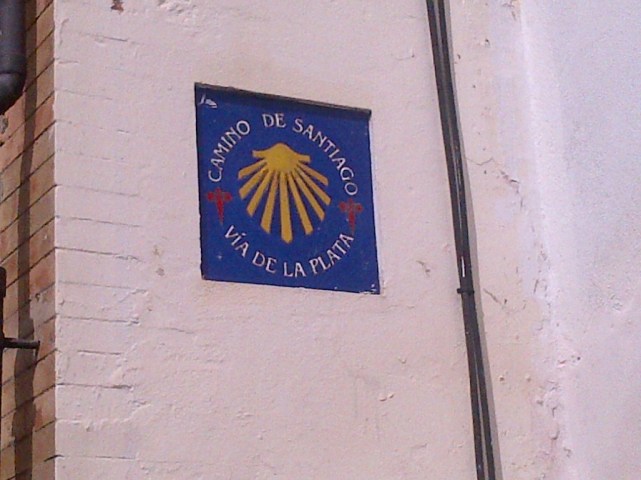
The Vía de la Plata is the longest of the pilgrimage routes in Spain, heading north from Sevilla to Zamora, then north-west to Santiago, a total distance of about 1000 km.  Much of the route is on ancient Roman roads.  The route was also known as the Camino Mozárabe, originally followed by the Christians of North Africa.

img_2725
Vía de la Plata

I was no stranger to the route from Sevilla.  In mid-February of 2015, I had set out to walk from Sevilla.  The temperature was perfect for hiking, but my start was delayed for nearly a week by torrential rain.  When I eventually got going, I found low-lying areas to be flooded, streams with stepping stones to be deep under water, and mountain paths washed out.  Twice I slipped and fell in the water, and when I reached Villafranca de los Arroyos, the heavy rains started again.  The forecast was for rain, rain and even more rain for the week ahead and extensive flooding.  I decided to abandon the walk and return another time.

My second attempt was in late September of the same year, but this time it was in soaring temperatures and with little or no shade.  When I walked into Mérida the temperature was 42 °c.  The heatwave showed no sign of abating, so I once more stopped.

But ‘Stubborn’ is my middle name and back to Sevilla I went once more, this time with Lotta.  It was her first time in Sevilla, so we spent the first day seeing some of the sights.

The central core of Sevilla is a labyrinth of narrow streets branching out from the massive cathedral.  Some of the lanes are so narrow that one can stretch out ones’ arms and almost touch the walls on each side.  The lanes twist and turn, and despite being close to the cathedral, one cannot see it until one exits the maze.

The cathedral is the third-largest church in the world and is the burial site of the alleged bones of Christopher Columbus.  It has fifteen doors on its four facades.  It is so extensive that it can only be seen in its totality from the air.

img_2686
Part of one of the facades of the cathedral

Sevilla is a popular tourist destination, for it is an interesting scenic and historic city.  But one of the downsides of exploring the tourist area is being the constant target of touts trying to entice one into restaurants, sell tickets to flamenco shows, rides in a carriage etc.

img_2667
Coches de Caballo – Rather expensive tourist traps

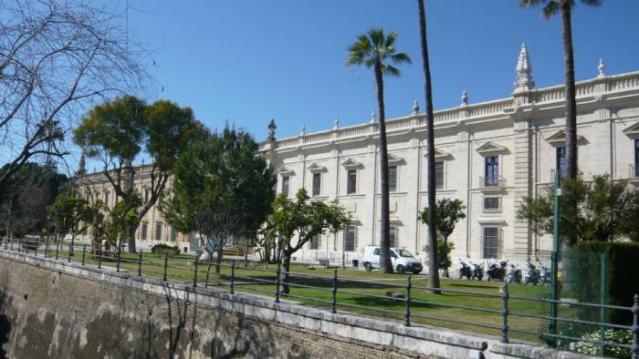
One of the largest buildings ever constructed in Europe was the Royal Tobacco Factory.  It measures 250 m by 180 m and was built in the mid-eighteenth century.  It was the first tobacco factory in Europe.  Since the 1950s, it has housed part of the University of Seville.


02_big
The Royal Tobacco Factory (picture from internet)

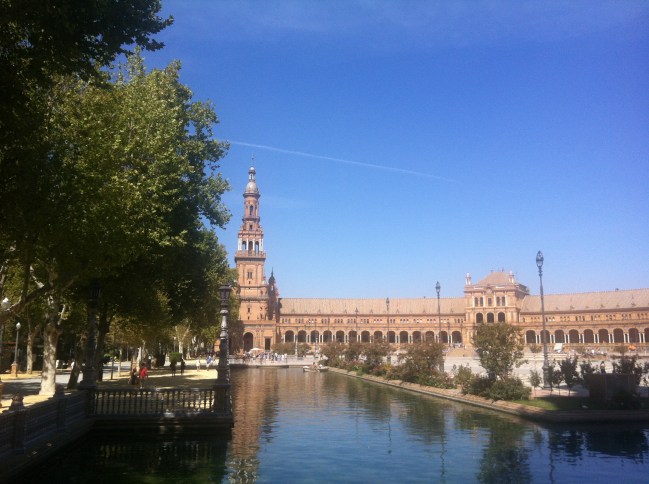
The magnificent Plaza de España was built in 1929 and was the central feature of the Ibero-American Exposition, held to strengthen the ties between Spain, Portugal and their former colonies.  The building is semi-circular and features a canal crossed by several ornate bridges.

img_2696
A view of one of the symetric ends of the building


img-20130220-00441
And one of the pairs of bridges crossing the canal


The building has 58 pairs of benches, each one representing a province of Spain, with a typical scene from the province and a map, all surfaced in painted ceramic tiles.

img_2698

And at the end of the day, a timely reminder of why we were in Sevilla…

img-20130222-00455


Next: Seville to Castilblanco de los Arroyos

Valencia

Over the last few years, Valencia has become one of my favourite cities.  Indeed, I have even been considering settling down there, although I confess that I am not yet quite ready for that big step.  For me, it is not easy to blow the full-time whistle on more than 50 years of my nomadic life-style.  That day will come, but not just yet.

Valencia has much of what I enjoy.

First and foremost, it has a wonderful subtropical climate, with a summer season lasting from April to November, mild winters, and an annual average of seven hours of sunshine per day.  That is almost double the average for northern Europe.  And only a precipitation average of 44 days in the year.

Then there is the glorious heart to the city, with its cathedral and its buildings, its history and the maze of narrow streets and alleyways.  And the multitude of inexpensive restaurants and bars.  The city throbs with life, day and night.  The typical Valenciano lives in the street.

And the beach is a short bus ride away.

But for me, the jewel of Valencia is El Jardín del Turia.

In October, 1957, the river Turia overflowed yet again, causing a lot of devastation and many deaths.  The authorities finally decided to divert the river, avoiding the heart of Valencia. In subsequent years, the bed of the river was converted to a sunken park, which was inaugurated in 1986.

Today, the park extends over 9 km of former riverbed, from Cabecera Park to the City of Arts and Sciences, and includes 18 bridges.

img-20161103-00012

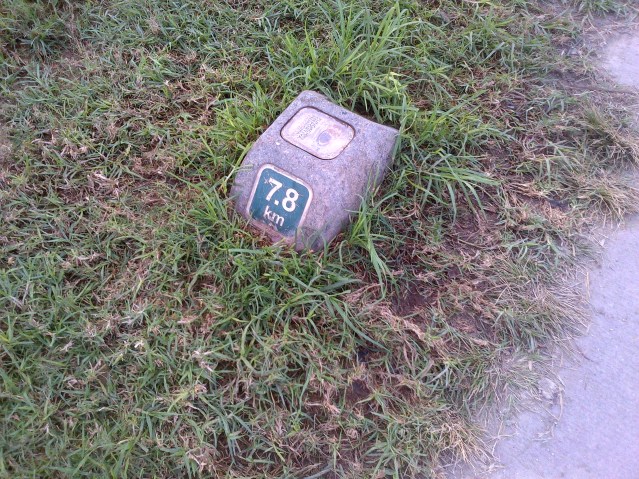
It is a relative paradise for a runner, with a marker every 100 m.

img-20161103-00015

At the down-river end of the park, there is the group of futuristic buildings that comprise the City of Arts and Sciences.

untitled-picture-1
The Opera House
untitled-picture-2
The Science museum, in the shape of the skeleton of a whale
untitled-picture-3
The Ágora, for special events

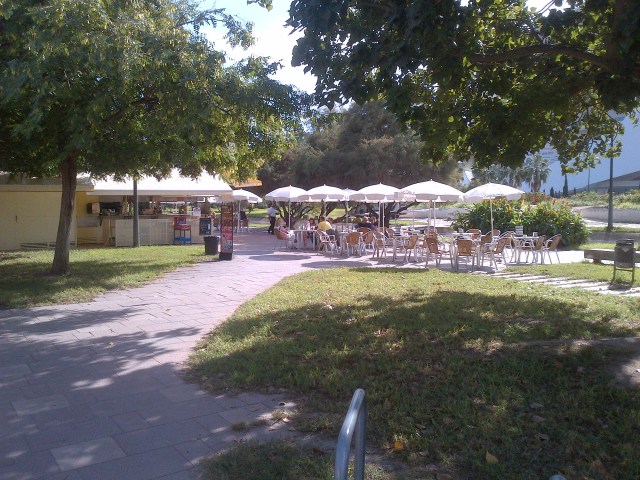
Throughout the length of the park there several bars and restaurants.

untitled-picture-4

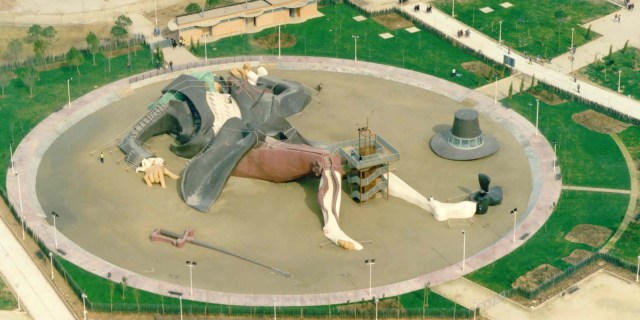
One of the unique features of the park is the Gulliver Park for children and the not-so-young.  Only from the air can one appreciate the size of the sculpture and the ant-like people.

img-20161103-00016

gulliver

The Palau de la Música, that houses the Valencia orchestra. In the foreground, the spectacular fountains are undergoing a complete restauration.

untitled-picture-5

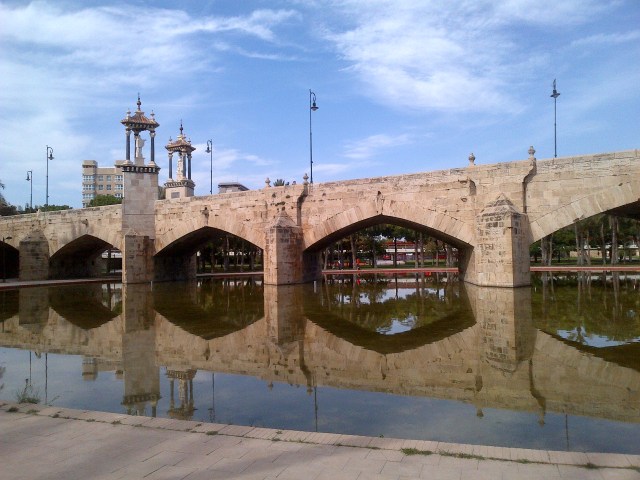
And if one forgets that one is on the bed of a river, there is the Puente del Mar to remind one that it was first built on the site in 1425.

untitled-picture-6

For the sports minded, there are facilities for football, rugby, tennis, baseball, hockey, athletics than others that I have forgotten.

Yup, Valencia is my kind of place… 🙂

The Itinerant Sailor

Today finds me in Alicante, in southern Spain.  While most of northern Europe is shivering in near, or below freezing temperatures, I am in shorts and light shirt, basking in 25°c.  It’s not very hard being me.

Give or take a week, it was about this time of the year, forty-eight years ago in 1968, that I first was in Alicante.  And the weather was like today.

I was on my way south to Gibraltar.  As a child, I had read of the history of Gibraltar, a tiny enclave of Britain, at the tip of Spain and separated by a short distance from Africa.  It had fascinated me.

Gibraltar was ceded to Britain by the Treaty of Utrecht in 1713, but unfortunately, there was no map of the boundaries, nor any detail of what was entailed.  Unsurprisingly, to this day Gibraltar has continually been subject to differing interpretations.

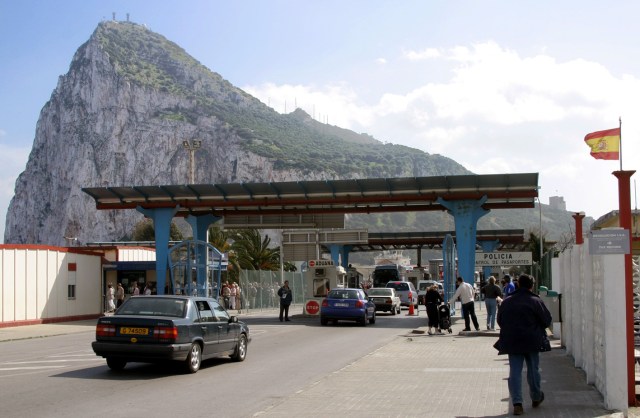
I have no recollect of how I reached the Gibraltar border from nearby Algeciras, probably by bus, but when I did, I found the border was not open.  It had been closed on June 8 of the same year, by General Franco, the Spanish dictator, and it remained closed until February 1985.

gibraltar_border
The border between Spain and Gibraltar, as it is in modern times (photo from internet)


I spent the night close to the border, in La Línea, in a pension, in the dampest bed in which I have ever slept.  The room felt as if it had not been occupied since the Treaty of Utrecht.
The next day I went back to Algeciras, and caught a ferry across the bay to Gibraltar.  That access was surprisingly still open.

On the ferry, I met one of the most interesting people I have ever encountered.  He was a retired English sailor.  From early teenage, he had worked all his life on boats, all over the world.  He was a small thin wiry man with scarcely any hair, with a deeply weathered and tanned face.

He told me that when he was forced to retire, he tried to settle in England, but he could not fit in.  He had no family, no relatives, no real friends.  He was too restless to live in one place, so he had taken all his possessions in a small backpack and set off to follow his nose.

In the next four years, he had traveled all over the world, in all the continents, sometimes working his passage across the oceans.  He ended up back in England, but did not stay long.  When I met him, he was on his way back south.  He said he was not going back to England again.

I asked him where he was going after Gibraltar.  He said that he was going to catch a ferry to Ceuta and then overland to South Africa.

And what if got ill?  He said that he would be treated like the local people, wherever he was.  And when he died, he said that they could have his few possessions to pay for his burial.

He did not seem to be lonely.  In fact, he appeared to be very content with his life.  In some ways, the old sailor reminded me of the legend of the itinerant Jew, although, in the end, the latter just wanted to die.

The last I saw of him, he was heading to the offices of the ferry companies, to get a passage to Africa, and I headed to the town.

Since then, I have often wondered whatever happened to the old sailor.

Burgos

Pamplona to Burgos

7-20 October 2016

This was the third time that I have walked from Pamplona to Burgos, so I will try not to repeat myself.  If you want to read my original accounts from 2012, then click on https://irishrover2016.wordpress.com/2016/08/07/29 (Pamplona to Logroño) and https://irishrover2016.wordpress.com/2016/08/20/34 Logroño to Burgos.

From Pamplona, I once more walked to Puente de La Reina, over the Alto del Perdón, to Estella, Los Arcos, Viana, where Cesare Borgia is buried, and Logroño, with its multitude of wine bars.

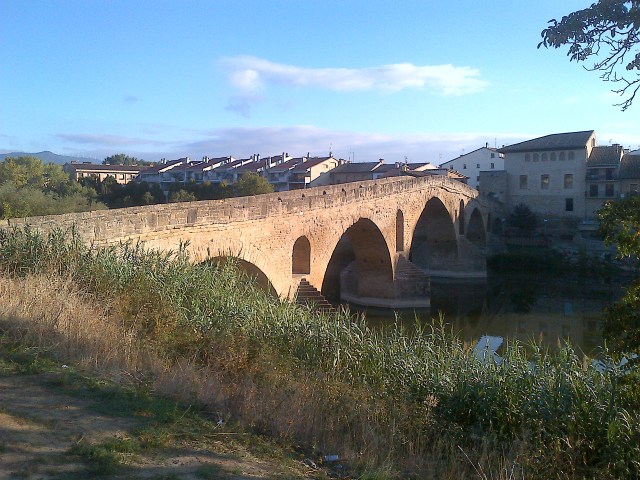
img-20161008-01236
Leaving Puente de La Reina in the early morning sun, on the eleventh century bridge over the river Arga

From Logroño I went on to Navarette, Nájera, and Santo Domingo, where I once more stayed with the nuns, as we had done in 2014.  Then Belorado, and Villafranca Montes de Oca, in the beautiful grand old mansion, where the owner and his son remembered me and treated me royally.

img-20161016-01244
One of numerous huge stacks of straw
img-20161018-01245
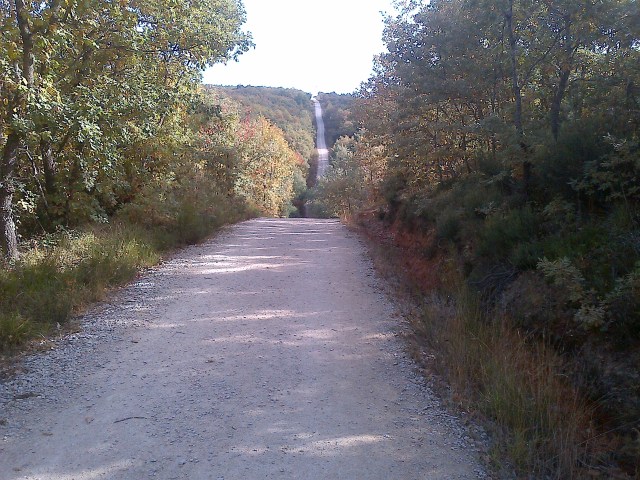
Part of the road between Villafranca Montes de Oca and Monasterio de San Juan de Ortega

Finally, to Atapuerca and the long gruelling walk into Burgos, around the airport and the 10 km of concrete pavement through the industrial area, until finally reaching the jewelled heart of the city.

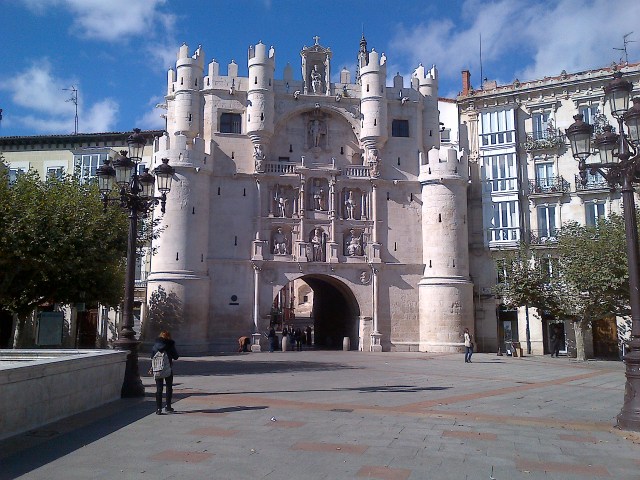
img-20161020-01248
The ornate entrance to the cathedral plaza in Burgos
img-20161020-01251
Burgos cathedral

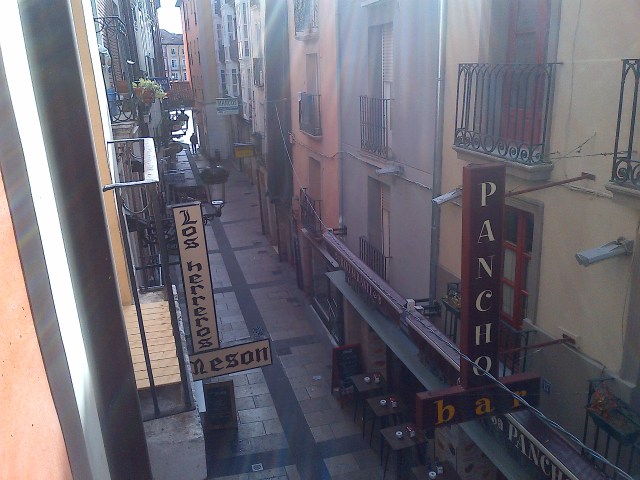
In Burgos, I stayed in a beautiful little apartment, opposite and managed by the Pancho Bar, where we had spent a riotous evening in 2014. When I made the booking, I did not realise the connection.  The owner, his two brothers and sister are the core of the staff, and their tapas are excellent.
And it was in that bar that I spent another great evening.

img-20161020-01253
Pancho Bar in Calle San Lorenzo

Burgos was to be the end of my Camino for 2016.  The weather was turning distinctly colder, especially overnight, and it was time for this little bird to spread his wings and head south to a warmer climate.

But God willing, I will be back next year to walk another path across the glorious landscape of Spain.

Pamplona

Villava into Pamplona

Wednesday, 5 October, 2016

That previous evening in Villava, it struck me that I had not seen one single pilgrim in six days of walking on the Camino de Baztan, from Bayonne.  Considering how difficult it is to find solitude in this crowded world, I over-achieved.

The next day I set off to stroll the remaining six kilometres into Pamplona, and true to recent form, I got rather lost. I was standing at an intersection, probably looking bemused, when a man came up to me and, without any questions on his part, said that if I was a pilgrim looking for the path, he would show me the way.

We walked together for more than an hour.  He said that he was taking food to his daughter and grandchild.  He noticed my limp and I told him of my stroke ten years previously.

It turned out that he had had an identical stroke to mine, a cerebral haemorrhage.  His was in August 2005, mine in November of that year.

He lost memory and speech, as did I, and his sight was affected, as was mine.  At the time he had his stroke he was still quite fit, running marathons and cycling.  My story is similar.

The big difference between his experience and mine was that he was operated on twice to remove the blood clot, and he subsequently made a full recovery.

While we walked, we talked about a wide range of subjects – children, love, religion, nature, food, wine and many more.  It was like talking to a twin brother.

And he even has a small vegetable plot in Asturias, similar to mine in Uppsala.

When we arrived at the Magdalena bridge, the ancient bridge over the river into historic Pamplona, he shook my hand and left me without a further word, apart from ‘buen camino’.

I wanted to  stop him.

But he did not look back.

dsc00004
Puente de La Magdalena