Zafra to Mérida

8-10 October, 2015

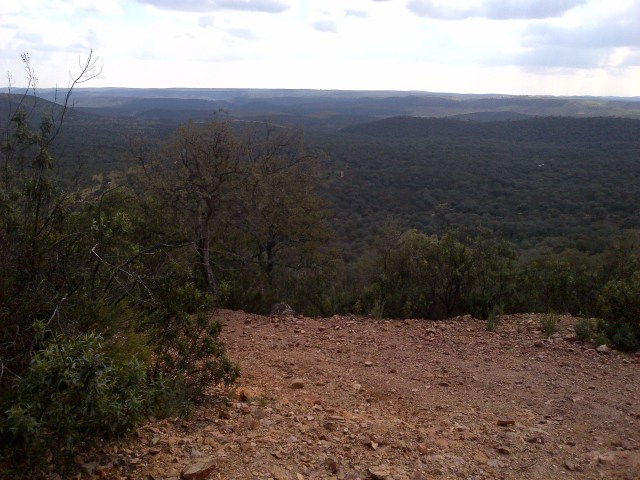
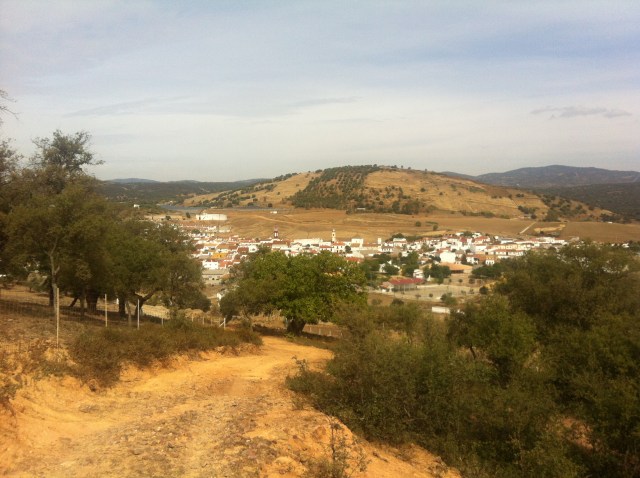
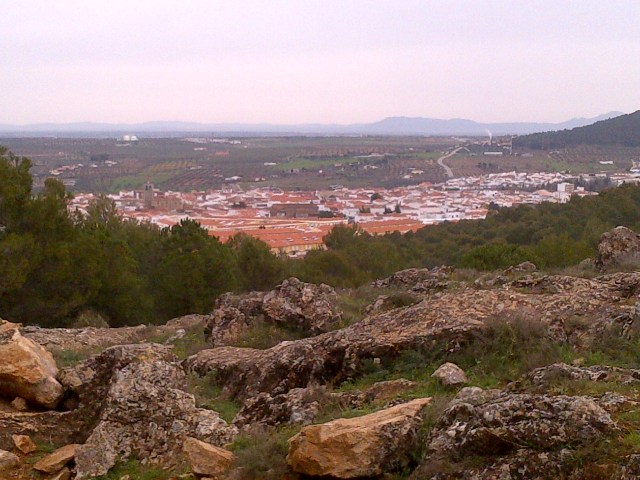
Once outside Zafra, the route climbed steadily to a ridge overlooking Los Santos de Maimona.  From the summit, one could see the plain stretching to distant mountains.  Mérida lies 65 km to the north of Zafra and takes three days of walking, spending the nights in Villafranca de Los Barros and Torremejía.  Once again, between the overnight villages, there was nothing but occasional farmland and bush.
img-20130304-00481
Looking down on Los Santos de Maimona

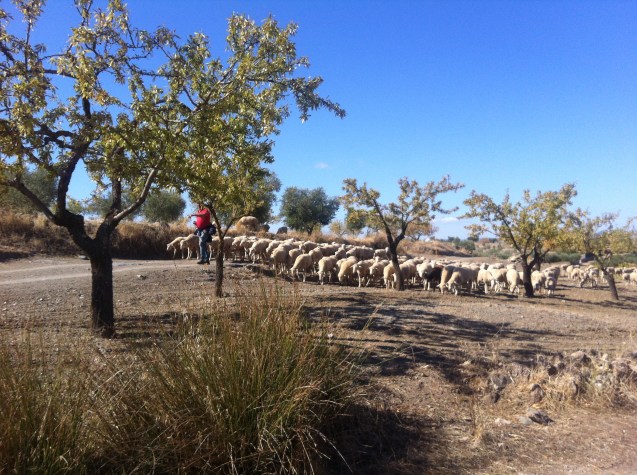
The land was parched.  It looked as if it had not seen rain for a long time.  At one time, after Santos de Maimona, we came across of a flock of sheep.  The shepherd walked ahead, seemingly oblivious of what was following him.  Four sheep dogs raced around, rounding up the stragglers and keeping the flock moving in the general direction of their master.  It was not the first time that I have witnessed the shepherd-to-dog relationship, and I have never ceased to be impressed.
img_2831
The shepherd leaving, the flocking following

From Villafranca de los Barros to Torremejía the path was straight, following the old Roman road.  There is absolutely no shade, just grape vines and occasional olive groves as far as the eye can see.  In one part, the road was being resurfaced, and for several kilometres we had to trudge through a thick layer of uncompressed dust.

img_2844
A repaired through the vines

On a long straight path, with no bordering trees or bushes, one’s progress across the landscape is barely perceptible.  The goal is there on the horizon, but on the horizon is where it seems to remain.

img-20130921-00654
In the distance Torremejía


But eventually one arrives.

img-20130921-00655
Grapes on their way to being pressed
img-20130921-00657
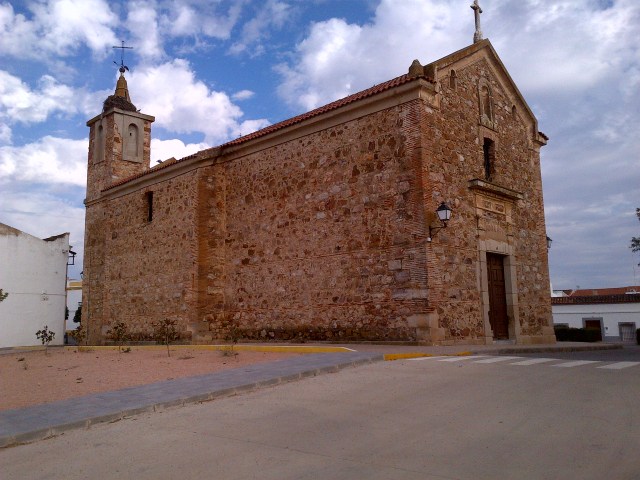
The recently renovated Iglesia Parroquial in Torremejía

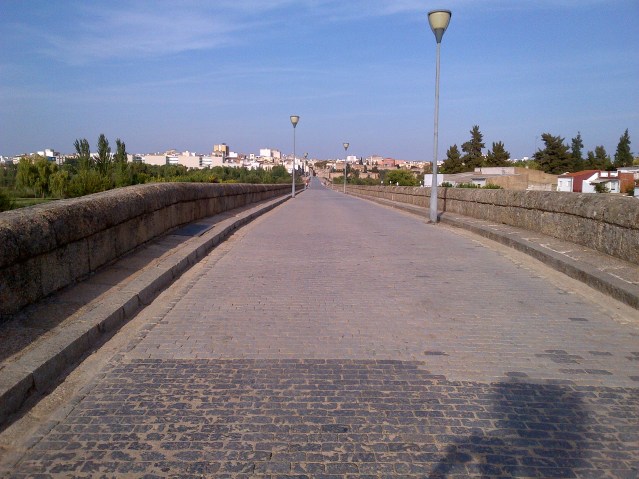
The next day was relatively easy and, in the early afternoon, we arrived at the Puente Romano, that leads across the river Guadiana to Mérida.

At 790 m, it is the longest surviving Roman bridge.

img-20130924-00682
The Puente Romano over the river Guadiana, with its 60 surviving spans


img-20130924-00683
The restored and pedestrianized Puente Romano


Next: Mérida

Guillena to Zafra

2-8 October, 2015

The path north from Guillena to Zafra covers 125 km and passes through five villages – Castilblanco, Almadén de la Plata, El Real de la Jara, Monestario and Fuente de Cantos.  The villages are between 15 km and 27km apart, a distance that a hiker, carrying a backpack, can comfortably cover in a day.  Originally it would have been the distance that a heavily armed Roman soldier would have been expected to march.  Apart from some farmland adjacent to the villages, the countryside was empty of habitation.

img-20130227-00462
A cork plantation near Castilblanco

For the first three days, the path wound through the rugged Parque Natural de la Sierra Norte to El Real de la Jara, shortly before passing from Andalusia into Extremadura.  There was a long climb to Monestario, after which the landscape transcended onto the plains that surround Mérida.

img-20130227-00468
Looking back from a ridge, before descending to Almadén de la plata


img_2742
And the path down to Almadén de la Plata

Apart from Zafra, which is a large town with a rail and bus station and several hotels, the villages that we passed through were small, each with its church and a small central plaza, an hotel or rural hostel with a few rooms, an albergue with dormitory accommodation, a bar, and little else.  And the houses and buildings were universally painted white, with red tiled roofs.

In the first three days, where the landscape was more rugged, the path led through many huge paddocks, where herds of cattle, pigs, goats, sheep and horses ranged free.

img_2758
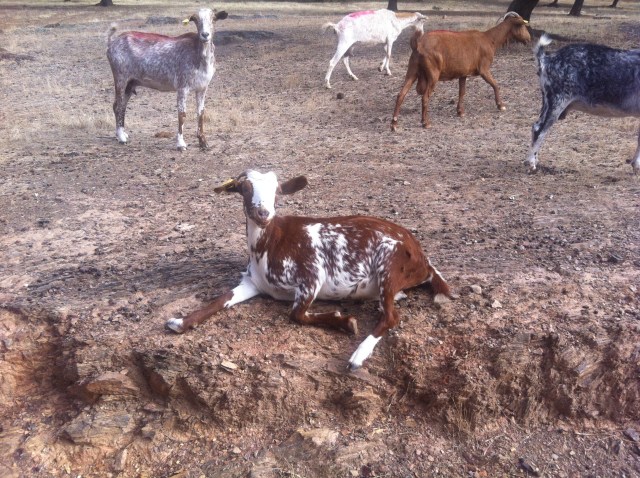
Free-ranging goats


img_2763
Pigs looking like hippos, with their own pool
img-20130301-00473
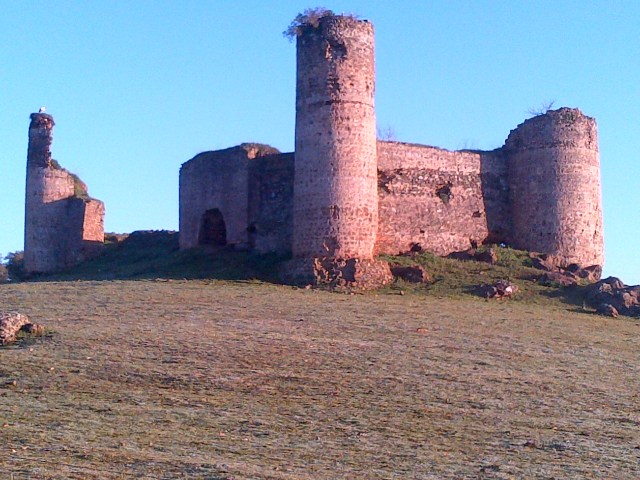
El Castillo de las Torres (XIII century) outside El Real de la Jara

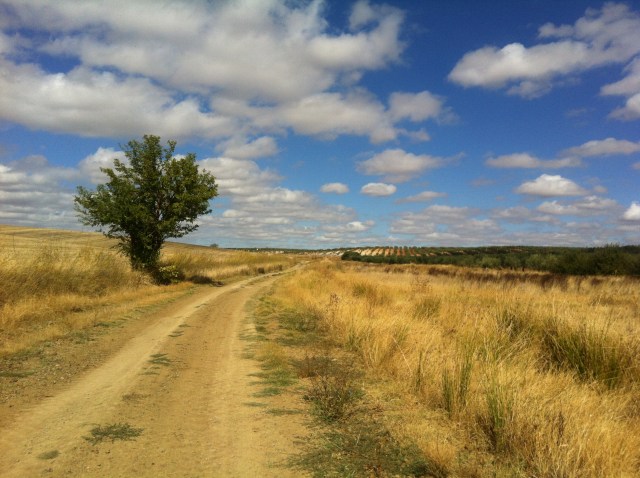
After Monestario, the land flattened, and the farming changed from mainly animals to crops, with occasional olive groves and grape vines.  The path was dusty and the land parched; it seemed as if it had been since the last sustained fall of rain.

img_2819

In the seven days that we walked from Sevilla to Zafra, the only other hikers that we saw were the strange couple pulling the cart; we had seen them arriving in the bar in Guillena and pulling their cart up the stairs to their room.   We passed them a couple of times on the path, when they were sitting in the shade, resting or having something to eat and drink.  They seemed to be quite shy, or perhaps they just wanted to be alone.  I can well sympathize with the latter.

We always knew when they were ahead of us, when we spotted the tracks that the wagon tyres left in the dust.  And each night we usually saw them arrive in a village, sometime after we did.  On a couple of occasions we saw them enter the same hostel where we were staying, but they were quite reclusive and stayed in their room.  I thought that they might have been on their honeymoon.

When we were on our way out of Zafra, we stopped at the bar of a comfortable hotel to have a coffee and a croissant, and who walked out of the restaurant and up the stairs but the strange couple with the cart.

Little did we know that we were to see them every day until Cáceres.

img_2825
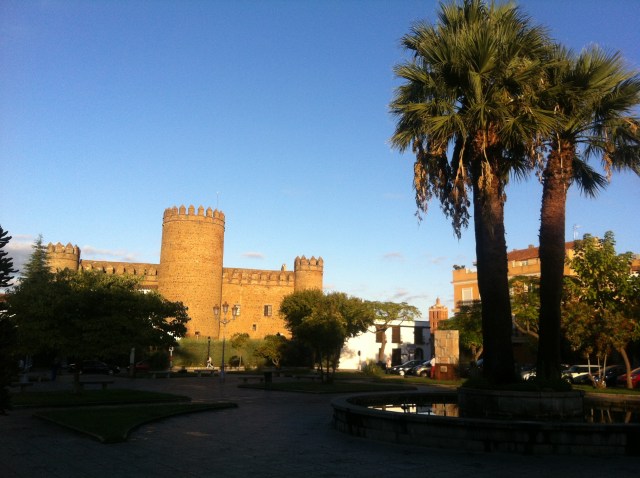
Leaving Zafra and passing the castle in the early morning sun


Next: The former Roman city that is now Mérida