Ávila

Caracas, 1978

Until I moved to Caracas in 1978, I had never lived anywhere within easy access to mountains.

The landscape around where I grew up on the north coast of Ulster, could be described as ‘gently undulating’, and it would be an exaggeration to describe the ‘mountains’ in the north of Ireland as anything more than ‘cuddly little hills’.

Likewise, Toronto and London are as vertically challenged as a slightly creased table cloth.  There are small mountains inland from Sydney, but they are at least a two-hour drive away.  On a rare day, clear of smog, from Los Angeles, with binoculars one can sometimes see the Rockies, but again a long drive.  And Lagos is on the vast delta of the river Niger.

So, on that morning in November 1978, when I was shown to my new office on the seventh floor of Maraven, in Caracas, and I looked across the adjacent city airport and saw that massive green wall rising from the northern suburbs, I felt so fortunate to have the opportunity to be there.

image_78
Pico Oriental (2640 m), with the city aitport in the foreground (from internet)


The mountain at which I was looking, was the western end of El Parque Nacional El Ávila, that stretches for 80 km along the north coast, and is about 16 km wide.  The highest point is Pico Naiguatá at 2765 m, with Caracas at about 1000 m.

For quite a while, the mountains were ever present in my mind, but by necessity they were in the background; I was busy settling in, getting my bearings, coping with the challenges of a new job, and above all, wrestling with the Spanish language.

But eventually the urge to climb that mountain and walk along the ridge was irresistible.  I asked around the office, but nobody seemed to have ever climbed the mountain, nor did they seem to know anything about the access paths.

It was my new friend and eventually my constant companion, Ivonne, who inquired at an information office somewhere in the city, and obtained some documentation.  So, one Saturday morning we set off to climb Pico Oriental.

There was nothing technically challenging about the climb; it was like going up steep stairs for 2-3 hours.  And it was a very warm day.  But the views from the top were incredible, with Caracas on one side, and the Caribbean far below on the other.  And we could see planes flying below, and landing at the city airport, and on the other side, at the international airport of Maiquetía.

Over the next year on several weekends, we explored most of the paths on the mountain, accompanied by various permutations of Ivonne’s younger sisters – Maureen, Vilma and Dayra, and two of our colleagues from Maraven – Aiden Lehane and Laín Burgos-Lovece.

We went along the ridge as far as the Humbolt Hotel, at 2015 m, then deserted and decayed.  It had been built in 1956, with a cable car climbing from Caracas in the valley and then down the other side to Macuto, at the coast.  It was shut down in the early 1970’s, due to operational and technical issues with the cable car system.  It was reopened in the late 1980’s as a School of Tourism.

428_001
Hotel Humbold at 2015 m


lenvisiting-002
Kaare & Lonny Plesner (Danish friends), with the author and Ivonne Garban, in 1979

Ivonne somehow obtained a faded copy of a document that gave the history of the ascent of Naiguatá, so one weekend we set off from Petare, in the eastern suburbs of Caracas.

naiguata-page-001-1
The front page of an old 8-page document about Pico de Naiguatá


naiguata-page-003
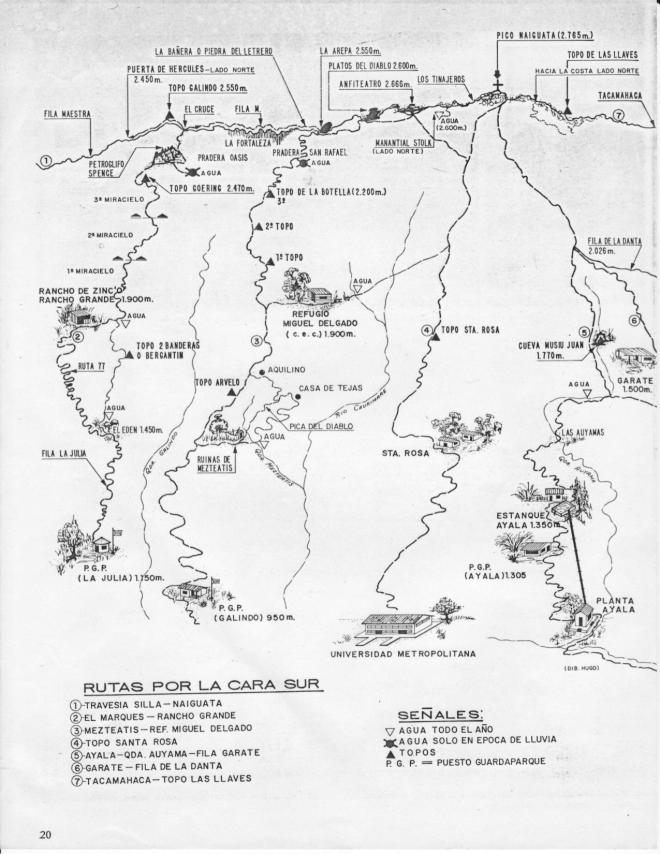
And a map showing some of the possible ascents to Naiguatá


Once more there was nothing technical about the climb, it was just long, and in the valley, the weather was hot that day.  And once again the views were stunning.

1200px-scratching_the_sky
View of Naiguatá from the western ridge
Anfiteatro Pico Naiguata, Fila Maestra y Pico Oriental
Looking west from Naiguatá, with Caracas on the left, and the Caribbean on the right


Although there were several paths up the south side of Ávila, I never found one descending from the ridge on the north side, down to the Caribbean.  The north side was reputed to be a naturalist’s paradise, with many different species of flora and fauna.

There was no road along the coast for the length of the park.  The road ended at a beach club on the western end of the park, and just outside Higuerote on the eastern end.  In between, there was about 50 km of a rough track, only suitable for a 4-wheel drive.

One day I decided that I was going to run and walk the 50 km. Ivonne drove me to Higuerote, and I started out just after the sunrise.  We agreed to meet at the other end at 18:00, around sunset.

As crazy as it may seem today, I took nothing with me: no pack, no food, no water.  I had just my running gear.  And of course there were no mobile phones in those days.

But the distance for me, was a little more than that of a marathon, of which I had already done several.  And a few weeks earlier I had run and walked 80 km in training in Caracas, so I was not in awe of the distance.

The going was rough in parts, particularly in the middle third, and it was hot and very humid in the sun.  I drank from streams and surprisingly, I found several banana plants, with ripe fruit, possible descended from a long-vanished subsistence plot.

I had no concept of distance covered, but I had calculated on it taking no more than ten hours.  When ten hours had elapsed and there was still no sign of civilisation, I started to feel a little uneasy, especially when it looked like it would not be long until the sun set.  I began to regret the time had spent on those idyllic breaks that I had taken, sitting on the beach, or cooling my feet in the streams.

It was quite dark when I finally emerged from the bushes to find myself in the car park of the club at Naiguata.  And there was Ivonne with one of her sisters, patiently waiting for me in my car.

Mission accomplished.

Since Caracas, I have had several opportunities to live close to mountains, and I have never lost my fascination for them.

But my memories of Ávila stand out above all others.

Valencia

Over the last few years, Valencia has become one of my favourite cities.  Indeed, I have even been considering settling down there, although I confess that I am not yet quite ready for that big step.  For me, it is not easy to blow the full-time whistle on more than 50 years of my nomadic life-style.  That day will come, but not just yet.

Valencia has much of what I enjoy.

First and foremost, it has a wonderful subtropical climate, with a summer season lasting from April to November, mild winters, and an annual average of seven hours of sunshine per day.  That is almost double the average for northern Europe.  And only a precipitation average of 44 days in the year.

Then there is the glorious heart to the city, with its cathedral and its buildings, its history and the maze of narrow streets and alleyways.  And the multitude of inexpensive restaurants and bars.  The city throbs with life, day and night.  The typical Valenciano lives in the street.

And the beach is a short bus ride away.

But for me, the jewel of Valencia is El Jardín del Turia.

In October, 1957, the river Turia overflowed yet again, causing a lot of devastation and many deaths.  The authorities finally decided to divert the river, avoiding the heart of Valencia. In subsequent years, the bed of the river was converted to a sunken park, which was inaugurated in 1986.

Today, the park extends over 9 km of former riverbed, from Cabecera Park to the City of Arts and Sciences, and includes 18 bridges.

img-20161103-00012

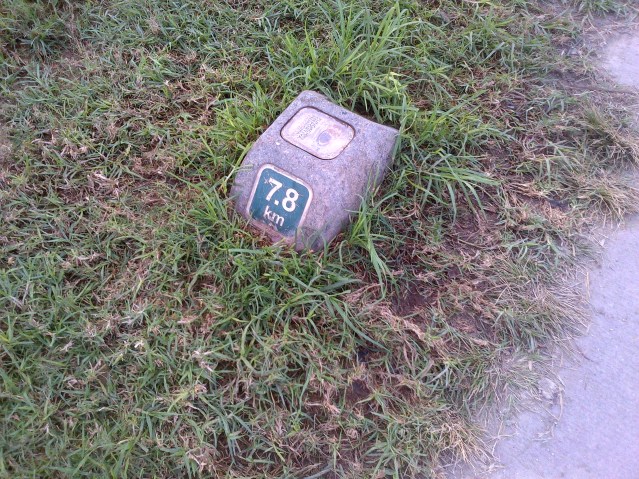
It is a relative paradise for a runner, with a marker every 100 m.

img-20161103-00015

At the down-river end of the park, there is the group of futuristic buildings that comprise the City of Arts and Sciences.

untitled-picture-1
The Opera House
untitled-picture-2
The Science museum, in the shape of the skeleton of a whale
untitled-picture-3
The Ágora, for special events

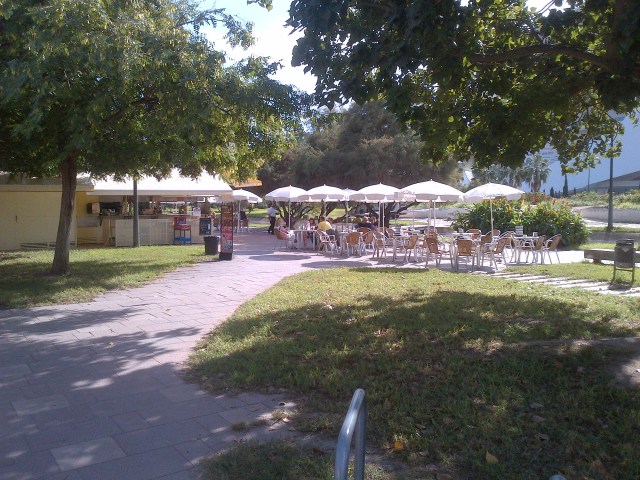
Throughout the length of the park there several bars and restaurants.

untitled-picture-4

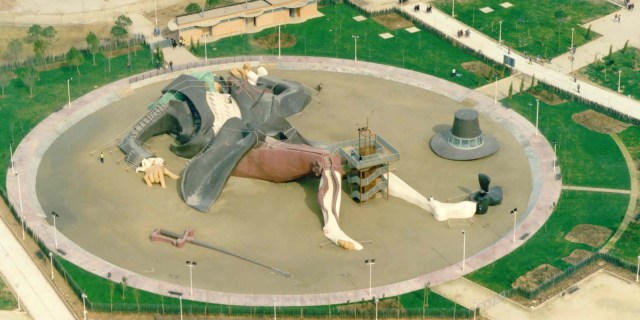
One of the unique features of the park is the Gulliver Park for children and the not-so-young.  Only from the air can one appreciate the size of the sculpture and the ant-like people.

img-20161103-00016

gulliver

The Palau de la Música, that houses the Valencia orchestra. In the foreground, the spectacular fountains are undergoing a complete restauration.

untitled-picture-5

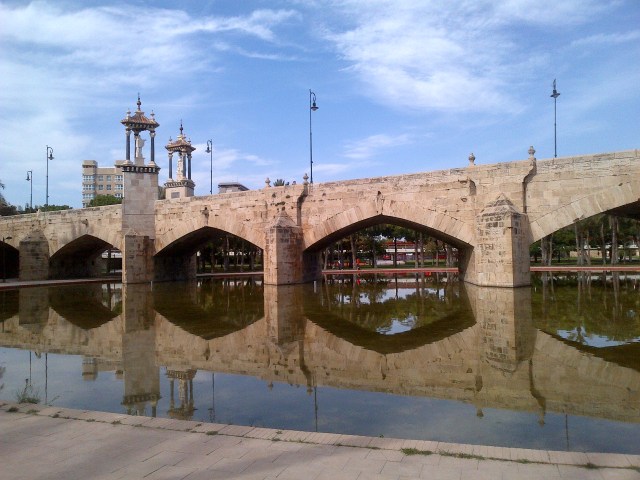
And if one forgets that one is on the bed of a river, there is the Puente del Mar to remind one that it was first built on the site in 1425.

untitled-picture-6

For the sports minded, there are facilities for football, rugby, tennis, baseball, hockey, athletics than others that I have forgotten.

Yup, Valencia is my kind of place… 🙂

The Itinerant Sailor

Today finds me in Alicante, in southern Spain.  While most of northern Europe is shivering in near, or below freezing temperatures, I am in shorts and light shirt, basking in 25°c.  It’s not very hard being me.

Give or take a week, it was about this time of the year, forty-eight years ago in 1968, that I first was in Alicante.  And the weather was like today.

I was on my way south to Gibraltar.  As a child, I had read of the history of Gibraltar, a tiny enclave of Britain, at the tip of Spain and separated by a short distance from Africa.  It had fascinated me.

Gibraltar was ceded to Britain by the Treaty of Utrecht in 1713, but unfortunately, there was no map of the boundaries, nor any detail of what was entailed.  Unsurprisingly, to this day Gibraltar has continually been subject to differing interpretations.

I have no recollect of how I reached the Gibraltar border from nearby Algeciras, probably by bus, but when I did, I found the border was not open.  It had been closed on June 8 of the same year, by General Franco, the Spanish dictator, and it remained closed until February 1985.

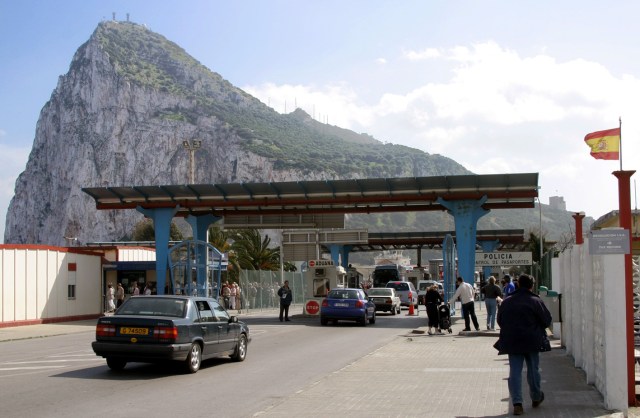
gibraltar_border
The border between Spain and Gibraltar, as it is in modern times (photo from internet)


I spent the night close to the border, in La Línea, in a pension, in the dampest bed in which I have ever slept.  The room felt as if it had not been occupied since the Treaty of Utrecht.

The next day I went back to Algeciras, and caught a ferry across the bay to Gibraltar.  That access was surprisingly still open.

On the ferry, I met one of the most interesting people I have ever encountered.  He was a retired English sailor.  From early teenage, he had worked all his life on boats, all over the world.  He was a small thin wiry man with scarcely any hair, with a deeply weathered and tanned face.

He told me that when he was forced to retire, he tried to settle in England, but he could not fit in.  He had no family, no relatives, no real friends.  He was too restless to live in one place, so he had taken all his possessions in a small backpack and set off to follow his nose.

In the next four years, he had traveled all over the world, in all the continents, sometimes working his passage across the oceans.  He ended up back in England, but did not stay long.  When I met him, he was on his way back south.  He said he was not going back to England again.

I asked him where he was going after Gibraltar.  He said that he was going to catch a ferry to Ceuta and then overland to South Africa.

And what if got ill?  He said that he would be treated like the local people, wherever he was.  And when he died, he said that they could have his few possessions to pay for his burial.

He did not seem to be lonely.  In fact, he appeared to be very content with his life.  In some ways, the old sailor reminded me of the legend of the itinerant Jew, although, in the end, the latter just wanted to die.

The last I saw of him, he was heading to the offices of the ferry companies, to get a passage to Africa, and I headed to the town.

Since then, I have often wondered whatever happened to the old sailor.

The Ash Tree

My mother loved her garden.  Apart from a few essentials for herself, every spare penny she could save was invested in scrubs and plants.

When we moved into the new house in 1952, the site was covered in rubble, ashes from the burned out Irish cottage, that previously stood in one corner, weeds and nettles.  There was little or no topsoil.  It looked as if nothing would ever grow there.

Yet a few years later, it was a virtual ‘Garden of Eden’, with a variety of flowering shrubs, roses, various plants and bulbs.  My mother had a proverbial ‘green thumb’, and visitors to the farm used to marvel at the profusion of year-round colour.

In a secluded corner of the garden, where there was a small ash tree, my mother had one of the workers construct a seat under the tree, using a sheet of corrugated iron, backed with soil and topped with a layer of grass.

It was never a success.  It was too shaded, too damp and within a year the iron retainer started to rust.  Nobody ever sat there.

But I liked it, for it enabled me to climb onto the lower branch of the tree, and standing on the branch, I felt as if I was on a ship.  I used to spend many hours in that corner of the garden.  It does not take a lot to stir the fertile imagination of an eight-year-old.

On Friday, February 07, 1958, the BBC morning news announced that a plane carrying the Manchester United football team had crashed the previous evening, when attempting to take-off from Munich airport, and that 20 of the 44 passengers had been killed.  Later three more died of their injuries.

The team had been returning from a European Cup match in Belgrade and had landed at Munich to refuel.  The pilot had aborted take-off twice in a snow storm, due to poor runway conditions.  On the third attempt, the plane hit a thick layer of slush, careered off the runway through a fence, and one wing hit a house.

2bf71d69dce66e0ffaae0f1cadeabfe4
BEA Flight 609

One of the undoubted heroes on the night was Irish goalkeeper, Harry Gregg, from my home area.  He managed to carry and drag several of the injured from the burning plane, including Bobby Charlton, Jackie Blanchflower, Dennis Violett, the pregnant wife of a Yugoslav diplomat and her daughter, and his manager, Sir Matt Busby, who was twice given last rites, but survived.

harry-gregg
Harry Gregg in his playing days


harrygreggmanchesterunitedmark50thanniversarytszrkyp7g7ll
And at the 50-year memorial, with a candle for each of the victims


Like a great many people, I was very shaken by the news.  I went down to my secluded corner, climbed into the ash tree, and with my penknife I carved ‘Man U 1958‘ in the bark.

Several years later, when I returned on a visit, I could still vaguely make out the carving.

The garden has now long gone, but perhaps the ash tree is still there.


Moon Landing

It was on October 04, 1957, that Russia successfully launched the first Sputnik into orbit. It was the first artificial Earth satellite and it weighed 84 kg, with a diameter of 58 cm.

The Sputnik took about 100 minutes to complete an orbit, and with favourable conditions, was reportedly visible with the naked eye.  I never saw it, nor did I ever know anyone who had seen it, although I did go out one night to try to spot it.  Having a clear sky on the north coast of Ireland can be a relatively rare event.

sputnik_asm

The launch of the Sputnik was the starting pistol for the space race between Russia and the United States.

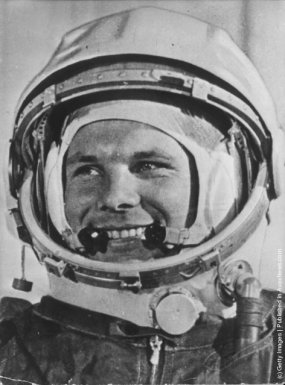
Less than four years later, on April 12, 1961, Yuri Gargarin became the first human in space.  He was a small man, only 1.57 m in height, and was probably chosen for the mission because of his stature and weight.  He died six years later in a plane crash.

yuri-gargarin

Most people can remember what they were doing on Monday, July 21, 1969.  It was at 02:56 UTC that the first human set foot on the moon.  I was fast asleep at the time in a hotel room in Frankfurt.

What was I doing in Frankfurt in July 1969?

At that time, I was employed as a junior programmer with Singer Sewing Machines.  I was based in London, in a team developing an inventory control system for Singer’s European companies.  We were writing programs using the COBOL language.  Input, instructions or data, was via punched cards and punched tape, for an IBM 360 model 30.

In the photograph below, one can see a typical computer room, housing an IBM 360 30, like that we used in Frankfurt.

ibm-360-30

Also in the photo one can see disc drives, tape drive, central processor and printer, with the operator sitting at the system console.  Not only can one observe how bulky everything was, but the system had to be housed in a cold air-conditioned room, with a raised floor to accommodate the plethora of cables connecting the equipment.

And the power and capability of such a system was miniscule, when compared to the most basic smart phone of today.

The same basic smart phone has infinitely more capability than the computer systems that managed ground control, the different stages of the rockets and the landing module of the moon landing in 1969.

Of course, comparing the computer systems of 1967 to the smart phone of today is like comparing the plane of the Wright brothers to the Boeing Dreamliner.  Both fly, but that is about the limit of the comparison.

I am, however, constantly amazed that man could progress from launching the first satellite in 1957 to landing men on the moon less than 12 years later.

It was an amazing feat.

Becoming Aware


Valencia

Friday, 28 October, 2016

On October 23, 1956, there was a country-wide revolt of Hungarians against Soviet imposed policies.  On November 4, a large Soviet force invaded Hungary and brutally suppressed the resistance.

That was almost exactly sixty years ago, and I was nine years old at the time. I can clearly remember being very aware of the BBC radio news reports, and sensing the tension in my parents, as they listened to the depressing news.

In those days, few people had a television, so our only news was that of the two or three daily reports on the radio.  The newspapers were always one day old, and the news in the cinemas was at least a week out of date.

A few days later, on 29 October, Israel invaded Egypt, supported by Britain and France, their goal being to seize the Suez Canal, and remove the Egyptian President, Nasser, from power.  A few days later, the US and USSR forced them into a humiliating withdrawal.  That was the start of the rapid decline of British and French influence on the global scene.

At that time, I overheard my father saying that, if hostilities continued to escalate, he would soon be back in uniform.  As he had already spent some seven years serving in WW2, from the Normandy beaches to Lübeck and Hamburg, the prospect of another protracted period of hostilities, was a concern to my parents and their generation.

That period of less than two weeks in late 1956, was a watershed for me. I guess that one could say that it was the end of my innocence, and the beginning of my awareness of the greater world outside the little farm in which I was growing up.

Soon after, I decided that I wanted to go to Sandhurst and become a career officer in the Army.  I also started to take an active interest in my father’s business, and he began giving me ‘pocket money’, in return for chores, especially during school holidays.  And almost certainly because of my reading, I dreamed vividly of travelling to remote parts, of climbing mountains, of being successful.

My military ambitions did stay with me for a few years.  When I was old enough, I joined the local Army Cadets and was an enthusiastic member.  But one day, when I was sixteen, I decided that a career of having to blindly obey orders was not for me, and I resigned.

Perhaps I could have made a success out of the expansion of my father’s farming business, but my heart was not in it.  The urge to see the world and expand my horizons had become much too strong.

When I was eighteen, I migrated to Canada, and that was the first of my many moves.

And I am still moving…

Burgos

Pamplona to Burgos

7-20 October 2016

This was the third time that I have walked from Pamplona to Burgos, so I will try not to repeat myself.  If you want to read my original accounts from 2012, then click on https://irishrover2016.wordpress.com/2016/08/07/29 (Pamplona to Logroño) and https://irishrover2016.wordpress.com/2016/08/20/34 Logroño to Burgos.

From Pamplona, I once more walked to Puente de La Reina, over the Alto del Perdón, to Estella, Los Arcos, Viana, where Cesare Borgia is buried, and Logroño, with its multitude of wine bars.

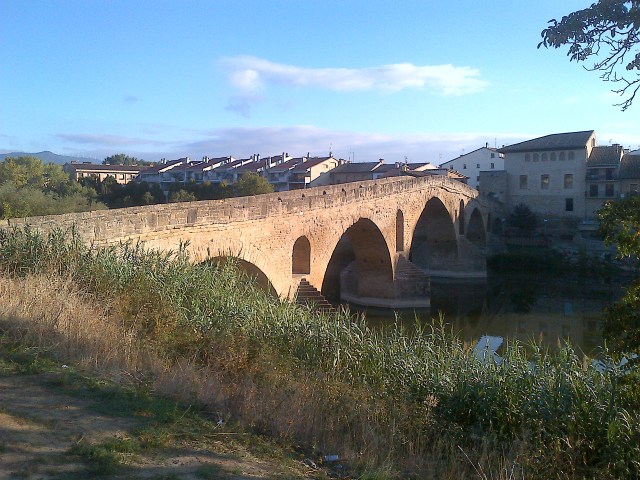
img-20161008-01236
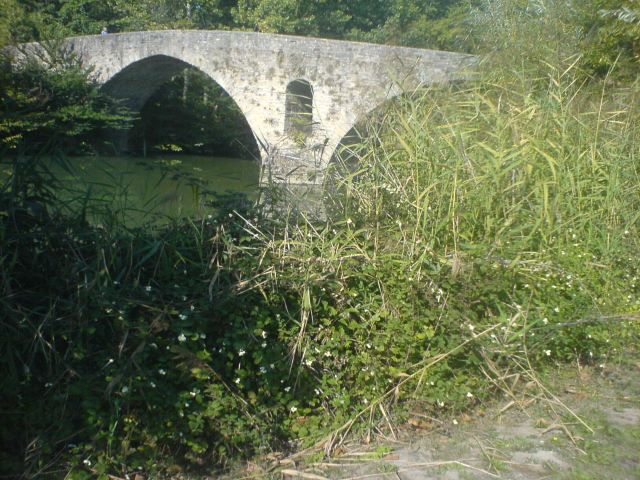
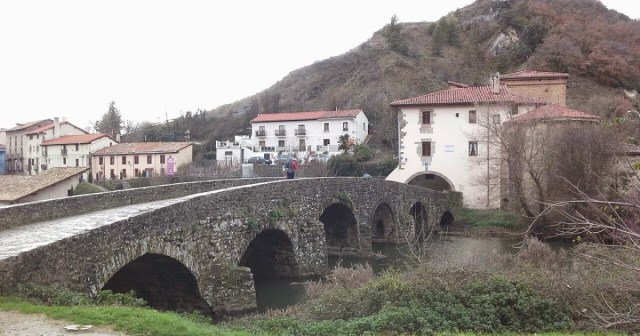
Leaving Puente de La Reina in the early morning sun, on the eleventh century bridge over the river Arga

From Logroño I went on to Navarette, Nájera, and Santo Domingo, where I once more stayed with the nuns, as we had done in 2014.  Then Belorado, and Villafranca Montes de Oca, in the beautiful grand old mansion, where the owner and his son remembered me and treated me royally.

img-20161016-01244
One of numerous huge stacks of straw
img-20161018-01245
Part of the road between Villafranca Montes de Oca and Monasterio de San Juan de Ortega

Finally, to Atapuerca and the long gruelling walk into Burgos, around the airport and the 10 km of concrete pavement through the industrial area, until finally reaching the jewelled heart of the city.

img-20161020-01248
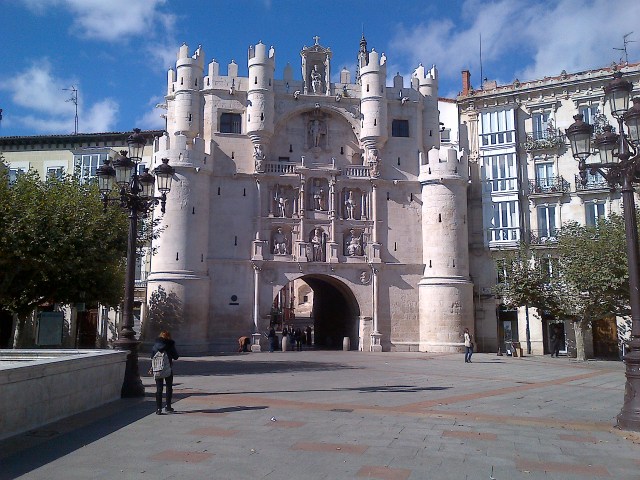
The ornate entrance to the cathedral plaza in Burgos
img-20161020-01251
Burgos cathedral

In Burgos, I stayed in a beautiful little apartment, opposite and managed by the Pancho Bar, where we had spent a riotous evening in 2014. When I made the booking, I did not realise the connection.  The owner, his two brothers and sister are the core of the staff, and their tapas are excellent.

And it was in that bar that I spent another great evening.

img-20161020-01253
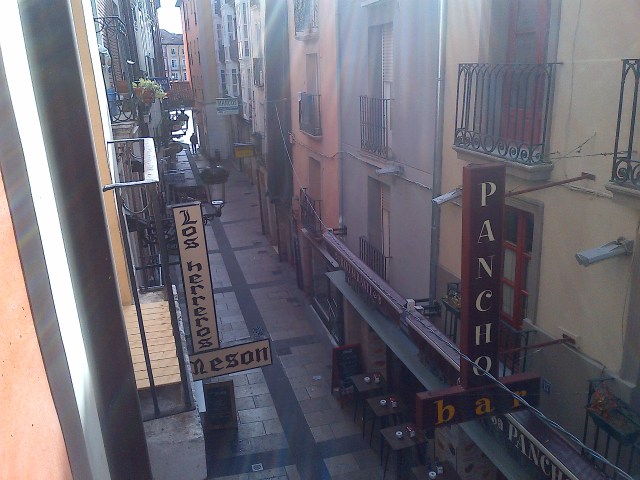
Pancho Bar in Calle San Lorenzo

Burgos was to be the end of my Camino for 2016.  The weather was turning distinctly colder, especially overnight, and it was time for this little bird to spread his wings and head south to a warmer climate.

But God willing, I will be back next year to walk another path across the glorious landscape of Spain.

Pamplona

Villava into Pamplona

Wednesday, 5 October, 2016

That previous evening in Villava, it struck me that I had not seen one single pilgrim in six days of walking on the Camino de Baztan, from Bayonne.  Considering how difficult it is to find solitude in this crowded world, I over-achieved.

The next day I set off to stroll the remaining six kilometres into Pamplona, and true to recent form, I got rather lost. I was standing at an intersection, probably looking bemused, when a man came up to me and, without any questions on his part, said that if I was a pilgrim looking for the path, he would show me the way.

We walked together for more than an hour.  He said that he was taking food to his daughter and grandchild.  He noticed my limp and I told him of my stroke ten years previously.

It turned out that he had had an identical stroke to mine, a cerebral haemorrhage.  His was in August 2005, mine in November of that year.

He lost memory and speech, as did I, and his sight was affected, as was mine.  At the time he had his stroke he was still quite fit, running marathons and cycling.  My story is similar.

The big difference between his experience and mine was that he was operated on twice to remove the blood clot, and he subsequently made a full recovery.

While we walked, we talked about a wide range of subjects – children, love, religion, nature, food, wine and many more.  It was like talking to a twin brother.

And he even has a small vegetable plot in Asturias, similar to mine in Uppsala.

When we arrived at the Magdalena bridge, the ancient bridge over the river into historic Pamplona, he shook my hand and left me without a further word, apart from ‘buen camino’.

I wanted to  stop him.

But he did not look back.

dsc00004
Puente de La Magdalena


Villava

Lantz to Villava

Tuesday, 4 October, 2016

While I having breakfast, my hostess told me that the rest of the way to Pamplona was gently downhill, at least compared to my previous day in the mountains, and that it was about 20 km to Pamplona.  So mentally I expected 15 km, as I intended to spend the night in Villava.  I set out at a leisurely pace, for what I perceived to be a relatively easy walk.

img-20161004-01227
Leaving Lantz with the mountains in the background

The route followed farm paths, heavily covered with smooth stones, that I found rather uncomfortable on my injured toe, ankles and knees.

I passed through a couple of tiny villages, each with a large closed-up church.  At one time there must have been a much larger population, for today each village had only a handful of houses, no bar or shop and little sign of life.

img-20161004-01229

img-20161004-01230

There was eventually a long stretch of narrow path, high up on the hillside, alternating between forest and meadow, following the contours of the land and avoiding the busy road below.  It seemed endless, but finally it descended to the river and Sorauren.  There two old ladies told me that I had about six kilometres to go to Villava.  My original estimate of 15 km was now looking more like 28 km.

The path was now concrete and followed the banks of the river.  There was no breeze and it was hot.

But my day was made when a huge flock of sheep came along the path toward me.      Without any outward sign and without looking back, the shepherd moved over into the field and the leading sheep followed him.  One little sheepdog raced around like crazy, rounding up the laggards and moving  the whole flock across into the field.

img-20161004-01234

I always find it impressive to witness a working dog.  And with all under control, the dog ignored me as he passed.

img-20161004-01233

About an hour later I crossed the bridge over the Río Ulzama into La Trinidad de Arre and Villava on the outskirts of Pamplona, where the Camino Baztan joined up with the Camino Francés.

villaba-puente
The bridge into La Trinidad  de Arre and Villava (from internet)

I was now on familiar territory and mission accomplished…  🙂

Lantz

Monday, 3 October, 2016

When the church bells woke me that morning at 07:00, I was so comfortable in bed that I was sorely tempted to roll over and stay for another hour.  But the nagging ache in my big toe reminded that all was not well.  The nail had gone brown and black and had started to pull away from the flesh.  It was bothering me the previous evening, and I must have caught it on the sheets when turning over during the night.

My hostess told me that there was no pharmacy between Ziga and Pamplona, some 50 km away, but she supplied me with some gauze and sticky tape, and I was able to carefully wrap the toe, hopefully avoiding further damage.

So off I set to cover the 25 km to Lantz, via a 600 m ascent over the mountain.

The road from Ziga climbed steadily, passing through the little neighbouring villages of Berroeta and Almándoz.  At Venta San Blas I left the road behind and the path zig-zagged up through the forest.  Everywhere the ground was covered with a thick layer of autumn leaves, and the sky was a piercing blue.  It was a glorious autumn day.

In the entire day, the only people I saw were two men hunting for mushrooms.  They told me that I had a long way to go to Lantz.  I did not need reminding of that fact.  They also said that the markings were quite faded and to watch out for false paths.

There were two high points with a significant dip between them.  That part was very wet, the rocks were slimy and very slippery, and all was coated in a thick layer of leaves and mud.  It seemed that the sun never reaches that area and I made very slow progress, trying to ensure that I did not once more sprain my ankle.

When I finally emerged from the marshy area and passed over the second high point into warm sunshine, the going came suddenly easier, for the ground was dry and the views were stunning.

A few minutes later I passed the newly built Ermita de Santiago.

img-20161003-01226
Ermita de Santiago at 911 m

At the end of the valley below was the XII century pilgrim hospital of Santa Maria de Belate.

ermita-de-belate
Ermita de Belate (photograph from internet)

At this point the normal pilgrim route through the forest was closed, due to forestry work, and a temporary route had been marked, following the busy main road for about four km, until it re-joined the historic path.  The deviation added another three km to my total hike for the day.

I was footsore and quite weary when I finally reached Lantz.  Once more the accommodation was excellent, the hostess extremely hospitable and helpful.

And that first beer went down without touching the sides.

When I finally took off my boots and socks, I found that my injured toe had come through the day surprisingly well.

So one more day to go to Pamplona.